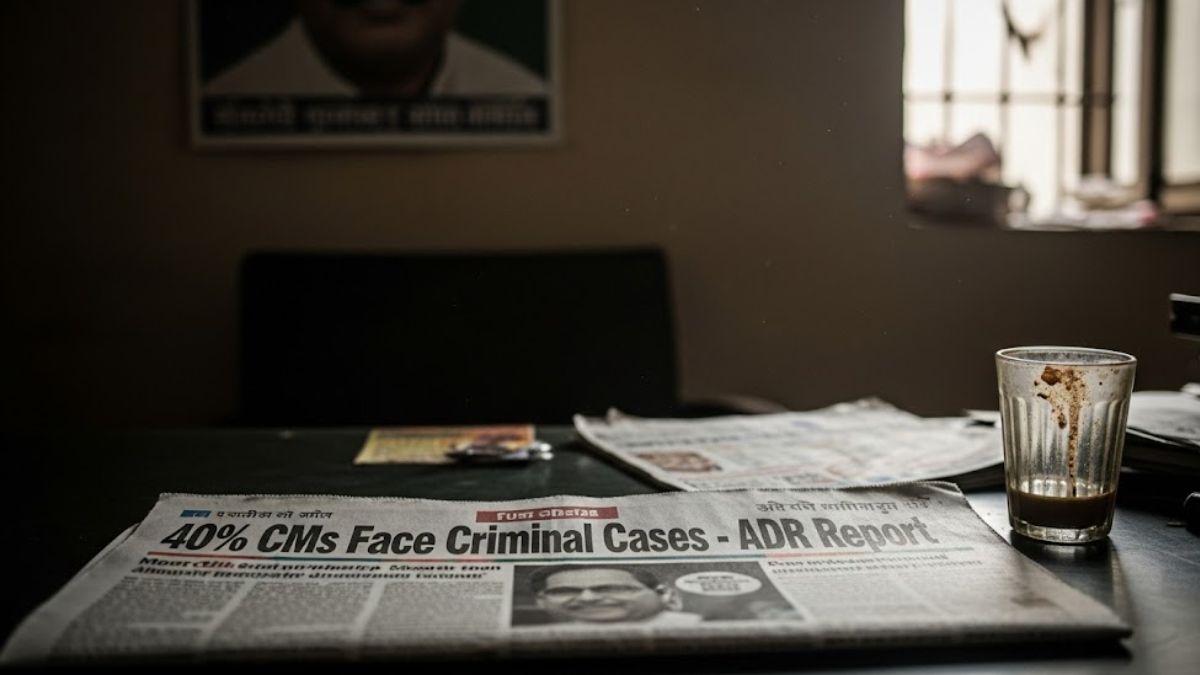
A new analysis by the Association for Democratic Reforms (ADR) has revealed that 40% of India’s Chief Ministers face criminal cases, highlighting the persisting issue of the criminalisation of politics. The report comes at a crucial time as the government introduces three new bills seeking to remove the Prime Minister, Chief Ministers, and Ministers arrested for 30 days on serious criminal charges.
Key Findings of the Report
Number of Chief Ministers with Criminal Cases
Out of 30 sitting Chief Ministers across states and Union Territories,
- 12 CMs (40%) declared criminal cases.
- 10 CMs (33%) face serious criminal charges, including attempt to murder, kidnapping, bribery, and criminal intimidation.
Chief Ministers with the Highest Cases
- Revanth Reddy (Telangana CM): 89 cases (highest in the country).
- M.K. Stalin (Tamil Nadu CM): 47 cases.
- Chandrababu Naidu (Andhra Pradesh CM): 19 cases.
- Siddaramaiah (Karnataka CM): 13 cases.
- Hemant Soren (Jharkhand CM): 5 cases.
Other Notable Cases
- Devendra Fadnavis (Maharashtra CM): 4 cases.
- Sukhvinder Singh (Himachal Pradesh CM): 4 cases.
- Pinarayi Vijayan (Kerala CM): 2 cases.
- Bhagwant Mann (Punjab CM): 1 case.
Methodology
The ADR analysis is based on self-sworn affidavits submitted by Chief Ministers before contesting their most recent elections. These affidavits are legally binding documents that disclose details of assets, liabilities, education, and criminal background.
Legislative Context
New Bills in Parliament
- The findings come as the government introduces three bills in Parliament that propose:
- Automatic removal of PM, CMs, or Ministers if they are arrested for 30 days on serious criminal charges.
- Stronger mechanisms to reduce criminalisation in politics and improve accountability in governance.
Criminalisation of Politics Debate
The ADR report renews focus on the issue of criminalisation in Indian politics, a recurring subject of concern flagged by,
- The Supreme Court of India,
- The Election Commission, and
- Civil society groups demanding clean candidates and electoral reforms.
Implications
Governance and Public Trust
- High numbers of criminal cases among top political executives raise questions about integrity, governance, and accountability.
- Presence of serious charges undermines public faith in democratic institutions.
Electoral Reform Push
- The report strengthens the case for mandatory disqualification of candidates with serious charges, unless acquitted.
- Encourages debate on fast-track courts for politicians’ cases and greater voter awareness.


 UV Index Explained: The Hidden Health Ri...
 QS World University Rankings 2026: India...
 Best Airlines in the World 2026: Best Fu...