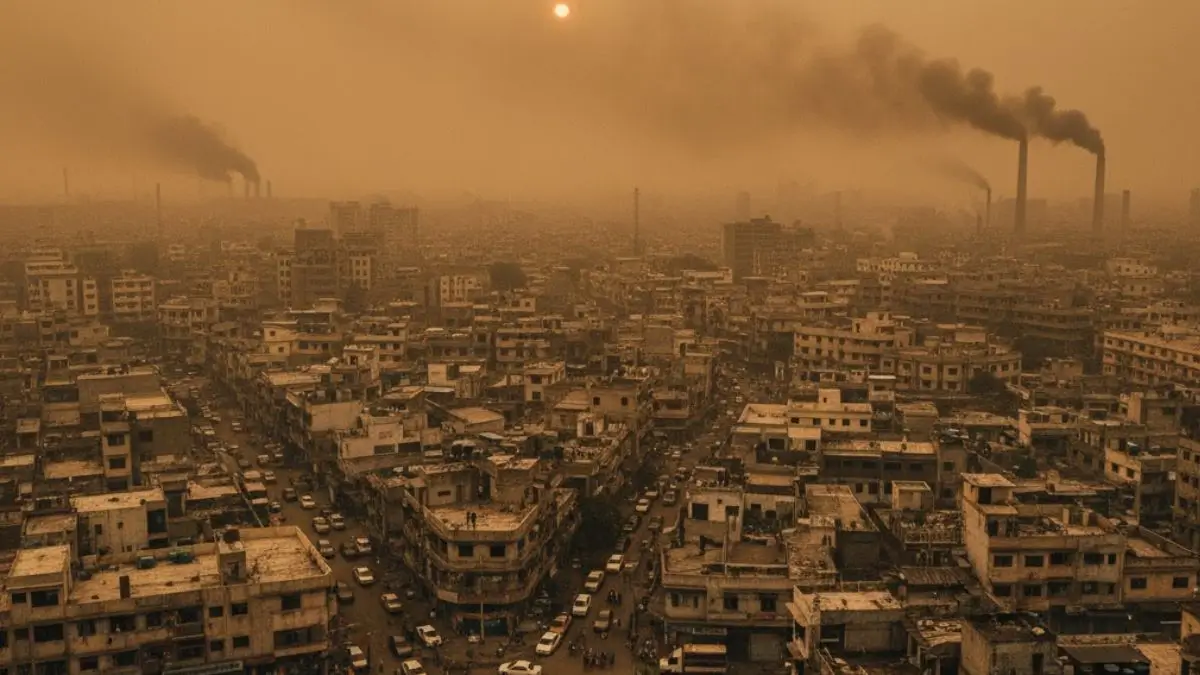
In a worrying development, all top 40 spots in the list of the world’s most polluted cities were occupied by Indian cities as of October 30, 2025, based on the Air Quality Index (AQI) measured at 8:30 AM. While Delhi is typically the face of India’s pollution crisis, it ranked only 13th this time, with several smaller northern cities registering even higher AQI values, crossing dangerously into the severe and hazardous categories.
Top 10 Most Polluted Cities Globally (All Indian)
| Rank | City | State | AQI |
| 1 | Sri Ganganagar | Rajasthan | 830 |
| 2 | Siwani | Haryana | 644 |
| 3 | Abohar | Punjab | 634 |
| 4 | Hisar | Haryana | 477 |
| 5 | Churu | Rajasthan | 456 |
| 6 | Charkhi Dadri | Haryana | 448 |
| 7 | Rohtak | Haryana | 444 |
| 8 | Nangli Bahrampur | Uttar Pradesh | 438 |
| 9 | Bhiwani | Haryana | 437 |
| 10 | Sasroli | Haryana | 433 |
Why Delhi Isn’t in the Top 10 — But It’s Still Alarming
Delhi’s AQI of over 400 still places it in the severe category, indicating dangerously polluted air. However, several lesser-known cities surpassed it, showing how the pollution crisis has spread beyond the capital. This shift also reflects agricultural burning, geographic factors, and local weather conditions that trap pollutants in smaller towns during early winter.
What Is AQI and What Do These Numbers Mean?
| AQI Range | Air Quality Category | Health Impact |
| 0–50 | Good | Minimal impact |
| 51–100 | Satisfactory | Minor discomfort |
| 101–200 | Moderately | Polluted Breathing discomfort in sensitive groups |
| 201–300 | Poor | Breathing discomfort on prolonged exposure |
| 301–400 | Very Poor | Respiratory issues, especially in vulnerable |
| 401–500+ | Severe | Serious risk of respiratory illness |
Causes Behind the High Pollution Levels
Seasonal & Regional Factors
- In northern India especially, as temperatures drop and atmospheric mixing weakens, pollutants emitted near the surface stay trapped.
- This is compounded by dust from construction, unpaved roads, open waste burning and agricultural residue burning.
Emission Sources
- Stubble burning in adjoining states (Punjab, Haryana, UP) often sends smoke into nearby cities.
- Construction dust and road dust contribute significantly, especially in rapidly expanding urban‑regions.
- Vehicle emissions, often from older vehicles and diesel engines, add to the pollutant load.
- Industrial emissions and power‑generation also play a role, though in many of the worst‑AQI spots the key issue is particulate matter (PM₂.₅/PM₁₀) rather than just gases.


 Jan Vishwas Amendment Bill 2026 Passed: ...
 India's First Digital Census 2027 Begins...
 PM Modi Launches Kaynes Semiconductor Pl...