Karthik Muralidharan Appointed ADB Chief Economist: To Succeed Albert Park in July 2027

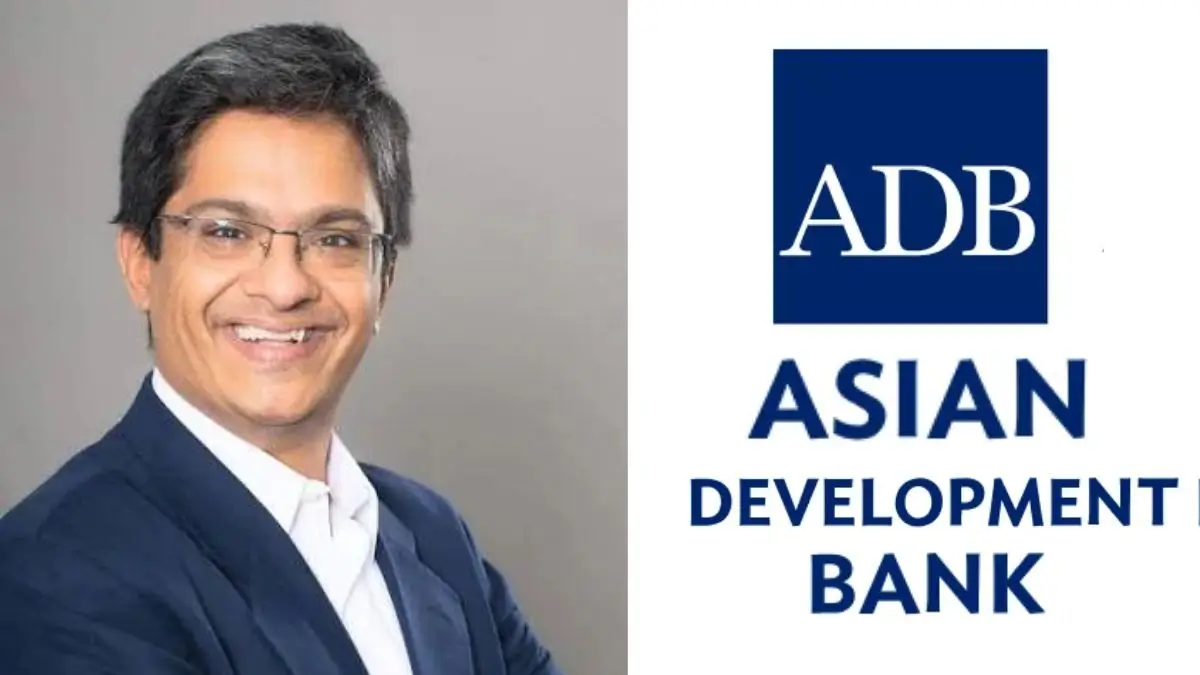
The Asian Development Bank (ADB) appointed Karthik Muralidharan as Chief Economist and Director General of the Economic Research and Development Impact Department. He will take up the position on 1st July 2027. Muralidharan is currently the Tata Chancellor’s Professor of Economics at the University of California, San Diego. As Chief Economist, Muralidharan will provide economic research, analysis and forecasting across economies in Asia and the Pacific.

Who is Karthik Muralidharan?

Karthik Muralidharan is an Indian developmental economist. He is currently the Tata Chancellor’s Professor of Economics at the University of California, San Diego.

His research looks at ways to improve economic development and public services, including,

  • Public expenditure
  • Education and health
  • Social protection
  • Governance and capacity-building
  • Public services

He combines large-scale data analysis with working with governments to improve policy.

Contributions of Muralidharan

Muralidharan is a co-founder and scientific director of the Centre for Effective Governance of Indian States (CEGIS). This organisation works with state governments in India to improve governance, increase capacity within states, make public expenditure more effective and improve public services.

He is also affiliated with the following organisations,

  • National Bureau of Economic Research (NBER) – economic research organisation.
  • Abdul Latif Jameel Poverty Action Lab (J-PAL), MIT – global research centre looking to reduce poverty using evidence-based methods.
  • Global Education Evidence Advisory Panel – provides evidence-based advice on education policies.

In 2024, he published Accelerating India’s Development. This book looks at problems with governance in India and suggests reforms to improve public service provision.

Qualifications of Muralidharan

Qualification and Institution

  • PhD in Economics Harvard University, USA
  • MPhil in Economics University of Cambridge, UK
  • Bachelor of Economics Harvard University, USA

Responsibilities in ADB

As Chief Economist and Director General of Economic Research and Development Impact, Muralidharan will be responsible for,

  • Economic research – leading research into economic and development issues faced by member economies.
  • Policy advice – providing evidence based policy recommendations to governments in Asia and the Pacific.
  • Economic forecasting – leading assessments and forecasts of economic conditions.
  • Leading publication – Leading production of the Asian Development Outlook.

ADB President Masato Kanda said that Muralidharan would bring relevant experience to turn economic research into policy recommendations and investment.

About ADB

The Asian Development Bank is a multilateral development bank set up in 1966. They work with economies in the Asia-Pacific region with development partners to encourage sustainable, inclusive development.

  • Name: Asian Development Bank
  • Abbreviation: ADB
  • Founding Year: 1966
  • Based in: Manila, Philippines
  • President: Masato Kanda
  • New Chief Economist: Karthik Muralidharan
  • Start Date: 1st July 2027
  • Key Economic Publication:Asian Development Outlook

National Book Awards 2026: Hannah Lillith Assadi Wins Fiction Prize for Paradiso 17

Hannah Lillith Assadi, a Palestinian-Jewish writer, has won the National Book Award for Fiction for the year of 2026. Paradiso 17 tells the story of a Palestinian individual who was forced to migrate in 1948 in the Nakba. The winners of other categories were announced, as well as Salman Rushdie, an Indian British author, receiving a special medal for his contribution to literature in America.

Winner in Fiction Category

Hannah Lillith Assadi has won the National Book Award in fiction with her third book, Paradiso 17. She will receive $10,000 in prize money.

Paradiso 17 explores the emotional effects of displacement on a Palestinian man forced to leave his home in the Nakba of 1948.

Sami Abdul-Fattah Al-Assadi, Assadi’s late father, was inspired for this work. He fled the Nakba as a child with his family. He went onto study in Italy before moving to New York.

This novel ‘was praised for its lyrical prose and original spatial and temporal structures. ‘It presents a powerful narrative of devastation and resilience.’

Other Finalists (Fiction)

Assadi won from a shortlist of,

  • Dèy – Edwidge Danticat
  • Pretend You’re Dead and I Carry You – Julián Delgado Lopera
  • Beginning Middle End – Valeria Luiselli
  • Mad Eden – Morgan Thomas

Other Winners of the National Book Awards 2026

A total of five categories were awarded at the 77 th National Book Awards. Writers in each category received $10,000.

Category Winner Author/Translator
Fiction Paradiso 17 Hannah Lillith Assadi
Nonfiction Huna: A Memoir of Revolution, Prison, and Becoming Abdelrahman ElGendy
Poetry Still House in the Desert: An eco-contemplation Brenda Hillman
Translated Literature Centroeuropa Vicente Luis Mora (translated by Rahul Bery)
Young People’s Literature The Fight of Our Lives: AIDS in America David Levithan and Gabriel Duckels

Winner of Nonfiction Category

Abdelrahman ElGendy, an Egyptian author, has won the Nonfiction category for his debut memoir Huna: A Memoir of Revolution, Prison, and Becoming.

The book documents ElGendy’s experiences as a political prisoner in Egypt, including 6 years in prison and physical mistreatment.

As ElGendy was unable to obtain a U.S. visa, he was unable to attend the ceremony. However, his editor, Helen Thomaides, attended and accepted the award on his behalf. She gave a speech on behalf of ElGendy.

Although the National Book Foundation called the decision to refuse visas to ElGendy and another finalist from Syria, Samar Yazbek, unfair, they stated there were no concerns over whether ElGendy should have won the award.

Special Award for Lifetime Contribution

Salman Rushdie, an Indian British author, has received the Medal for Distinguished Contribution to American Letters in 2026.

Rushdie, born in Bombay (Mumbai) in 1947, is internationally known for his novels,

  • Midnight’s Children (1981) – won the Booker Prize.
  • The Satanic Verses (1988).
  • The Moor’s Last Sigh (1995).
  • The Golden House (2017).
  • Victory City (2023).

The award is presented to individuals who have made an extraordinary contribution to American literary heritage.

Other notable mentions,

  • Perri Klass won the Literarian Award for Outstanding Service to the American Literary Community.
  • Host: Kyle MacLachlan (actor and author).
  • Guest musician: Michelle Zauner, author of Crying in H Mart.

Overview of National Book Awards

The National Book Awards are the prestigious literary prizes in the United States. The National Book Foundation, a non-profit organization which promoting the literature and reading, runs them.

The 2026 National Book Awards marked the 77th awards. The event took place on the 18th November 2026 at Cipriani Wall Street in New York City.

Categories,

  • Fiction, Nonfiction, Poetry, Translated Literature and Young People’s Literature.
  • The winner of each category will receive $10,000 in prize money.
  • Books were judged by independent panels of writers, editors, booksellers and literary professionals.
  • Special awards are also given out. These include, the Medal for Distinguished Contribution to American Letters and the Literarian Award.
  • A total of 1,912 books entered for consideration in 2026.

AI Kavach: IIT Kanpur and Bharat1.ai Launch AI Cybersecurity Lab for Financial Sector

AI Kavach is a cybersecurity and assurance laboratory developed in collaboration between IIT Kanpur and Bharat1.ai. It was launched in November 2026 to improve the security of AI systems within finance. This includes banking systems, digital payments, lending, insurance and other financial services. AI Kavach will develop capabilities to address cybersecurity issues and provide training to over 300 students and professionals each year.

What is AI Kavach?

AI Kavach is a lab that tests, secures and improves reliability in AI systems within the BFSI sector.

It is developed in collaboration between IIT Kanpur’s Wadhwani School of AI and Intelligent Systems (WSAIS) and Bharat1.ai (Intellineuro Private Limited).

It aims to identify security issues within AI systems and develop tools to protect from cyber-attacks and unintended or malicious activity within AI agents.

This is the first AI cybersecurity and assurance lab focused on the financial sector in India.

Focus Areas of AI Kavach

There are four main focus areas.

Focus Area Description
AI Red Team Testing and Security Testing AI systems in finance to identify vulnerabilities
Secure AI agents Develop sandboxing tools to manage autonomous AI agents.
AI Assurance Research on reliable, verifiable, traceable AI systems and responsible vulnerability disclosure.
Talent Development Provide fellowships, challenges and training programs to students and professionals.

By completing these focus areas, financial institutions can understand risk within AI systems and improve the safety of AI services.

IIT Kanpur and Bharat1.ai Collaboration

IIT Kanpur will offer academic leadership, expert staff, research capability and lab facilities through its Wadhwani School of AI and Intelligent Systems.

Bharat1.ai will offer AI infrastructure, secure testing environments, project management and support in translating research into cybersecurity solutions.

In addition to the two collaborating institutes, the lab will be working with banks, FinTechs, AI research institutes, regulatory bodies and cybersecurity experts to create universal security standards and best practice.

Support from IndiaAI and Skills Development

AI Kavach will be using high-performance computing resources provided by the IndiaAI Mission to conduct AI security research and testing.

A key goal of AI Kavach is to develop skills within India to specialize in AI cybersecurity. Over 300 students and professionals can be trained at AI Kavach by,

  • Offering targeted research fellowships.
  • Offering cybersecurity challenges.
  • Offering training within industry.
  • Working in research and industry partnerships.

This will develop expertise in securing AI applications in key financial sectors.

Why is AI Cybersecurity Important Within Finance?

Within banking, insurance, and FinTech, AI is commonly used to detect fraud, assess creditworthiness, deliver customer service, verify identities and process transactions.

However, as autonomous AI agents are set to be increasingly used in to the financial systems, there are increased cybersecurity concerns. These systems may have access to sensitive financial data, interact with digital systems, and perform tasks with minimal human involvement.

To overcome these issues, adversarial testing is conducted to identify vulnerabilities; AI agents are run in sandboxes to limit unauthorized access, behavior can be monitored to identify abnormal and potentially dangerous activity, and systems can be made traceable and verifiable to better understand decision-making and identify security issues.

By doing this, confidence in AI-driven financial services can be improved, and emerging technologies can be safely adopted.

Rani Lakshmibai Birth Anniversary 2026: Life, Revolt of 1857 and Legacy

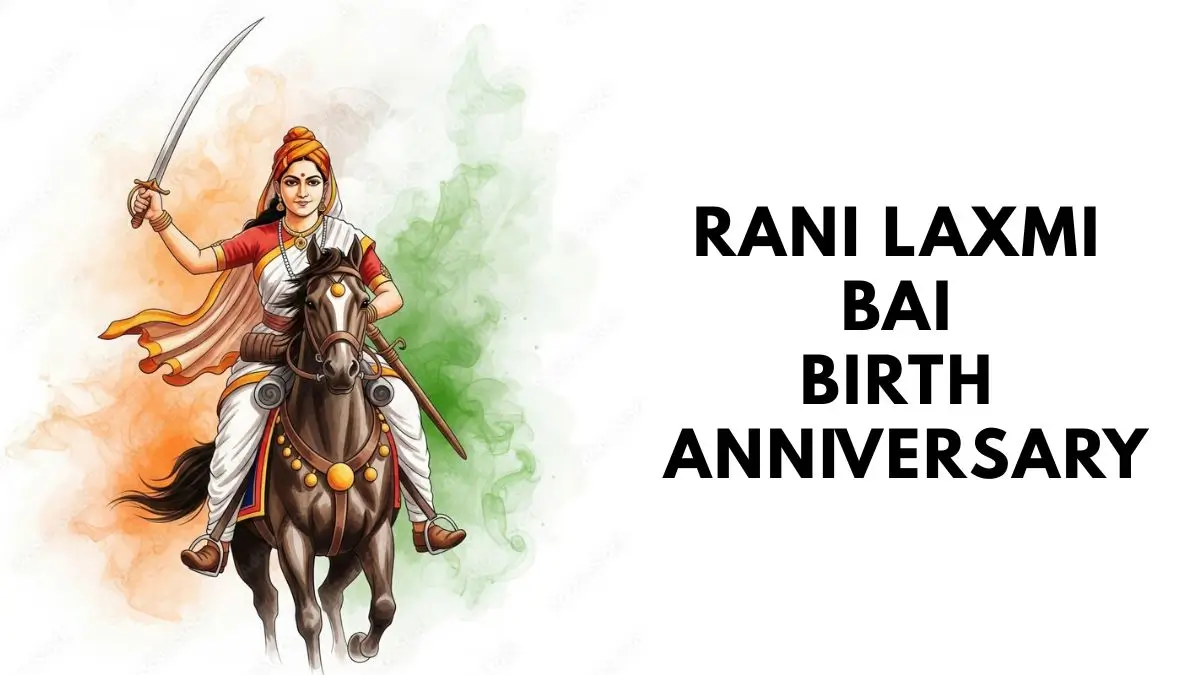
Rani of Jhansi was an important figure in the Revolt of 1857. Rani Lakshmibai was born as Manikarnika Tambe in Varanasi. She married Maharaja Gangadhar Rao and became the queen of Jhansi. Due to her opposition to the annexation of Jhansi by the British under the Doctrine of Lapse and her role in the Revolt of 1857, she is greatly revered. Rani Lakshmibai’s birthday is on 19th November.

Early life of Laxmi Bai

Manikarnika Tambe, who later became famed as Rani Lakshmibai, was born in Varanasi on 19th November, 1828. Her father was Moropant Tambe and her mother was Bhagirathi Bai. As a child, she was referred to as Manu.

At Bithoor, she lived under the household of Peshwa Baji Rao II. As a result of living in this environment, she had an exceptional and unique education.

During her childhood,

  • She knew how to ride horses and wield swords.
  • She knew how to shoot and had other combat skills.
  • She underwent physical training with other boys in the Peshwa’s house.
  • As well as this, she befriended key figures in the 1857 uprising: Nana Sahib and Tatya Tope.

Note: The exact year of her birth is sometimes disputed in some sources. However it is widely accepted that she was born in 1828.

Marriage and becoming Queen of Jhansi

In 1842, Manikarnika married Maharaja Gangadhar Rao Newalkar of Jhansi. As a result, she became known as Lakshmibai.

Lakshmibai gave birth to a son, however he passed away at a young age. Before he passed away in 1853, Maharaja Gangadhar Rao and Lakshmibai adopted another boy from the royal family. This boy was named Damodar Rao.

This adoption was so that the throne of Jhansi could be passed to Damodar Rao. However, this was not recognised by the British East India Company.

Annexation of Jhansi with the Doctrine of Lapse

Jhansi was annexed by the British in 1854 with the Doctrine of Lapse. This policy was introduced and enacted by Governor General, Lord Dalhousie.

If there was no natural male heir to a prince’s throne, the East India Company had the right to annex their land. In these cases, adopted children would not be considered as rightful heirs to the throne.

After the death of the Maharaja Gangadhar Rao, Lakshmibai protested against the British decision. She requested that Damodar Rao be considered as the rightful heir, however this was declined. As a result, Jhansi was placed under British control.

This caused significant conflict between Rani Lakshmibai and the British.

Role in the 1857 Revolt

The Revolt of 1857 began in Meerut. Rani Lakshmibai was an important leader in the revolt from Bundelkhand.

In 1857, when the revolt occurred in Jhansi, she became the administrator of Jhansi. She organised troops to protect the area and opposed British attempts to take control of the area back.

Role in Revolt

Siege of Jhansi

  • In March 1858, General Hugh Rose led an attack on Jhansi. For around 2 weeks, Rani Lakshmibai successfully led the defence within the fort.
  • However, the army sent to help her by Tatya Tope was defeated at the Battle of Betwa. As pressure increased in Jhansi, Rani Lakshmibai and a small number of soldiers fled. They arrived at Kalpi.
  • She later joined forces with Tatya Tope and Rao Sahib.

Battle of Gwalior

  • The rebels gained control of Gwalior and the fort in 1858. However, the British launched an offensive led by General Hugh Rose.
  • Rani Lakshmibai fought against the British near Gwalior, at Kotah-ki-Serai. During this battle, she died in June 1858.
  • There are differing accounts as to the exact date of her death. The Government of India’s Dictionary of Martyrs lists her death date as 17 th June. However, 18 th June is widely acknowledged as her death anniversary.

Significance

Rani Lakshmibai is one of the most celebrated figures in Indian history due to her courage, leadership and determination in resisting British colonial rule.

She appears in many forms of media and has left a lasting impact on the freedom movement.

Rani of Jhansi Regiment

In 1943, Subhas Chandra Bose created the Rani of Jhansi Regiment as the women’s army unit of the Indian National Army. It was named after Rani Lakshmibai.

This army was led by Captain Lakshmi Swaminathan (popularly known as Captain Lakshmi Sahgal). The regiment inspired women of Indian origin in South-east Asia to get involved in the struggle to gain independence for India.

Literature about Laxmi Bai

The renowned poet Subhadra Kumari Chauhan wrote a famous poem about Rani Lakshmibai.

The final lines in the poem, “Khoob ladi mardani, woh toh Jhansi wali Rani thi”, are strongly associated with how brave the queen was.

World Toilet Day 2026: Theme, History, Significance and India’s Sanitation Initiatives

World Toilet Day 2026 takes place on the 19th November. It aims to highlight how good sanitation is important for people. The 2026 theme focuses on linking good sanitation with gender equality. Issues within sanitation can cause problems for women and girls. By improving sanitation, we can better protect people’s health, dignity, safety and equal opportunities.

World Toilet Day 2026

World Toilet Day is celebrated annually. It aims to encourage people in governments, organisations and communities to improve sanitation so that everyone can have safe sanitation. It also raises awareness of the negative effects poor sanitation can have on people’s health, social lives and the environment.

This day aids the global goals to ensure that everyone can have safe sanitation.

  • Name: World Toilet Day
  • Date: 19th November 2026
  • Theme: Safe toilets. Equal futures.
  • First Celebrated: 2001
  • Officially Recognised by United Nations: 2013
  • Established by: World Toilet Organisation
  • Founded by: Jack Sim
  • Organised by: UN-Water

World Toilet Day 2026 Theme

The theme of World Toilet Day 2026 is: ‘Safe toilets. ‘Equal futures.’

This theme focuses on how providing safe and accessible toilets can help achieve gender equality. Poor sanitation can cause health issues, vulnerability to harassment, insecurity and discrimination in women and girls.

Improving sanitation facilities for women and girls should include,

  • Safe, private and accessible toilets
  • Access to clean water, soap and menstrual facilities
  • Better sanitation in education, workplaces and out in public
  • Removing inequality within education and employment for women and girls
  • Inclusive facilities for people with disabilities and other vulnerable people.

Having safe sanitation is vital for public health and allows people to participate equally in society.

History of World Toilet Day

In 2001, World Toilet Day was created by the World Toilet Organisation (WTO). This organisation was started by Jack Sim, a philanthropist from Singapore.

Key events in the history of World Toilet Day are,

Year Event
2001 The WTO was created by Jack Sim on the 19th November. World Toilet Day was also introduced.
2007 Supported by SuSanA (Sustainable Sanitation Alliance)
2010 The United Nations officially recognised the right to clean and safe drinking water and sanitation.
2013 The resolution ‘Sanitation for All’ was passed by the General Assembly of the UN. World Toilet Day was officially recognised.
2013 onwards World Toilet Day is coordinated by UN-Water each year with global campaigns.

Following an initiative by the Government of Singapore and World Toilet Organisation, the United Nations officially recognised World Toilet Day in 2013. It was supported by 122 countries.

World Toilet Day 2026 and Sustainable Development Goals

World Toilet Day links sanitation to many of the Sustainable Development Goals set by the United Nations.

SDG Goal Link to sanitation
SDG-6 Clean Water and Sanitation To improve equal, safe sanitation and hygienic practices for everyone.
SDG-3 Good Health and Wellbeing Reduces risk of illness due to poor sanitation and poor hygiene.
SDG-5 Gender Equality Improves safety, dignity, menstrual hygiene, and equal opportunity for women.
SDG-10 Reduced inequalities Improves inclusive sanitation for disadvantaged/vulnerable groups.

Target 6.2 encourages adequate and equitable sanitation and hygiene for all people. It places importance on meeting the needs of women and girls and vulnerable people.

World Toilet Day 2026: Global Sanitation Issues

Though progress has been made, billions of people globally do not have access to safely managed sanitation.

According to UN-Water, using data from WHO and UNICEF in 2025, we know that,

  • 3.4 billion people do not have access to safe toilets.
  • 354 million people practice open defecation.
  • 1.7 billion people do not have basic hygiene within their homes, including hand washing with soap and water.
  • Almost one in five adolescent girls globally do not have access to basic sanitation.

This problem has a greater effect on women and girls, meaning they face difficulties in gaining education, medical care, employment and access to public spaces.

World Toilet Day in India: India’s Major Initiatives

There have been many initiatives in India to improve sanitation,

  • Swachh Bharat Mission
  • Swachh Bharat Mission-Urban 2.0
  • Aspirational Toilets
  • Technology and partnerships
  • Changing behaviour and promoting good hygiene.

Significance of World Toilet Day 2026

World Toilet Day raises awareness of how important sanitation is in society. It is essential to support public health, gender equality and sustainable development.

1. Gender Equality: Providing private and safe sanitation facilities in toilets reduces the risk of women and girls being vulnerable to harassment, as well as feeling insecure/discriminated against. Providing good menstrual hygiene facilities means that women can have equal opportunities in education and employment.

2. Public Health: Providing good sanitation reduces exposure to human waste and pathogens. Therefore, reducing the likelihood of illness.

3. Dignity: Providing clean and working sanitation facilities means people can have their privacy respected, maintain dignity, and feel safe. This is especially important for those without adequate sanitation.

4. Education and Employment: Having accessible toilets in schools/employment settings means girls can more easily attend school and women can have equal opportunities in employment.

5. Inclusive Facilities: Toilets should be accessible to children, elderly people, people with disabilities and people of different genders.

6. Sustainable Development: Improving sanitation facilities helps the environment due to efficient waste water disposal. It improves waste management meaning healthier communities.

International Men’s Day 2026: Date, History, Theme and Significance

International Men’s Day takes place every year on 19th of the November. 2026’s theme is ‘The Future Is Everyone’. This means we are encouraging inclusivity, equity, and shared responsibility. However, this day also helps raise awareness of key issues men and boys face. These include physical and mental health, overall wellbeing, and positive role models.

International Men’s Day 2026 Date & Theme

International Men’s Day will take place on Thursday 19th November 2026. It is a great opportunity to appreciate what men do within society, but also to have discussions around men’s health and wellbeing.

This year’s theme is ‘The Future Is Everyone’. This means we need everyone to come together in order to create inclusive and equitable futures.

The idea of ‘The Future Is Everyone’ in relation to International Men’s Day was created by Lisa Britton (USA) around 2020. It is encouraging true inclusivity and appreciation of men and boys.

Background of the Men’s Day

International Men’s Day was created by Dr Jerome Teelucksingh, a history teacher at the University of the West Indies in Trinidad and Tobago, in 1999.

He chose 19th November to celebrate his father’s birthday, and it also marks a significant unifying football event in Trinidad and Tobago.

Since its creation, International Men’s Day has now taken place in over 80 countries. Within this celebration, we appreciate positive male role models, improve men’s well-being, and support positive gender relationships.

International Men’s Day began to gain popularity in India in 2007. Uma Challa has played a key role in promoting this celebration within India. She is affiliated with the Save Indian Family Foundation, which works on issues regarding men and within families.

Importance of International Men’s Day

International Men’s Day allows US to appreciate what men do. There are many aims to International Men’s Day, including,

  • Improving men’s health: Increasing awareness around physical health, preventative measures, and having access to healthcare.
  • Improving men’s mental health: Increasing discussion on stress, depression, mental health, and preventing suicide.
  • Positive role models: Appreciating men for creating positive changes within families, communities, and society as a whole.
  • Improved gender relationships: Improving equality, cooperation and respect in relationships between men and women.
  • Social Inclusivity: Identifying issues men and boys may face within education, family and society.

This day is not meant to be competitive with International Women’s Day. Rather, it complements wider conversations surrounding equality and good wellbeing.

International Men’s Day in India

International Men’s Day has been celebrated in India since 2007, with Uma Challa helping to make it popular. She is affiliated with the Save Indian Family Foundation in Bengaluru.

Within India, International Men’s Day has focused on raising awareness around men’s experiences, family issues, and improving men’s well-being.

6 Aims Of International Men’s Day

There are 6 main aims of International Men’s Day,

  1. Encourage positive male role models.
  2. Appreciate what men and boys do in society.
  3. Improve men’s health and wellbeing.
  4. Tackle discrimination and inequality facing men and boys.
  5. Improve gender relationships and equality.
  6. Create a safer and better society for everyone.

International Men’s Day and International Women’s Day

International Men’s Day does not seek to oppose International Women’s Day (March 8th ). Both days allow people to have discussions on gender issues, to encourage wellbeing and equality and respect between genders.

Whilst International Women’s Day aims to recognize the achievements and issues faced by women, International Men’s Day seeks to recognize experiences of men and positive contributions men make. It also seeks to identify issues men and boys face.

Indira Gandhi Birth Anniversary 2026: Early Life, Education, Political Career and Major Contributions

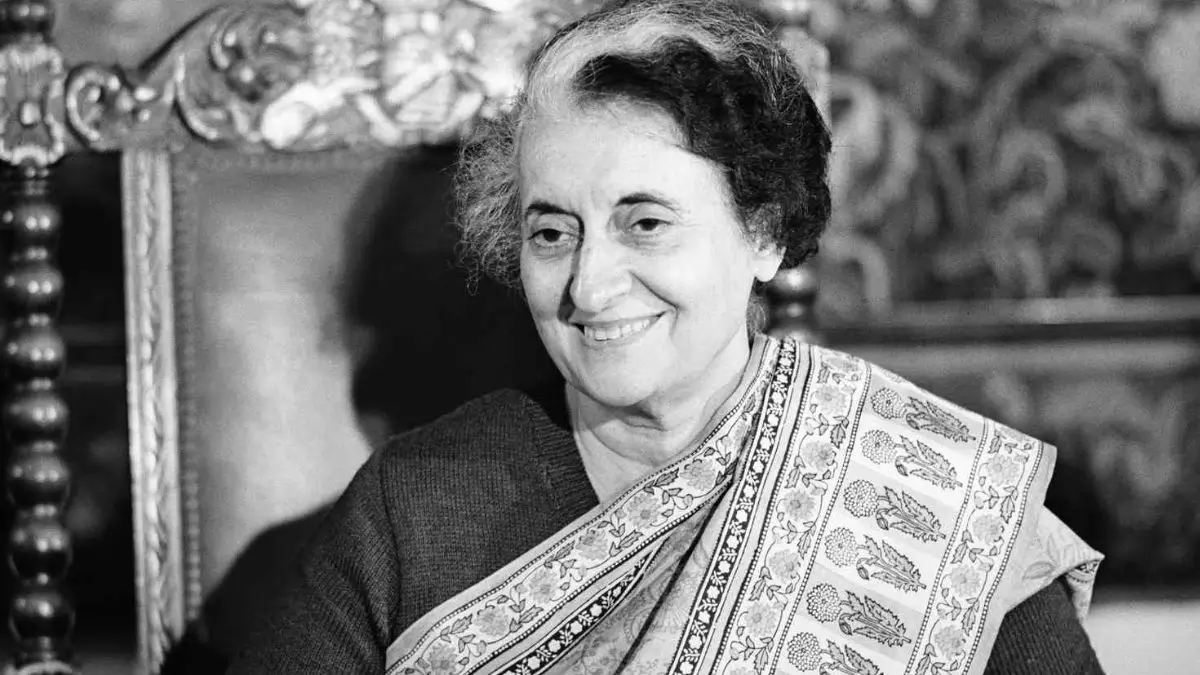
Indira Priyadarshini Gandhi was born on 19th November 1917. She held the position of Prime Minister of India between 1966-1977 and again in 1980 until her assassination in 1984. Some key developments have occurred during her time in office. Many commercial banks were nationalized, the Green Revolution was implemented, the Indo-Pak War took place in 1971, and a controversial emergency was imposed between 1975 and 1977. Indira Gandhi’s political career is very significant in modern history.

Indira Gandhi: Early Life & Background

Indira Priyadarshini Gandhi was born on 19th November 1917 in Allahabad (now Prayagraj, Uttar Pradesh) within the United Provinces of British India. She was the only child of Jawaharlal Nehru and Kamala Nehru.

As her father was a key figure in the Indian National Congress, Indira Gandhi was heavily involved in the Indian Independence Movement.

Key points about her background and early life,

  • Father – Jawaharlal Nehru (first Prime Minister of India).
  • Mother – Kamala Nehru (involved in the independence movement).
  • Spouse – Feroze Gandhi (married in 1942).
  • Children – Rajiv Gandhi and Sanjay Gandhi.
  • Grandfather – Motilal Nehru (prominent lawyer and Congress leader).

At a young age, Indira Gandhi created a youth group called the Bal Charkha Sangh. In 1930, she also created the Vanar Sena. The youth groups aided the Indian National Congress in their independence movement through passing messages and assisting with organization.

Education of Indira Gandhi

Indira Gandhi attended many schools throughout India and abroad. However, she missed some schooling due to her parents’ political activity and illness in her mother.

Schools attended include,

  • Pupil’s Own School – Pune & Bombay.
  • Visva-Bharati University – Santiniketan (created by Rabindranath Tagore).
  • Badminton School – Bristol, UK.
  • Somerville College – University of Oxford, UK.

While at Santiniketan, Indira was influenced by the ideas of Rabindranath Tagore. Before continuing higher education at Oxford, Indira attended schools in Switzerland.

Political Career and Key Events in Life

Political Involvement

  • Since Independence, Indira Gandhi became heavily involved in the Indian National Congress. In 1955, she became a member of the Congress Working Committee.
  • In 1959, she became the President of the Indian National Congress, a position she held until 1960.
  • After the death of Jawaharlal Nehru in 1964, Indira Gandhi joined the Union Cabinet as Minister for Information & Broadcasting within the Government of Lal Bahadur Shastri.

First Female Prime Minister

  • After the sudden death of Lal Bahadur Shastri in January 1966, Indira Gandhi took the role of leader of the Parliamentary Party within the Congress Party. Therefore, she became the first female Prime Minister of India on 24 th January 1966.
  • Indira Gandhi was Prime Minister until 1977. In January 1980, she was re-elected as Prime Minister. However, she was assassinated on 31 st October 1984.

Key Political Decisions/Events

Nationalization of Commercial Banks (1969)

  • In July 1969, Indira Gandhi’s Government nationalised 14 large commercial banks. This allowed more banking services to be available, encouraging credit for agriculture and small-scale industry and enabling overall economic growth.

Green Revolution

  • Within her government, the Green Revolution was encouraged. This involved high-yield seed varieties, irrigation, fertilizers, and modern farming techniques. As a result, food grain production increased significantly; therefore, less food had to be imported.

Indo-Pak War/Formation of Bangladesh (1971)

  • During 1971, during the crisis in East Pakistan, Indira Gandhi aided the millions of refugees who crossed into India. In December 1971, the India-Pakistan War took place.
  • The result of this war in the Eastern Theatre was a military defeat for Pakistan. It resulted in Bangladesh becoming independent.

Declaration of Emergency (1975-1977)

  • On 25th June 1975, an emergency was declared in India (under Article 352 of the Indian Constitution) due to ‘internal disturbances’. Many civil liberties were removed during this period. The media was censored, and opposition political leaders were arrested.

The Emergency finished in March 1977, following elections. Indira Gandhi and the Congress Party lost the election. Morarji Desai became Prime Minister.

Operation Blue Star (1984)

  • In June 1984, the Indian Army performed Operation Blue Star within the Golden Temple complex in Amritsar, Punjab. This operation, authorized by Indira Gandhi’s Government, removed armed militants from within the complex.
  • However, much destruction was caused within the complex. Many people were killed, and as a result there was much anti-feeling within certain sections of the Sikh population.

Key Events in Indira Gandhi’s Life

Year Key event
1917 Born on 19th November.
1930 Vanar Sena formed (Independence movement).
1942 Married to Feroze Gandhi. Imprisoned during the Quit India Movement.
1959 Elected President of the Indian National Congress.
1964 Appointed as Minister for Information & Broadcasting.
1966 Became first female Prime Minister of India.
1969 14 Large commercial banks nationalized.
1971 Won war against Pakistan. Resulted in the creation of Bangladesh.
1971 Awarded the Bharat Ratna.
1975 National Emergency declared on 25 th June.
1977 Lose general election. End of Emergency.
1980 Re-elected as Prime Minister.
1984 Operation Blue Star carried out in June.
1984 Assassinated on 31 st October in New Delhi.

Key Achievements

  • During Indira Gandhi’s political career, she made many changes within India.
  • First Female Prime Minister.
  • Led India during the 1971 War, resulting in the creation of Bangladesh.
  • Supported the Green Revolution in agriculture.
  • Nationalization of 14 large commercial banks in 1969.
  • Nuclear Development. On 18 th May 1974, India’s first nuclear test (Smiling Buddha) was performed in Pokhran, Rajasthan.
  • Awarded Bharat Ratna in 1971.

Contributions of Indira

Contributions to Politics

  • Indira Gandhi made very significant contributions to politics within India. As Prime Minister, she provided greater strength to the Prime Minister’s office, and central decision-making.
  • However, the period of Emergency between 1975-1977 is very contentious. Civil liberties, press freedom and democratic freedom were limited.

Contributions to Agriculture and Economy

  • Her government encouraged modernization within agriculture. This was done by using high-yielding crops, infrastructure for irrigation and fertilizers.
  • In addition, in 1969, commercial banks were nationalized. This allowed more people (apart from large businesses and industries) to have access to banking and credit services.

Contributions to Foreign Policy

  • Indira Gandhi focussed on security, independence and placing India in a good international position. A key diplomatic achievement was signing the Indo-Soviet Treaty of Peace, Friendship and Cooperation on 9 th August 1971.

Awards Received By I. Gandhi

Award/Honour Year
Bharat Ratna 1971
Mexican Academy award for Liberation of Bangladesh. 1972
FAO Second Annual Medal. 1973
Sahitya Vachaspati. 1976

Indira Gandhi was awarded the Bharat Ratna in 1971 for her contributions to public service.

Final years and Death

  • In January 1980, Indira Gandhi became Prime Minister again as the Congress Party won the general election. However, during her last years in office, there were political and security issues within Punjab.
  • On 31st October 1984, Indira Gandhi was assassinated by two of her bodyguards at her home in New Delhi.
  • This occurred following Operation Blue Star in earlier in the year. Following her death, her son Rajiv Gandhi became Prime Minister. There was also widespread anti-Sikh violence in many parts of India.

Significance

  • Indira Gandhi has been one of the most influential (and controversial) politicians in recent Indian history.
  • Throughout her political career, she made many key developments within agriculture, banking, security, and foreign policy. However, the time of the Emergency is a significant point to consider when considering issues regarding individual rights, democratic responsibility, and the extent of executive authority.
  • Her political career is very significant to understanding the development of a parliamentary democracy in India post-independence.

Varuvaaiy Becomes the First Tamil Song Nominated for a Grammy Award

Varuvaaiy, a modern adaptation of a hymn written by Subramania Bharati, has become the first Tamil song to be nominated for a Grammy. Written by Devan Ekambaram, an Indian-American musician, and sung by Subhiksha Rangarajan (known as Susha), Varuvaaiy has been nominated in the ‘Best Global Music Performance’ category for the 69 edition of Grammy Awards. This will take place in Los Angeles in February 2027.

About Varuvaaiy

Varuvaaiy is a modern adaptation of an old hymn to Krishna. It fuses together elements of Carnatic music, neo-jazz and modern instruments.

  • Writer: Devan Ekambaram.
  • Singer(s): Subhiksha Rangarajan (Susha).
  • Raga: Desh.
  • Adapted from: Hymn by Subramania Bharati.
  • Category: Best Global Music Performance.
  • Year: 69th Grammy Awards (2027).
  • Significance: This nomination makes Varuvaaiy significant in getting recognition for Tamil music internationally.

Information About Artists of Varuvaaiy Song

1. Devan Ekambaram

  • Devan Ekambaram is an Indian-American musician and singer. He completed a degree in Engineering at the University of Illinois.
  • During a break in college in 1995, he went to India in order to gain opportunities within the music industry. During this time, he signed a deal with a record label in Chennai.
  • Started as a backing vocalist in 1999 in the film Kadhalar Dhinam, working with A.R. Rahman.
  • Has worked in over 500 films.
  • Began composing music in 2010.
  • Composed Varuvaaiy.

2. Subhiksha Rangarajan (Susha)

  • Subhiksha Rangarajan (Susha) specialises in both Carnatic music and Jazz.
  • Completed a degree in Jazz at the University of Toronto.
  • One of the top 24 musicians in A.R. Rahman and Clinton Cerejo’s NEXA Music project in 2019.
  • Released debut album Love Language in August 2026.
  • Combines traditional Indian melodies with improvised jazz elements, and modern music.

Connection to Subramania Bharati

Subramania Bharati (1882-1921) was a notable figure in the Indian independence movement. He was a Tamil writer, poet and social reformer.

This hymn calls upon Krishna to enter the mind, and defeat the demons within. These demons can also be seen to represent the oppression caused by colonialism.

Although it is unclear exactly when this hymn was composed, it is believed to have been written during the 10 years that Bharati spent in exile in Pondicherry. At the time it was under French rule, and he had fled there to avoid being arrested by the British authorities.

Other Nominations for 2027 Grammy Awards

Alongside Varuvaaiy, many international artists and collaborations have been nominated in the Best Global Music Performance category.

Nominated Work Artists
Varuvaaiy Devan Ekambaram and Subhiksha Rangarajan
Bando (Orchestral) Angélique Kidjo with Pharrell Williams and Quavo
Porcelana ROSALÍA and Dougie F
Dai Dai Shakira and Burna Boy
Una Flor En Cada Estrella KerreKe, Mireya Ramos and Alex E. Chávez

The 69th Grammy Awards will take place on 7 th February 2027 in the Crypto.com Arena in Los Angeles, USA.

Other connections to India in 2027 Grammys

Another connection to India in the 2027 Grammy Awards is the album The Mountain by Gorillaz. This album has been nominated in the ‘Best Alternative Music Album’ category.

It contains contributions from multiple Indian artists,

  • Anoushka Shankar
  • Ajay Prasanna
  • Asha Bhosle
  • Amaan Ali Khan
  • Ayaan Ali Khan

The album has been nominated due to contributions from Gorillaz.

China’s LineShine Supercomputer Retains World No. 1 Ranking in November 2026

China has produced the fastest supercomputer in the world in the month of November 2026 rankings. The LineShine has been placed at first in the TOP500 and High-Performance Conjugate Gradient (HPCG) rankings. The rankings were announced on 16th of November 2026 at the SC26 computing conference in Chicago, United States. The system achieved 2.198 exaflops on the High Performance Linpack benchmark, beating the American supercomputer El Capitan.

What is the LineShine Supercomputer?

The supercomputer is located within the National Supercomputing Centre in Shenzhen (NSCS) in the Guangdong Province. It was developed by the Shenzhen Cloud Computing Center.

It contains the following technologies,

  • CPU: LX2 (304 cores)
  • Network: Proprietary high speed interconnect known as LingQi.
  • OS: Kylin OS.
  • Architecture: CPU based with matrix acceleration.

Key to this supercomputer is that it is able to provide over 2 exaflops of sustained double-precision performance from a purely CPU based architecture. Therefore, no high-end GPU accelerators were used in the system.

November 2026 Top 500

This is the 68th edition of the Top 500.

LineShine took the first position in the ranking with 2.198 exaflops on the HPL benchmark. In second place came the El Capitan supercomputer in the USA, achieving 1.809 exaflops.

Top 5 Supercomputers (Nov 2026)

Position Name Country Speed (HPL)
1 LineShine China 2.198 Exaflops
2 El Capitan USA 1.809 Exaflops
3 Frontier USA 1.353 Exaflops
4 Aurora USA 1.012 Exaflops
5 JUPITER Booster Germany 1.000 Exaflops

Compared to the June 2026 Top 500, the Top 10 has not changed. However, the LineShine speed was approximately 21.5% faster than El Capitan.

High Performance Conjugate Gradient (HPCG) Rankings

In addition to the Top 500 rankings, the LineShine took first place in the HPCG rankings.

Position Name Speed (HPCG)
1 LineShine 22.00 Petaflops
2 El Capitan 17.41 Petaflops
3 Fugaku 16.00 Petaflops
4 Frontier 14.05 Petaflops

This indicates that the LineShine provides high performance in a wide variety of high performance computing tasks.

Understanding Top 500, HPL and HPCG

What is the Top 500?

  • The Top 500 is an international list of the 500 fastest computers in the world. There are two editions per year, typically in June and November.
  • The list is primarily measured using the High Performance Linpack benchmark, to measure how fast a supercomputer can solve large systems of linear equations.

What is High Performance Linpack (HPL)?

  • The HPL benchmark shows the sustained performance of a supercomputer when solving large scale linear algebra problems.
  • The result is given in FLOPS (Floating Point Operations Per Second). This shows how many mathematical operations a computer can perform per second.

What is High-Performance Conjugate Gradient (HPCG)?

  • The HPCG benchmark measures a supercomputer’s performance during computational processes that involve sparse linear systems and interprocessor communications.
  • In comparison to the HPL benchmark, HPCG is intended to be more representative of real-world workloads encountered in scientific computing.

Uses of the LineShine Supercomputer

The LineShine is capable of supporting a wide range of large-scale scientific and computational applications. These include,

  • Weather prediction and climatology
  • Material science and atomic simulations
  • Drug discovery and scientific research
  • Engineering applications
  • Artificial intelligence and scientific computing

It has supported 22 large-scale applications, each requiring over 10 million processor cores, and has been tailored to support over 220 specific pieces of software. The supercomputer has been used to carry out research into new materials for solid state batteries, as well as large scale electronic structure simulations.

Significance

The LineShine supercomputer was first listed as the fastest supercomputer in the world in the June 2026 Top 500 rankings, displacing the El Capitan supercomputer in the USA.

This marks the first time in 9 years that a Chinese supercomputer has taken the number one spot. The last time a supercomputer from China reached the top of this list was with the Sunway TaihuLight in 2017.

Finally, the LineShine is significant in that it is the first supercomputer to provide over 2 exaflops of sustained double precision performance via a CPU-only architecture (according to the Top 500 organization).

India Revises Maritime Flag Rules After 65 Years: Red and Blue Ensign Explained

The national flag requirements have been updated for Indian vessels. This notice (dated 9 th November 2026) replaces a previous notice (dated 9 th February 1961). Under Section 37(1) of the Merchant Shipping Act, 2025 merchant vessels, government owned vessels and merchant vessels used solely by the Ministry of Defence will have different national colours: Red Ensign and Blue Ensign.

Revisions to Maritime Flag Requirements

This notice sets out what national flags must be flown depending on the type of vessel. It also sets out the requirements for the official insignia to be placed on the Blue Ensign.

This notice replaces S.O. 380 (9 th February 1961); however actions undertaken under the old notice are still valid.

The following vessel types are included,

  • Vessels registered under the Merchant Shipping Act, 2025.
  • Government owned vessels, excluding Indian Navy / Indian Coast Guard.

Indian merchant vessels which are given financial assistance by the Ministry of Defence, and used solely by the Ministry of Defence.

Changes to the Flag Requirements

1. Indian Merchant Vessels – Red Ensign

All Indian vessels registered under the Merchant Shipping Act, 2025 must have to fly the Red Ensign.

Key features,

Red.

  • Indian National Flag located in the top canton (closest edge to the flag pole).
  • 1.5 times longer than the width of the flag.
  • The Indian National Flag is the same as defined in the Flag Code of India, 2002.

2. Government Owned Vessels – Blue Ensign

All government owned vessels, regardless of registration, must fly the Blue Ensign.

They must also display an official insignia for the government department/authority/organisation.

Key points

  • Indian Navy and Indian Coast Guard vessels are not included in this category.
  • If a new insignia is to be applied for, prior approval must be obtained from the Central Government.
  • Applications should be sent to the Director General of Maritime Administration.

If an organisation currently has an insignia approved in previous years, then this insignia can be used.

3. Merchant Vessels used solely by the Defence Ministry

  • A new category of vessel has been included for Indian merchant vessels which are given financial assistance by the Ministry of Defence, and which are used solely for the Ministry of defence.
  • These vessels must fly the Blue Ensign.
  • Insignias must be authorised by a warrant issued by the Chief of the Naval Staff. Applications for insignia authorisation must be made directly to the Naval Chief.

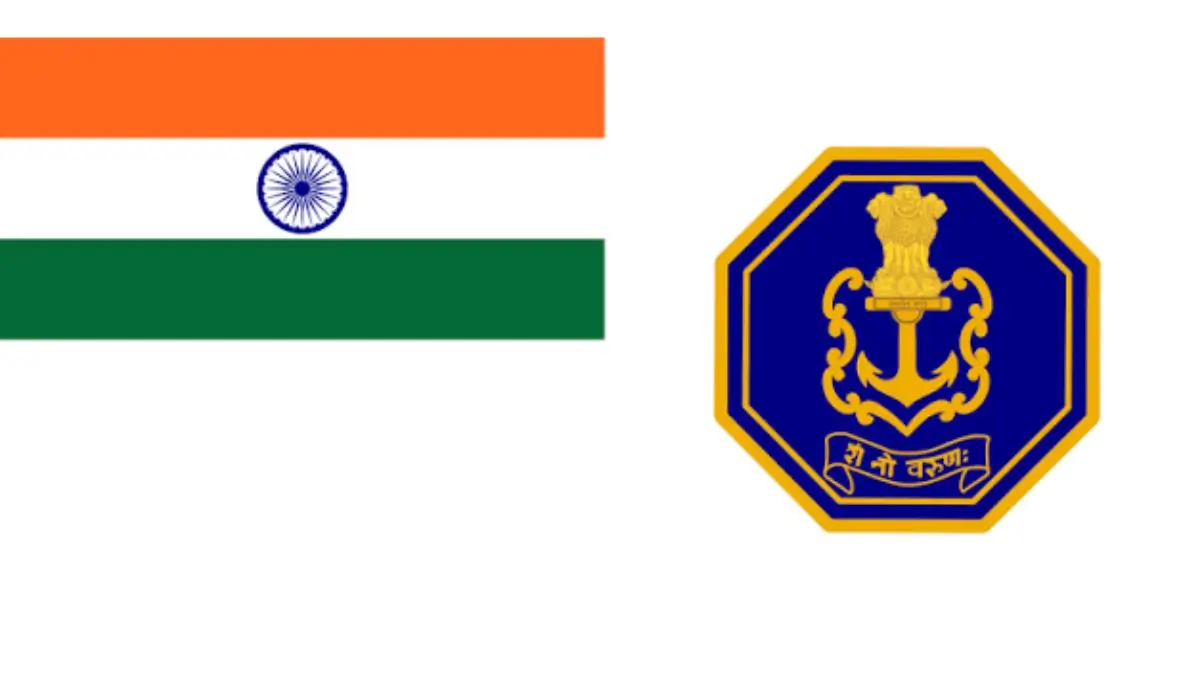
Details of the Blue Ensign

The following details specify the design of the Blue Ensign.

Feature Detail
Background Royal Blue
National Flag Indian National Flag in top canton.
Height 1.5 times the width.
Insignia Light gold.
Location of Insignia Centre of the fly.
Size of insignia Must fit inside a circle with diameter 13/30 of the width of the flag.

The fly half of the flag is the furthest away from the pole. Insignias are placed in the fly half to indicate the government department/authority/organisation.

Comparing Red Ensign and Blue Ensign.

Feature Red Ensign Blue Ensign
Background Red Royal Blue.
National Flag Top Canton Top Canton
Insignia No insignia. Light gold.
Primary users Indian registered merchant vessels. Government owned vessels, and certain merchant vessels linked to defence.
Height 1.5 x width. 1.5 x width.

What does Section 37 of the Merchant Shipping Act, 2025 say?

Section 37 of the Merchant Shipping Act, 2025 allows the Central Government to impose certain national colours to be flown on Indian and government owned vessels. It also allows specific national flag requirements based on the type of vessel.

Within this section, there are 4 key points.

Sub-section Detail
37(1) Allows Central Government to notify national colours to be flown by Indian and government owned vessels. Different colours can be imposed based on class of vessel.
37(2) Requires the registered vessels to fly the appropriate national colour if they are near or leaving/arriving at port, or alerted to do so by an Indian Navy or Coast Guard vessel.
37(3) Empowers certain officials to board vessels flying unauthorised colours. These flags can be impounded and may be handed to the government.
37(4) Prevents foreign vessels flying Indian national colours to make it look like an Indian vessel, except in situations where the vessel is attempting to evade capture in conflict.

Officials listed in 37(3) include commissioned officers in the Indian Navy and Coast Guard, surveyors, and Indian Ambassadors.

Overview of the Merchant Shipping Act, 2025

It was enacted on 18 th August 2025, and this act provides the regulation within the merchant shipping industry.

It aims to,

  • Update merchant shipping legislation in India.
  • Ensure alignment with international maritime conventions.
  • Encourage growth in shipping in India and within the mercantile marine.
  • Improve maritime administration.

This act became effective on 15 th March 2026. Section 37 falls under sections of the act relating to maritime administration, and national colours for Indian vessels.

_12.1
November 2026
M T W T F S S
 1
2345678
9101112131415
16171819202122
23242526272829
30