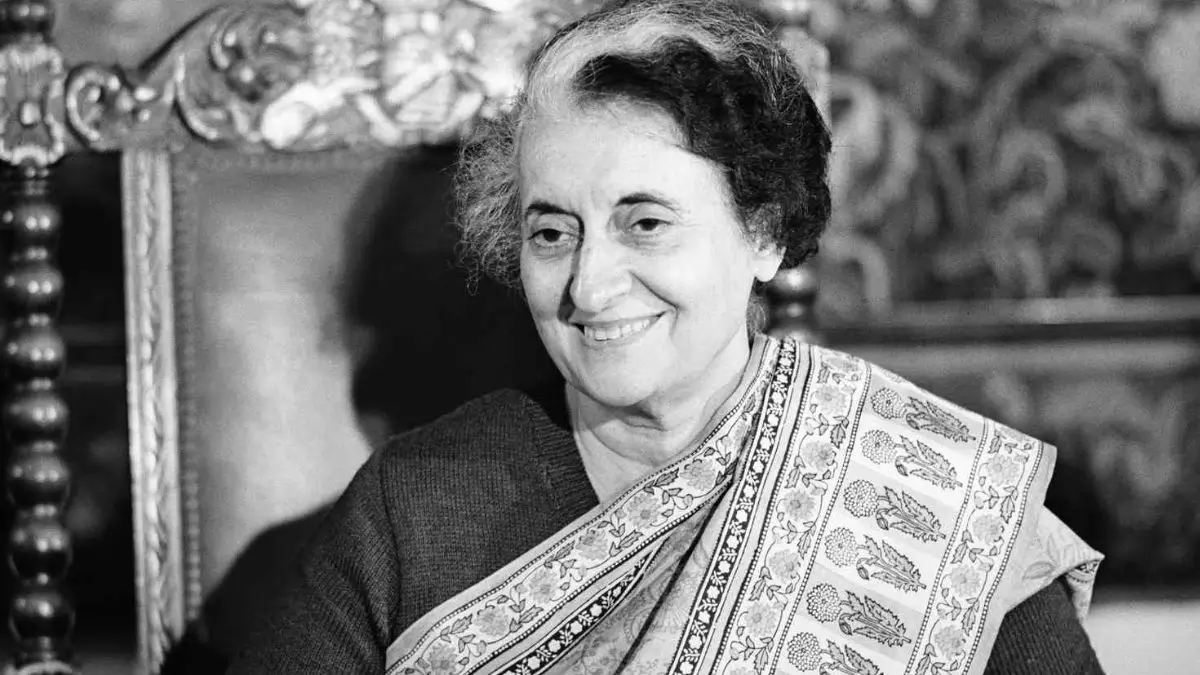
Indira Priyadarshini Gandhi was born on 19th November 1917. She held the position of Prime Minister of India between 1966-1977 and again in 1980 until her assassination in 1984. Some key developments have occurred during her time in office. Many commercial banks were nationalized, the Green Revolution was implemented, the Indo-Pak War took place in 1971, and a controversial emergency was imposed between 1975 and 1977. Indira Gandhi’s political career is very significant in modern history.
Indira Gandhi: Early Life & Background
Indira Priyadarshini Gandhi was born on 19th November 1917 in Allahabad (now Prayagraj, Uttar Pradesh) within the United Provinces of British India. She was the only child of Jawaharlal Nehru and Kamala Nehru.
As her father was a key figure in the Indian National Congress, Indira Gandhi was heavily involved in the Indian Independence Movement.
Key points about her background and early life,
- Father – Jawaharlal Nehru (first Prime Minister of India).
- Mother – Kamala Nehru (involved in the independence movement).
- Spouse – Feroze Gandhi (married in 1942).
- Children – Rajiv Gandhi and Sanjay Gandhi.
- Grandfather – Motilal Nehru (prominent lawyer and Congress leader).
At a young age, Indira Gandhi created a youth group called the Bal Charkha Sangh. In 1930, she also created the Vanar Sena. The youth groups aided the Indian National Congress in their independence movement through passing messages and assisting with organization.
Education of Indira Gandhi
Indira Gandhi attended many schools throughout India and abroad. However, she missed some schooling due to her parents’ political activity and illness in her mother.
Schools attended include,
- Pupil’s Own School – Pune & Bombay.
- Visva-Bharati University – Santiniketan (created by Rabindranath Tagore).
- Badminton School – Bristol, UK.
- Somerville College – University of Oxford, UK.
While at Santiniketan, Indira was influenced by the ideas of Rabindranath Tagore. Before continuing higher education at Oxford, Indira attended schools in Switzerland.
Political Career and Key Events in Life
Political Involvement
- Since Independence, Indira Gandhi became heavily involved in the Indian National Congress. In 1955, she became a member of the Congress Working Committee.
- In 1959, she became the President of the Indian National Congress, a position she held until 1960.
- After the death of Jawaharlal Nehru in 1964, Indira Gandhi joined the Union Cabinet as Minister for Information & Broadcasting within the Government of Lal Bahadur Shastri.
First Female Prime Minister
- After the sudden death of Lal Bahadur Shastri in January 1966, Indira Gandhi took the role of leader of the Parliamentary Party within the Congress Party. Therefore, she became the first female Prime Minister of India on 24 th January 1966.
- Indira Gandhi was Prime Minister until 1977. In January 1980, she was re-elected as Prime Minister. However, she was assassinated on 31 st October 1984.
Key Political Decisions/Events
Nationalization of Commercial Banks (1969)
- In July 1969, Indira Gandhi’s Government nationalised 14 large commercial banks. This allowed more banking services to be available, encouraging credit for agriculture and small-scale industry and enabling overall economic growth.
Green Revolution
- Within her government, the Green Revolution was encouraged. This involved high-yield seed varieties, irrigation, fertilizers, and modern farming techniques. As a result, food grain production increased significantly; therefore, less food had to be imported.
Indo-Pak War/Formation of Bangladesh (1971)
- During 1971, during the crisis in East Pakistan, Indira Gandhi aided the millions of refugees who crossed into India. In December 1971, the India-Pakistan War took place.
- The result of this war in the Eastern Theatre was a military defeat for Pakistan. It resulted in Bangladesh becoming independent.
Declaration of Emergency (1975-1977)
- On 25th June 1975, an emergency was declared in India (under Article 352 of the Indian Constitution) due to ‘internal disturbances’. Many civil liberties were removed during this period. The media was censored, and opposition political leaders were arrested.
The Emergency finished in March 1977, following elections. Indira Gandhi and the Congress Party lost the election. Morarji Desai became Prime Minister.
Operation Blue Star (1984)
- In June 1984, the Indian Army performed Operation Blue Star within the Golden Temple complex in Amritsar, Punjab. This operation, authorized by Indira Gandhi’s Government, removed armed militants from within the complex.
- However, much destruction was caused within the complex. Many people were killed, and as a result there was much anti-feeling within certain sections of the Sikh population.
Key Events in Indira Gandhi’s Life
| Year | Key event |
| 1917 | Born on 19th November. |
| 1930 | Vanar Sena formed (Independence movement). |
| 1942 | Married to Feroze Gandhi. Imprisoned during the Quit India Movement. |
| 1959 | Elected President of the Indian National Congress. |
| 1964 | Appointed as Minister for Information & Broadcasting. |
| 1966 | Became first female Prime Minister of India. |
| 1969 | 14 Large commercial banks nationalized. |
| 1971 | Won war against Pakistan. Resulted in the creation of Bangladesh. |
| 1971 | Awarded the Bharat Ratna. |
| 1975 | National Emergency declared on 25 th June. |
| 1977 | Lose general election. End of Emergency. |
| 1980 | Re-elected as Prime Minister. |
| 1984 | Operation Blue Star carried out in June. |
| 1984 | Assassinated on 31 st October in New Delhi. |
Key Achievements
- During Indira Gandhi’s political career, she made many changes within India.
- First Female Prime Minister.
- Led India during the 1971 War, resulting in the creation of Bangladesh.
- Supported the Green Revolution in agriculture.
- Nationalization of 14 large commercial banks in 1969.
- Nuclear Development. On 18 th May 1974, India’s first nuclear test (Smiling Buddha) was performed in Pokhran, Rajasthan.
- Awarded Bharat Ratna in 1971.
Contributions of Indira
Contributions to Politics
- Indira Gandhi made very significant contributions to politics within India. As Prime Minister, she provided greater strength to the Prime Minister’s office, and central decision-making.
- However, the period of Emergency between 1975-1977 is very contentious. Civil liberties, press freedom and democratic freedom were limited.
Contributions to Agriculture and Economy
- Her government encouraged modernization within agriculture. This was done by using high-yielding crops, infrastructure for irrigation and fertilizers.
- In addition, in 1969, commercial banks were nationalized. This allowed more people (apart from large businesses and industries) to have access to banking and credit services.
Contributions to Foreign Policy
- Indira Gandhi focussed on security, independence and placing India in a good international position. A key diplomatic achievement was signing the Indo-Soviet Treaty of Peace, Friendship and Cooperation on 9 th August 1971.
Awards Received By I. Gandhi
| Award/Honour | Year |
| Bharat Ratna | 1971 |
| Mexican Academy award for Liberation of Bangladesh. | 1972 |
| FAO Second Annual Medal. | 1973 |
| Sahitya Vachaspati. | 1976 |
Indira Gandhi was awarded the Bharat Ratna in 1971 for her contributions to public service.
Final years and Death
- In January 1980, Indira Gandhi became Prime Minister again as the Congress Party won the general election. However, during her last years in office, there were political and security issues within Punjab.
- On 31st October 1984, Indira Gandhi was assassinated by two of her bodyguards at her home in New Delhi.
- This occurred following Operation Blue Star in earlier in the year. Following her death, her son Rajiv Gandhi became Prime Minister. There was also widespread anti-Sikh violence in many parts of India.
Significance
- Indira Gandhi has been one of the most influential (and controversial) politicians in recent Indian history.
- Throughout her political career, she made many key developments within agriculture, banking, security, and foreign policy. However, the time of the Emergency is a significant point to consider when considering issues regarding individual rights, democratic responsibility, and the extent of executive authority.
- Her political career is very significant to understanding the development of a parliamentary democracy in India post-independence.



 Naturopathy Day 2026: Date, Theme, Signi...
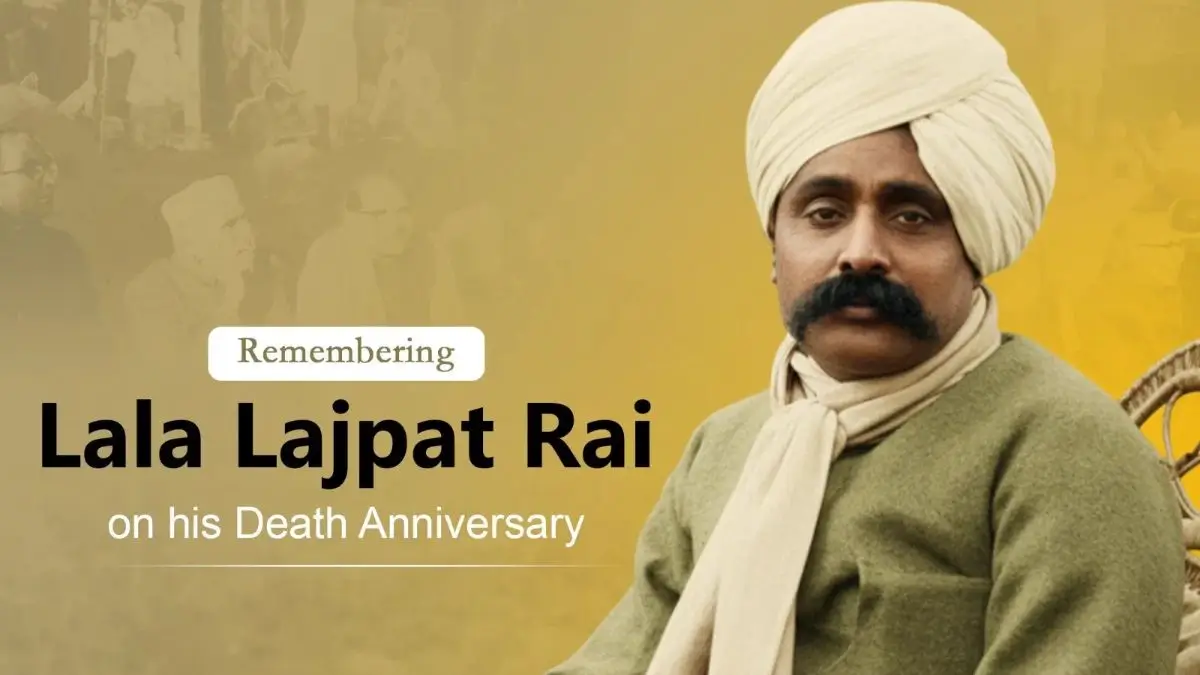 Lala Lajpat Rai Death Anniversary 2026: ...
 International Students Day 2026: Date, H...