Satish Golcha Gets New Posting in Delhi Home Guards Directorate

Satish Golcha, who had earlier served as the Commissioner of Police for Delhi, has been posted with a fresh posting in the Home Guards Directorate of the Delhi government. Golcha has been appointed as Officer on Special Duty (OSD) and he is expected to head the Home Guards department as its Director General from October 1, 2026. This decision comes after his dismissal as the Delhi Police Commissioner in July and subsequently his posting at the office of the Lieutenant Governor.

What Will Be Satish Golcha’s New Posting?

As per the order issued by the Home Department of the Government of NCT of Delhi, Satish Golcha, IPS (AGMUT: 1992), has been transferred and posted as OSD in the Directorate of Home Guards.

Golcha’s OSD posting will be valid till the superannuation of Virender Singh, IPS (AGMUT: 1991) on September 30, 2026.

Thereafter, from October 1, 2026, Golcha will take up charge as the Director General of Home Guards.

Why is Golcha Taking Charge From October 1?

This order sets up a transition plan related to the retirement of the current DG, Virender Singh.

Until Singh retires on September 30, Golcha will be the OSD at the Directorate of Home Guards. The official assumption of his duties of DG will start from October 1.

The Delhi Police has also been asked to include Golcha in their cadre for getting his pay against an existing post until he takes over as the DG.

Previous Career of Golcha in Delhi Police

Golcha has occupied many top-level posts in Delhi Police. Prior to his appointment as the Commissioner of Delhi Police, he was the Director General (Prisons), Delhi.

He had also served as the Special Commissioner (Law & Order) and occupied many other important posts during his tenure in Delhi Police.

India and China Hold Border Talks, Agree to Continue Search for Settlement

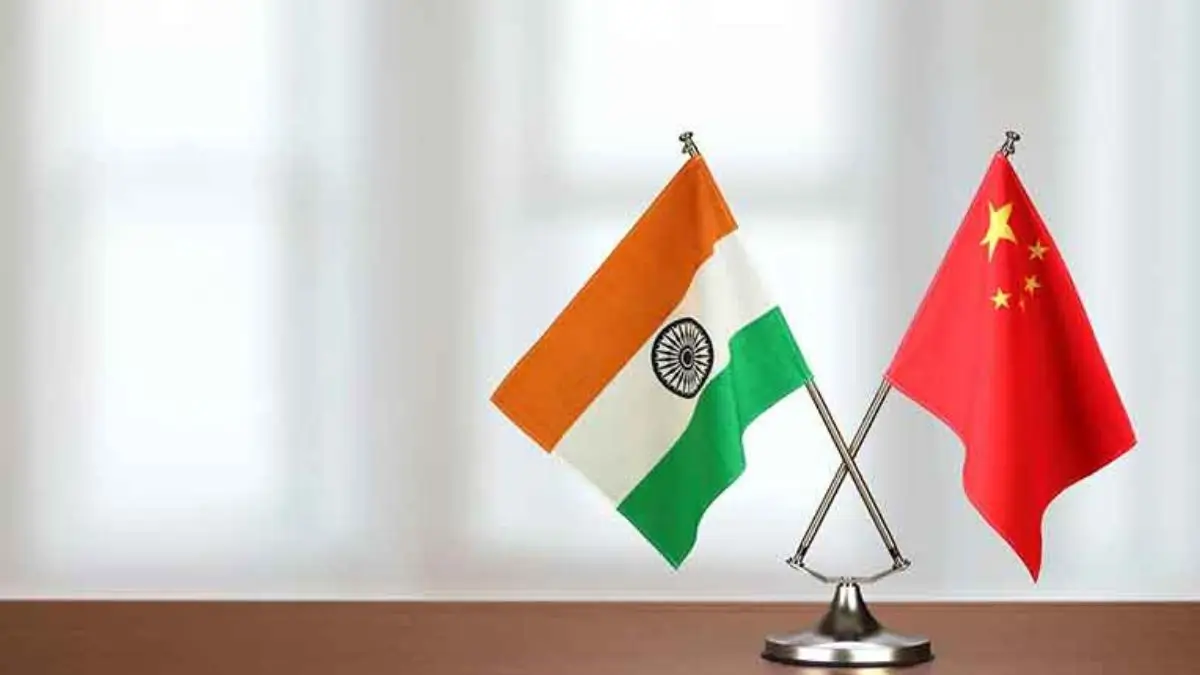
India and China are agreed to continue dialogue which aimed at to finding a just, reasonable and mutually satisfactory solution of the longstanding boundary dispute after the recent meeting in the Beijing between India’s National Security Advisor Ajit Doval and China’s Foreign Minister Wang Yi. At the same time, the two nations have decided to conduct the next session of border talks in India in 2027, indicating that both parties will maintain a peaceful diplomatic approach towards solving their differences.

New Round of Border Talks Conducted by Ajit Doval & Wang Yi

According to the Chinese Foreign Ministry, Wang Yi and Ajit Doval conducted in-depth and friendly discussions on border issues and overall bilateral relations, according to China’s Foreign Ministry.

It was reported by India’s Embassy in China that the two sides assessed the current state of India-China relations and considered how to increase cooperation and ensure peace and stability along the border areas.

According to Wang Yi, the relation between the two Asian giants currently carries not only bilateral but global and strategic importance as well.

Disputed Indian-Chinese Border Question Persists

India and China share an undefined and disputed border covering approximately 3,800 kilometres across the Himalayas.

The border dispute has been among the most intractable problems in the bilateral relationship. It got even more strained following the border skirmish in 2020 that caused injuries and led to the long-running military standoff between the two nations.

While a disengagement agreement signed in October 2024 eased the four-year standoff, the larger border problem has not been resolved.

Relations Have Slowly Improved in Recent Years

In spite of occasional disputes, India and China have steadily grown in diplomatic contact in recent years.

Indian Prime Minister Narendra Modi toured China last year for the first time since 2017, signaling improved relations.

Nevertheless, border disputes continue to cause diplomatic problems between the two nuclear powers.

Next Round of Border Talks in India in 2027

According to the Chinese Foreign Ministry, both countries have decided that the next round of border talks will be held in India in 2027.

This is an official procedure that is used to continue negotiations about the boundaries. Although any agreements have not been reached, such an agreement is essential as it allows keeping the problem in the diplomatic channel.

Fino Payments Bank Extends Interim CEO Ketan Merchant’s Tenure

Fino Payments Bank granted another three months extension to Ketan Merchant, who shall act as the interim Managing Director and Chief Executive Officer of the bank for another three months. This extension will commence from August 27, 2026, subject to the approval of the Reserve Bank of India. Ketan Merchant was acting as interim CEO from May 27 onwards when he took over from Rishi Gupta.

Three-Month Extension of Ketan Merchant Approved

Fino Payments Bank’s Nomination & Remuneration Committee recommended this extension and was later approved by its board.

This extension is for a period of three months and will start on August 27, 2026, as his previous term of three months starts from May 27, 2026, and ends on August 26, which has been previously approved by the Reserve Bank of India.

Merchant will hold this extension until RBI provides the necessary approval for this three-month extension.

What is the Reason for Interim CEO Position of Merchant?

Ketan Merchant was appointed as interim MD and CEO after the resignation of Rishi Gupta, who was the MD of the bank before him.

Prior to being the interim CEO, he was working as the CFO of the bank.

Where Has Rishi Gupta Gone?

Rishi Gupta was arrested in February 2026 by the Directorate General of GST Intelligence (DGGI), following some violations of the Goods and Services Tax regulations.

As per the allegation stated, shell companies and payment aggregators have been used for transferring illegal money earned from online money gaming.

Gupta later quit his post as a result of which Merchant took the lead temporarily.

India’s Steel Consumption Rises 7.9% in April-July 2026

The steel industry in India witnessed robust performance during the first four months of the fiscal year 2026-27, with consumption of finished steel increasing by 7.9 percent to 56 million tonnes (MT) in April-July 2026 compared to 52 million tonnes (MT). Finished steel production showed robust growth too, growing 4.7 percent to 54.7 million tonnes. The stronger growth in consumption suggests robust domestic demand, while higher imports and exports suggest stronger activities in foreign trade. Robust performance was also seen in alloy steel along with firm domestic prices.

Increase in Steel Production and Consumption

Crude steel production in India witnessed an increase of 2.4% to 56.2 MT in April-July 2026 when compared to 54.9 MT in the same period of the previous year. Hot metal production grew 2.7% to 31.9 MT.

During the month of July 2026, finished steel production stood at 14 MT, which was an increase of 3.9% over 13.5 MT of production recorded in July 2025. Consumption also grew 6.8% to 14.4 MT.

The faster growth in consumption signifies strong demand for the product by industries related to infrastructure and construction.

Increase in Steel Trade

Imports of finished steel went up 36.6% to 2.77 MT, whereas exports witnessed a growth of 35% to 2.29 MT. India therefore continued to be a net importer.

China had the maximum import share at 30.9%, South Korea followed at 30.2% and Japan at 14.9%. Vietnam was the leading market in terms of exports of finished steel by India with a share of 15.4%.

Hot-rolled coil and strip continued to remain the biggest trading category with 36.7% share in imports and exports.

Demand for Alloy Steel Experiences Robust Growth

There was an impressive growth witnessed in the alloy steel category. The production grew by 26.7% to reach 3.71 MT, while its consumption saw an increase of 22.1% to 4.02 MT.

There was a significant growth witnessed in alloy steel exports, which registered an increase of 150.7% to 122,200 tonnes, while its imports saw only 9.4% growth to 419,300 tonnes.

On the other hand, the stainless steel category showed a contrasting trend. Though there was an increase of 25% in its consumption to 1.77 MT, its production saw a decline of 4.2% to 1.38 MT. There was a 100% increase witnessed in its imports to 497,000 tonnes.

Growth in Steel Sector via Government Policies

Further, policy actions include securing supply of raw materials and technological advancements in production.

With this view, the Mines and Minerals (Development and Regulation) Amendment Act, 2026, notified on August 17, will work towards making improvements in the investment scenario for mines as well as domestic availability of critical minerals such as iron ore.

The Ministry of Steel has also initiated a monthly webinar on digitalization in steel and mining sectors.

In another development, NMDC’s 2.0 MTPA Iron Ore Beneficiation Plant in Bacheli is in its trial phase whereas MECON and NMDC Steel Limited have inked an agreement pertaining to consultancy services for future projects.

Indian Navy to Commission Second Indigenous Diving Support Vessel Nipun

Indian Navy set to commission the second Nistar class Diving Support Vessel (DSV), Nipun on 31st August 31, 2026, at Naval Dockyard, Mumbai. It is a special ship designed and built locally by the Hindustan Shipyard Limited (HSL), Visakhapatnam, this will add to the capabilities of the Navy in deep sea diving and underwater operations. This ship will also assist in submarine rescue operations.

What is Nipun?

Nipun is a custom-designed diving support vessel designed to conduct diverse diving and underwater operations. It assists naval divers by giving constant support while they perform their diving activities in difficult conditions at sea.

It comes with a range of advanced systems for diving and special underwater interventions. This will help the Navy in conducting its complicated underwater operations and give them necessary support.

When will Nipun be Commissioned?

The Indian Navy will officially commission the vessel named Nipun on 31st August 2026 in Naval Dockyard, Mumbai.

The delivery of Nipun to the Indian Navy took place on 30th July 2026 after undergoing a number of outfitting and trials programmes.

Nipun’s Key Capabilities

Nipun uses modern systems for navigation, platform management, and station keeping. All these systems are very crucial during specialised missions including diving and underwater interventions.

The other key features of Nipun include the following,

  • Specialised diving
  • Underwater intervention
  • Medical facilities
  • Submarine rescue support

All these capabilities combine to help Nipun act as a combined platform for underwater operations.

Why Is Nipun Crucial to the Indian Navy?

The entry of Nipun will improve the navy’s capacity to carry out special diving and underwater operations in India’s regions of maritime interest. Specialisation in submarine rescue support is crucial to underwater emergencies.

The other significance of Nipun lies in the fact that it is a great milestone achieved in indigenous shipbuilding for military use. The construction of the ship by HSL shows the improved capacity of Indian shipyards to design specialised ships according to the needs of the navy.

Nipun and India’s Defence Self-Reliance

The indigenous design and construction of Nipun is consistent with India’s larger movement towards achieving self-sufficiency in defence manufacturing. Specialized naval ships demand sophisticated engineering and highly advanced ship-building techniques.

The commissioning of Nipun, hence, has implications beyond its operational function. It represents the growing technical expertise within India’s home-grown defence ship-building industry.

CSIR-NAL Unveils Indigenous Gas Turbine Engines for Defence

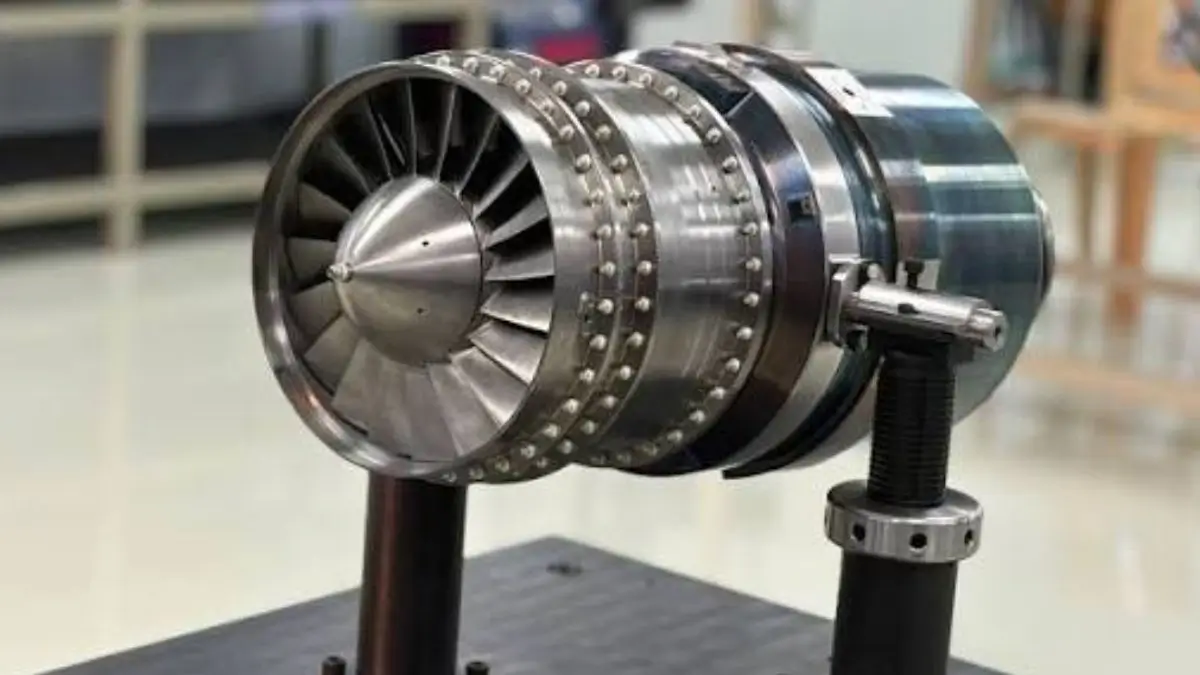
CSIR unveiled the three Indian-made Micro & Small Gas Turbine Engines on 25th August, 2026. NJ-05, NJ-50 and NJ-100 engines generate thrusts of 5kg, 50kg and 100kg respectively. These miniature engines have been developed by the CSIR National Aerospace Laboratories, and have been designed to be used in tactical UAVs, drone interceptors and compact missile systems.

Three Indigenously Developed Engines Launched

The unveiling ceremony took place at the SSB Auditorium at the CSIR Headquarters in New Delhi.

The engines are,

  • NJ-05: 5 kg thrust
  • NJ-50: 50 kg thrust
  • NJ-100: 100 kg thrust

The need to develop such engines is due to the rising demand for compact and specific types of engines for unmanned and defense purposes.

Gas Turbine Engine Technology

Dr. R. Prathapanayaka led the technical presentation of the scientists from CSIR-NAL on the development. The technology uses the advancements in high-speed turbomachinery and high-temperature combustion systems.

The latter is especially crucial for compact gas turbine engines since it is technologically complicated to provide adequate performance in restricted size and weight conditions.

Possible Defence Uses

These indigenous engines are slated to be used in multiple uses, including tactical UAVs, drone interceptors, and small missile systems.

This development will aid in reducing reliance on imported propulsion systems for smaller unmanned and defence systems. It also opens up possibilities for Indian industry and aerospace start-ups in manufacturing these specific engines.

Atmanirbhar Bharat Initiative

Dr. Abhay A. Pashilkar, the CSIR-NAL Director, stressed the contribution of this laboratory towards the growth of the drone ecosystem of India. He also emphasized the potential of Indian industry and its aerospace start-ups in manufacturing these engines.

Dr. N. Kalaiselvi, the CSIR Director General, said that developing indigenous specialized and critical subsystems is a significant step for Atmanirbhar Bharat Initiative in aerospace engineering.

Strategic Significance for India

As per Air Marshal Tejinder Singh, Chief of Integrated Defence Staff to the Chairman Chiefs of Staff Committee, development of advanced gas turbine engines is of great strategic significance for India.

Having indigenous capability in important propulsion technologies can be significant from both national security and technological independence aspects for the Armed Forces.

e-Shram Portal Completes 5 Years: 31.89 Crore Workers Registered, Key Features and Benefits

The e-Shram portal will complete five years on 26 August 2026, which is quite an important milestone in the journey of India towards making social security systems strong for the workers of the unorganized sector. The e-Shram portal was launched by the Ministry of Labour and Employment in 2021 to make India’s first Aadhaar based National Database of Unorganized Workers (NDUW).

The portal which started as a registration portal for workers became a more comprehensive digital portal for various welfare schemes related to social security, employment, skilling, apprenticeship, and pension. Till August 2026, 31.89 crore workers have registered themselves on the portal.

What is the e-Shram Portal?

The e-Shram Portal was introduced on 26 August 2021 with the aim of establishing a national database of the unorganised workers. It is a product of National Informatics Centre (NIC) and provides the registered worker with an unique 12-digit Universal Account Number (UAN).

The system aims at facilitating welfare delivery while also assisting the governments in recognising workers who could benefit from social security schemes. It also supports the portability of benefits for migrant and construction workers, who might need to change locations.

Unorganised workforce encompasses agricultural workers, construction workers, domestic workers, street vendors, migrant workers, self-employed workers and gig and platform workers, amongst others.

Why was e-Shram introduced?

One of the primary reasons behind introducing the e-Shram system is to facilitate a common digital database of India’s large and varied unorganised workforce.

The portal allows different government departments to share the relevant details of the workers via secure APIs which helps in better implementation of welfare schemes and making data-driven policies. The portal can even assist in planning for assistance during emergencies or crisis.

e-Shram Becomes a One-Stop Solution

The platform saw a huge boost in scope with the introduction of the e-Shram One-Stop Solution launched on 21 October 2024. It now does much more than just register workers. The platform connects workers to a larger range of government services.

The one-stop solution comprises of 15 social security and welfare schemes including Pradhan Mantri Shram Yogi Maan-Dhan Yojana (PM-SYM), Pradhan Mantri Suraksha Bima Yojana (PMSBY), Pradhan Mantri Jeevan Jyoti Bima Yojana (PMJJBY), National Social Assistance Programme (NSAP), One Nation One Ration Card (ONORC) and Pradhan Mantri Awaas Yojana-Gramin (PMAY-G).

The portal allows workers to look at the schemes they are eligible for and check the benefits they have already availed, thus making the process of navigation of different government welfare schemes much easier using just one platform.

Financial Services, Insurance and Employment Services

e-Shram also connects workers to various financial services, insurance and employment-related services.

Using the portal, eligible workers can register themselves under PMSBY, which provides accidental insurance of ₹2 lakh in case of accidental death or permanent disability and ₹1 lakh for partial disability. In addition, workers can enrol under PMJJBY which provides life insurance of ₹2 lakh in case of death due to any reason.

The portal also connects workers to the National Career Service (NCS) and the Skill India Digital Hub for employment and skilling and apprenticeship related programmes respectively. Moreover, using the myScheme platform, the workers can know about the government schemes available for them.

Eligible workers under PM-SYM will get a minimum assured pension of ₹3,000 per month once they reach 60 years of age, as per the terms of the scheme.

Expansion of Services to Migrant and Gig Workers

One of the unique features of this platform is its capability to capture details of the family members of the migrant workers. The platform also helps in transferring construction worker data to States and UTs for their registration under the respective Building and Other Construction Workers (BOCW) Board.

Moreover, this platform now includes the gig and platform workers, another rapidly growing segment of the workforce in India. Approximately 11.5 lakh platform workers were registered on the e-Shram portal till August 2026.

The database would help the policymakers in designing social security and welfare schemes for this emerging class of workers.

Eligibility and Registration for e-Shram Scheme

Registration on e-Shram Portal is one-time and free.

Workers aged above 16 years, working in the unorganised sector and who are not income-tax payers and EPFO or ESIC members, are eligible to register.

Workers can register themselves via the official portal of e-Shram or may approach a CSC/State Seva Kendra to get help. State government officials help workers in registering at the district and sub-district level.

To register oneself, one needs to have their Aadhaar number for eKYC and mobile number, preferably linked to the Aadhaar number.

Numbers Behind e-Shram Portal

The capacity of the platform has seen a major increase over the last five years. As of August 2026, the portal has recorded 31.89 crore registrations.

Female workers form the majority of the registered workers, as compared to male workers, with their share standing at 54.28%, while that of male workers stands at 45.72%. The age group 18-40 has been the maximum age group among the registered workers, with their share standing at 55.21%.

Occupational categories include agriculture, domestic and household work, construction, and apparel. The states of Uttar Pradesh, Bihar, West Bengal, Madhya Pradesh and Maharashtra have seen the highest registrations till date.

Common Service Centres have been the most popular choice for workers to register themselves.

Multilingual and Digital Reaches of e-Shram

In order to enhance accessibility of the platform in the various linguistic environment in India, multilingual capabilities were implemented in 22 languages through the Bhashini platform in 2025.

This would be especially important for such an initiative that seeks to connect with workers across rural and urban India who might find access to digital services a challenge.

Country Music Legend Dolly Parton Dies at Age 80

Country music icon Dolly Parton has passed away at the age of 80 years, her family announced on August 25, 2026. The singer, songwriter, actress, and philanthropist enjoyed almost 60 years of creating one of the most amazing careers in American entertainment history. Dolly is known around the world for such songs as “Jolene”, “Coat of Many Colors”, and “I Will Always Love You”. She sold over 100 million albums in her lifetime and received 11 Grammy Awards. Nevertheless, her impact goes beyond the music industry, as it includes literature, movies, education, philanthropy, and popular culture.

From Tennessee Farm Girl to Hollywood Star

Dolly Rebecca Parton was born on January 19, 1946. She grew up in poverty as one of the twelve siblings of a poor Tennessee farm family. At that time, Dolly was exposed to music mostly thanks to her mother, although she started performing on local radio stations as a child.

At the age of 13, she made her debut at the Grand Ole Opry. After moving to Nashville, she collaborated successfully with Porter Wagoner and became a successful solo artist and songwriter.

The Songs That Characterized Her Career

The songs Parton released defined her career. For instance, “Jolene,” “Coat of Many Colors” and “I Will Always Love You” were among her most popular hits. The latter song found new fans when it was performed by Whitney Houston.

Her songwriting was a defining part of who Parton was. According to Reuters, she wrote an estimated 3,000 songs, with storytelling being one of the cornerstones of her unique career.

Beyond Country Music Career

As a successful artist, she went on to work in the fields of television, movies and business. She started acting with her role in “9 to 5” and later on made appearances in such movies as Steel Magnolias.

Furthermore, she founded Dollywood, a famous tourist attraction in Tennessee. Her distinctive looks, humor and audience connection made her one of the most recognizable personalities in American culture.

Dolly Parton’s Philanthropic Work

It is not just her artistic success that Parton contributed to the world. For example, the Imagination Library she created encouraged childhood literacy across the globe. In addition, she contributed to education and public health projects.

For instance, during the time of the COVID-19 outbreak, she donated $1 million to vaccine research at Vanderbilt University.

Why Dolly Parton’s Legacy Lives On

Dolly Parton’s popularity was not restricted by generation, genre or politics. Dolly managed to combine commercial appeal with personal song writing and leveraged her celebrity status to champion a variety of social issues, including literacy, education and healthcare.

With Dolly Parton’s passing, the age of classic country music comes to an end. Yet, the singer’s music, her stories and philanthropy will live on.

What is the World’s Largest Freshwater Fish? All About the Record-Breaking Giant Stingray

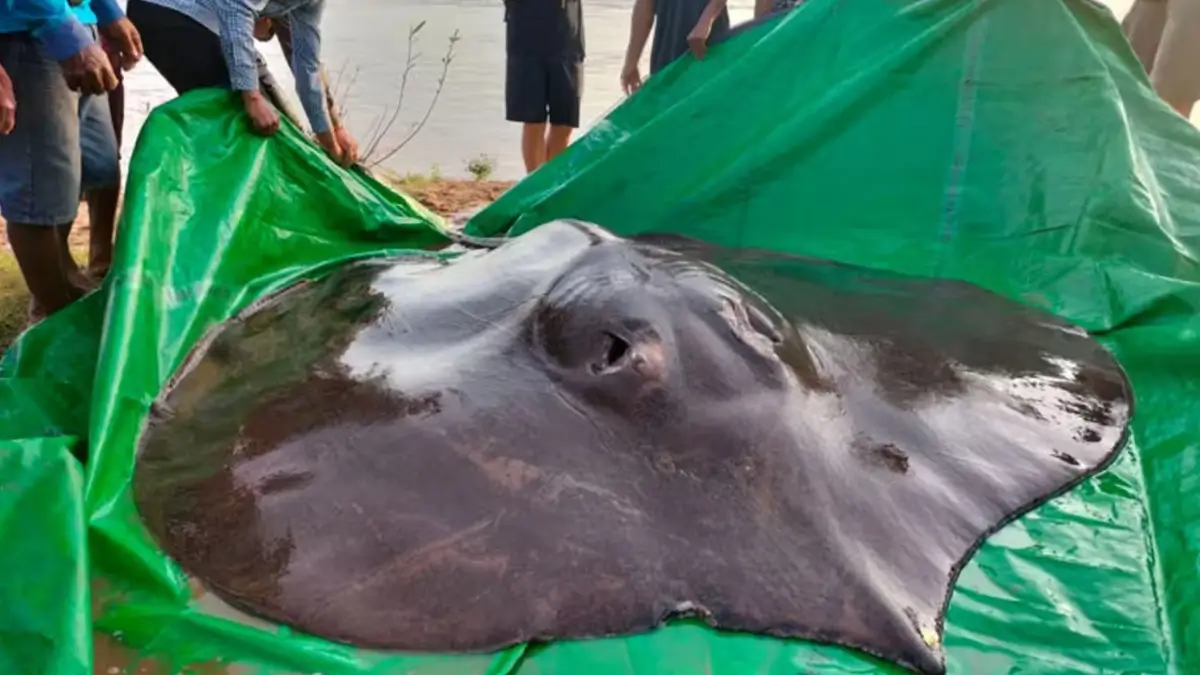
Imagine pulling a fish from a river that weighs as much as a large motorcycle and stretches nearly as long as a small car. That is exactly what happened in Cambodia’s Mekong River, where a giant freshwater stingray weighing around 300 kg (661 lb) was documented.

The enormous female stingray measured almost 4 metres (13 feet) from snout to tail, with a disc approximately 2.2 metres (7 feet 2 inches) wide. Its extraordinary dimensions earned it recognition as the world’s largest freshwater fish ever recorded by weight.

Which is the World’s Largest Freshwater Fish?

The giant freshwater stingray (Urogymnus polylepis) holds the record for the largest freshwater fish ever recorded.

The record-breaking specimen weighed approximately 300 kg and was discovered in the Mekong River in Cambodia. Its enormous size surpassed the previous record associated with a giant Mekong catfish.

Unlike marine rays that may occasionally enter rivers, the giant freshwater stingray is adapted to freshwater environments and can spend much of its life along the bottom of large rivers.

Where Was the 300-Kg Giant Stingray Found?

The record-breaking stingray was caught by local fishermen in the Mekong River in the Stung Treng region of northern Cambodia.

The female stingray weighed approximately 300 kg, or 661 pounds. From the front of its body to the end of its tail, it measured nearly 4 metres.

Its disc—the broad, flattened portion of a stingray’s body—measured approximately 2.2 metres across.

To put that into perspective, its overall length was comparable to that of a small car.

How Big Was the Record-Breaking Stingray?

The dimensions of the giant stingray demonstrate just how large freshwater species can become.

Feature Measurement
Species Giant freshwater stingray
Scientific name Urogymnus polylepis
Weight Around 300 kg (661 lb)
Total length Nearly 4 metres (13 ft)
Disc width Around 2.2 metres (7 ft 2 in)
Location Mekong River, Cambodia
Region Stung Treng
Habitat Freshwater rivers

Its broad, flattened body allows the stingray to live close to the riverbed, where it can remain relatively well hidden despite its enormous size.

Why is the Giant Freshwater Stingray So Special?

What makes this animal particularly remarkable is that it is a genuine freshwater giant.

Many of the world’s biggest fish, such as whale sharks and large sharks, live in oceans. The giant freshwater stingray, however, inhabits river systems.

The species spends much of its time close to the bottom, where its flattened body helps it move along sandy or muddy riverbeds.

Because of this behaviour, even extremely large individuals may remain difficult for people to observe.

Giant Stingray Enters the Record Books

The approximately 300-kg specimen attracted international attention because of its record-breaking weight.

It was recognised as the largest freshwater fish ever recorded, drawing global attention not only to the animal itself but also to the extraordinary biodiversity of the Mekong River.

Before this stingray, a 293-kg Mekong giant catfish caught in Thailand in 2005 was widely recognised as the record holder.

The Cambodian stingray surpassed that weight by approximately 7 kg.

Is the Mekong River Hiding More Giant Fish?

The discovery raises an intriguing question: could even larger freshwater animals still be living beneath the Mekong?

The Mekong is one of Asia’s great river systems and supports an enormous variety of aquatic life.

Its waters are known for several exceptionally large freshwater species, including giant stingrays, Mekong giant catfish and giant barbs.

The river’s size and complex underwater habitats also mean that some large animals can remain difficult to study.

Scientists therefore continue to investigate the biodiversity of the Mekong and the conditions that allow giant freshwater species to survive.

Where Does the Mekong River Flow?

The Mekong is one of the longest and most important rivers in Asia.

It originates in the Tibetan Plateau and travels through or along several countries before eventually reaching the South China Sea.

Its basin supports millions of people who depend on the river for food, fishing, agriculture, transportation and livelihoods.

The Mekong is also considered an important global centre of freshwater biodiversity.

Why Are Giant Freshwater Stingrays Important to Scientists?

Studying giant freshwater stingrays can provide scientists with valuable information about the health of large river ecosystems.

Large aquatic animals generally require extensive habitats, adequate food resources and suitable environmental conditions to survive.

Changes in water quality, fishing pressure, dams and modifications to natural river habitats can therefore affect their populations.

Tracking and studying these animals can help researchers better understand how environmental changes are influencing the wider Mekong ecosystem.

What Threatens Giant Fish in the Mekong River?

Despite its extraordinary biodiversity, the Mekong faces several environmental pressures.

Habitat modification, dam construction, overfishing and changes in river conditions can affect migratory routes, breeding grounds and food availability for freshwater species.

Large fish can be particularly vulnerable because many grow slowly, require extensive habitats and may take years to reach maturity.

Protecting these species therefore also means protecting the river ecosystems on which they depend.

Giant Freshwater Stingray vs Mekong Giant Catfish

Before the Cambodian stingray was documented, the Mekong giant catfish was associated with the freshwater fish size record.

Giant Freshwater Stingray Mekong Giant Catfish
Around 300 kg Around 293 kg
Found in Cambodia Record specimen caught in Thailand
Recorded in the Mekong River Recorded in the Mekong River
Broad, flattened body Large catfish body
Current record-breaking specimen Previous record holder

The difference between the two record specimens was only about 7 kg, demonstrating the remarkable size of the Mekong’s freshwater giants.

Key Facts About the World’s Largest Freshwater Fish

  • The giant freshwater stingray is scientifically known as Urogymnus polylepis.
  • A record-breaking female weighed approximately 300 kg or 661 lb.
  • It was documented in Cambodia’s Mekong River.
  • The specimen measured nearly 4 metres from snout to tail.
  • Its disc was approximately 2.2 metres wide.
  • It surpassed the previous 293-kg Mekong giant catfish record.
  • Giant freshwater stingrays generally live close to riverbeds.
  • The species is one of several exceptionally large fish associated with the Mekong ecosystem.

A Giant Worth Protecting

The 300-kg giant freshwater stingray is more than an extraordinary entry in the record books. Its existence demonstrates how much remarkable wildlife can remain hidden beneath the surface of the world’s great rivers.

For researchers, encounters with giant freshwater stingrays provide opportunities to learn more about the biodiversity and ecological health of the Mekong. Protecting these enormous fish also means conserving the freshwater ecosystems that support countless other species and millions of people.

The record-breaking stingray therefore serves as both a symbol of the Mekong’s extraordinary biodiversity and a reminder of why the world’s great freshwater ecosystems need protection.


No Roads? No Problem: NASA’s SkyFall Helicopters Are Heading to Mars

NASA’s planned 2028 Mars mission could take planetary exploration to a new level by combining nuclear-electric propulsion with three small helicopters known as SkyFall. The mission aims to demonstrate advanced space-power technology while exploring Mars from the air and investigating what lies beneath its surface.

Synopsis

The planned SR-1 Freedom mission is expected to carry three SkyFall helicopters to Mars while demonstrating a nuclear fission-powered electric propulsion system. The helicopters would use cameras, sensors and ground-penetrating radar to study Martian geology, weather and possible deposits of buried water ice.

What is SkyFall?

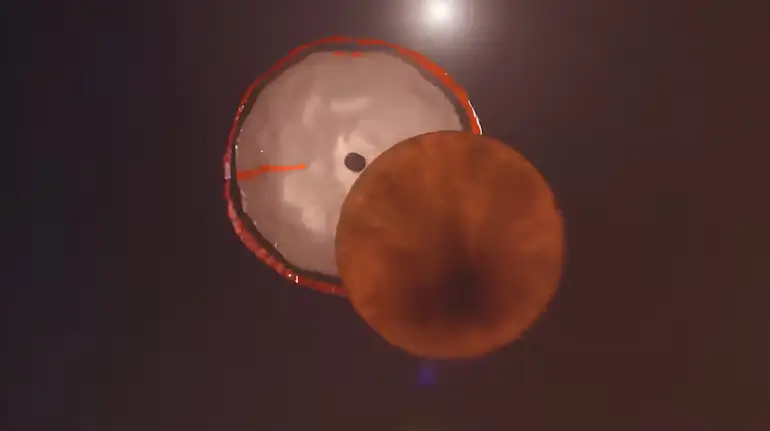
SkyFall is a proposed Mars exploration payload consisting of three small helicopters designed to fly independently over the Martian surface.

The helicopters build upon the concept demonstrated by NASA’s Ingenuity Mars Helicopter, which proved that controlled powered flight is possible in the extremely thin atmosphere of Mars.

SkyFall would take the concept further by using multiple aircraft equipped with scientific instruments. Instead of simply demonstrating flight, the helicopters would perform scientific observations and investigate areas that are difficult for conventional Mars rovers to reach.

What is the SR-1 Freedom Mission?

Space Reactor-1 Freedom, or SR-1 Freedom, is a proposed spacecraft mission expected to launch in late 2028.

One of the mission’s major objectives is to demonstrate the use of a nuclear fission reactor for producing electricity in deep space. The electricity generated by the reactor would power an electric propulsion system.

The spacecraft is designed to generate around 20 kilowatts of electrical power.

If demonstrated successfully, such technology could potentially support longer and more ambitious missions to Mars and other destinations where relying entirely on sunlight becomes increasingly difficult.

Why Use a Nuclear Reactor in Space?

Most spacecraft operating relatively close to the Sun can generate electricity using solar panels. However, sunlight becomes weaker as spacecraft travel farther into the Solar System.

Nuclear power offers an important alternative because it can generate electricity without depending on continuous sunlight.

In the proposed SR-1 Freedom system, a fission reactor would produce electricity, which would then power an electric thruster.

The mission could therefore serve as an important demonstration of nuclear-electric propulsion beyond Earth orbit and provide insights for future deep-space missions.

SkyFall Will Carry Three Mars Helicopters

One of the most interesting elements of the mission is the SkyFall payload consisting of three helicopters.

These aircraft would draw on lessons from Ingenuity but are intended to perform more extensive scientific work.

The helicopters are expected to carry instruments such as:

  • Cameras for imaging the Martian surface
  • Temperature sensors for studying environmental conditions
  • Ground-penetrating radar for investigating beneath the surface

Using three helicopters could allow scientists to examine different locations and cover terrain that would be challenging or time-consuming for a rover.

What Will SkyFall Search for on Mars?

One of SkyFall’s most important scientific objectives would be to investigate what lies underneath the Martian surface.

Its ground-penetrating radar is intended to examine approximately the upper 3 metres of the Martian crust, with the possibility of reaching greater depths under favourable conditions.

Scientists would particularly look for:

  • Buried water ice
  • Underground cavities or voids
  • Different layers of rock and soil
  • Geological structures
  • Features relevant to future human exploration

Discovering accessible deposits of water ice would be particularly valuable because water is considered an important resource for future crewed Mars missions.

Why is Water Ice Important on Mars?

Water is one of the most important resources for any future long-term human presence on Mars.

Martian water ice could potentially provide drinking water for astronauts. In the longer term, water could also be separated into hydrogen and oxygen, potentially providing oxygen and contributing to fuel production.

Knowing the location, depth and distribution of underground ice could therefore influence where future Mars missions establish exploration sites or bases.

SkyFall’s radar observations could help scientists build a better understanding of these underground resources.

Why is Flying on Mars Difficult?

Flying a helicopter on Mars presents a major engineering challenge because the Martian atmosphere is extremely thin compared with Earth’s.

Helicopter blades therefore have far fewer air molecules to push against to generate lift.

NASA’s Ingenuity demonstrated that powered flight is nevertheless possible on Mars. Future helicopter designs can use the lessons learned from Ingenuity to improve rotor performance, navigation and scientific capabilities.

SkyFall’s helicopters would be designed specifically to operate under these challenging Martian atmospheric conditions.

How is SkyFall Different from Ingenuity?

Ingenuity was originally sent to Mars primarily as a technology demonstration to determine whether powered, controlled flight was possible in the Martian atmosphere.

Its success opened the door for helicopters to become scientific exploration platforms.

SkyFall would represent a potential next stage of that development.

Instead of one experimental helicopter, SkyFall would deploy three aircraft carrying instruments intended for scientific investigation. They could potentially explore locations beyond the reach of traditional wheeled rovers and survey larger areas more rapidly.

Why Could the Mission Be Important for Future Mars Exploration?

The proposed mission combines two technologies that could play important roles in future planetary exploration: nuclear power and aerial exploration.

Nuclear-electric systems could provide reliable electricity for spacecraft travelling far from the Sun, while helicopters could provide scientists with a new way of examining planetary surfaces.

Mars exploration has traditionally relied heavily on orbiters, stationary landers and wheeled rovers. A fleet of helicopters could add another layer to this exploration strategy by providing greater mobility and access to difficult terrain.

_12.1
August 2026
M T W T F S S
 12
3456789
10111213141516
17181920212223
24252627282930
31