2026 Nobel Prize Winners: Categories Wise Complete Winners List

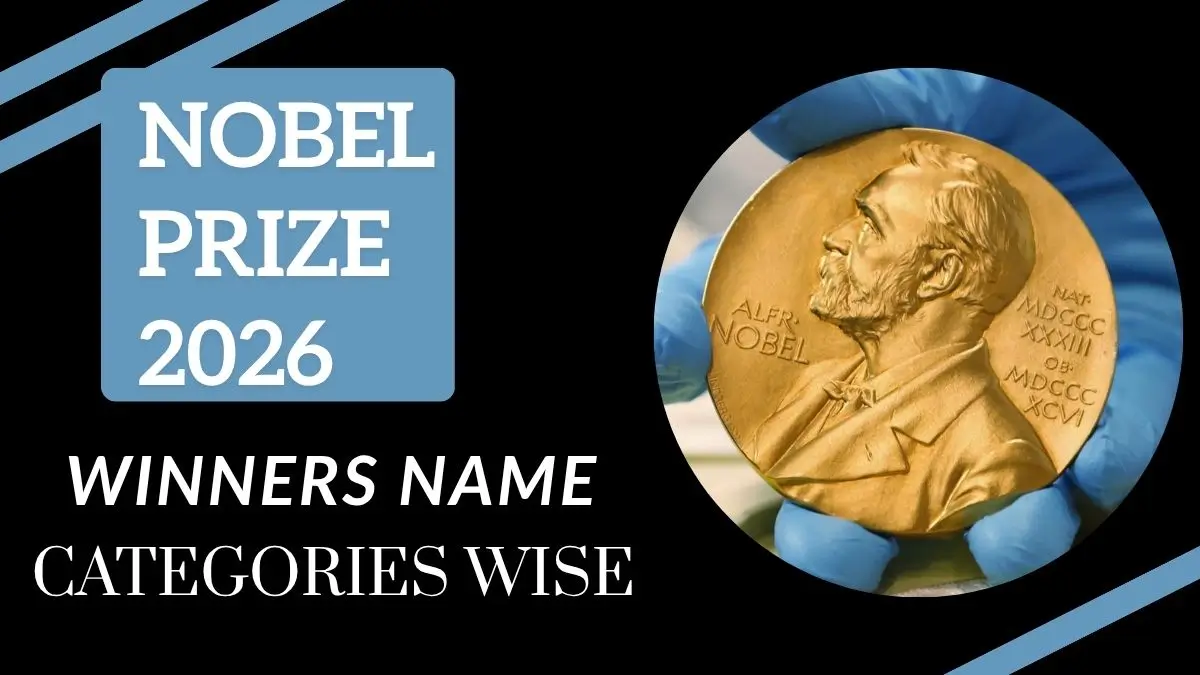
Nobel prizes in 2026 will be declared during the first half of October, and there will be six different types of Nobel prizes, namely, Physiology or Medicine, Physics, Chemistry, Literature, Peace, and Economic Sciences. The Nobel prizes are the most prestigious international prizes that reward outstanding achievement in science, literature, peace and economic sciences. The 2026 Nobel Prize winners will be announced beginning with the Prize in Physiology or Medicine on 5th October and ending with the Economic Sciences prize on 12th October.

Nobel Prize 2026 Winners List

Prize  Date of Announcement Winner’s Name Awarded By Location
Physiology or Medicine 5th of October, 2026 To be Announced Nobel Assembly at Karolinska Institutet` Solna, Sweden
Physics 6th of October, 2026 To be Announced Royal Swedish Academy of Sciences Stockholm, Sweden
Chemistry 7th of October, 2026 To be Announced Royal Swedish Academy of Sciences Stockholm, Sweden
Literature 8th of October, 2026 To be Announced Swedish Academy Stockholm, Sweden
Peace 9th of October, 2026 To be Announced Norwegian Nobel Committee Oslo, Norway
Economic Sciences 12th of October, 2026 To be Announced Royal Swedish Academy of Sciences Stockholm, Sweden

Nobel Prize in Physiology or Medicine 2026

The 2026 Nobel Prize in Physiology or Medicine is due to be unveiled on October 5, 2026.

The prize is to be awarded by the Nobel Assembly at the Karolinska Institute. This prize goes to discoveries of great importance in the field of physiology or medicine.

Winner: To be announced.

Nobel Prize in Physics 2026

The 2026 Nobel Prize in Physics is set for announcement on October 6, 2026.

The Nobel Prize in Physics is awarded by the Royal Swedish Academy of Sciences for major contributions to physics.

Winner: To be announced.

Nobel Prize in Chemistry 2026

The 2026 Nobel Prize in Chemistry is set for announcement on October 7, 2026.

The Nobel Prize in Chemistry is to be awarded by the Royal Swedish Academy of Sciences for achievements in the field of chemistry.

Winner: To be announced.

Nobel Prize in Literature 2026

Nobel Prize in Literature for the year 2026 will be announced on October 8, 2026.

The Swedish Academy decides the recipient of the Literature prize, which goes to a person whose works in the field of literature are highly appreciated.

Winner: To be announced.

Nobel Peace Prize 2026

Nobel Peace Prize for the year 2026 will be announced on October 9, 2026.

Unlike other prizes, the Nobel Peace Prize is decided by Norwegian Nobel Committee.

This award goes to those who have made any contribution for peace and international cooperation.

Winner: To be announced.

Nobel Prize in Economic Sciences 2026

Nobel Prize in Economic Sciences for the year 2026 will be announced on October 12, 2026.

This award is given by Royal Swedish Academy of Sciences to recognize achievements in economic sciences.

Winner: To be announced.

The Nobel Prize – Key Information

The Nobel Prizes were created according to the will of Alfred Nobel, a Swedish inventor, engineer, and industrialist.

They relate to accomplishments in physics, chemistry, physiology or medicine, literature, and peace.

In addition, the prize for economic sciences was instituted in 1968 by Sveriges Riksbank in memory of Alfred Nobel.

Among well-known Nobel Prize winners of history, there are such names as Marie Curie, Albert Einstein, Nelson Mandela, and Bob Dylan.
Parliamentary Panel Reshuffle 2026: Full List of New Chairpersons

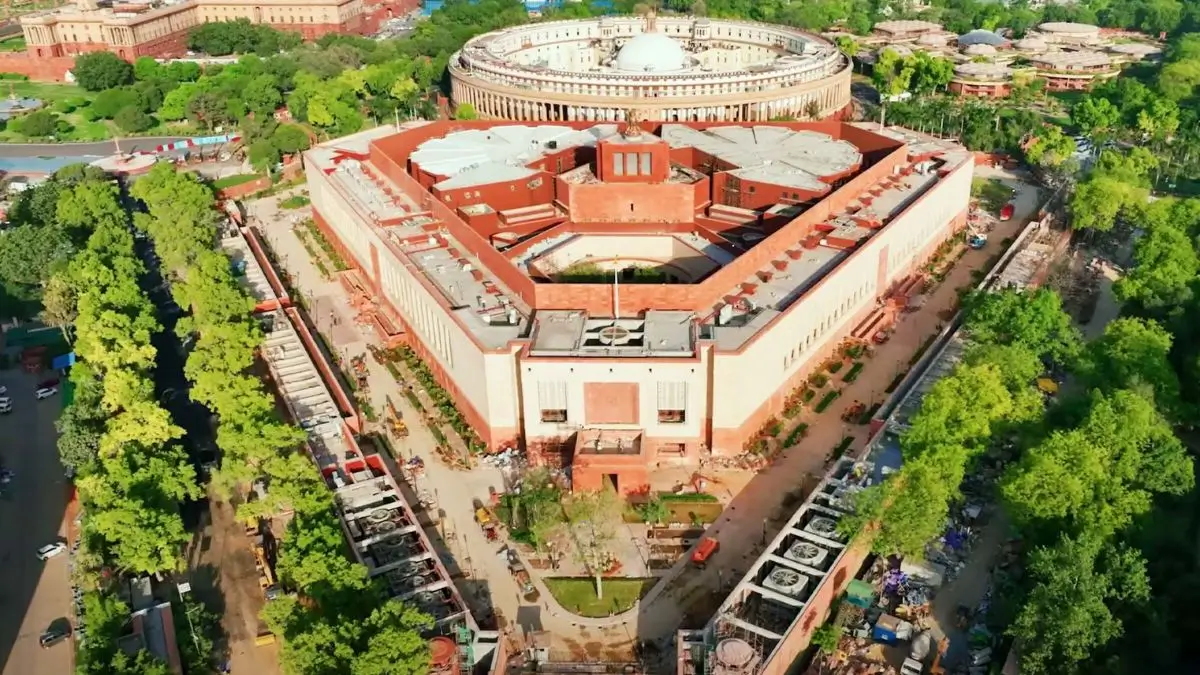
For the period 2026-27, the Lok Sabha and the Rajya Sabha have renewed their department-related Parliamentary Standing Committees and the majority of the previous chairpersons have been continued and only some committees have new chairpersons. Of the new appointments, Tiruchi Siva is the new chairperson of the Industry Committee and Sujeet Kumar is the new chairperson of the Personnel, Public Grievances, Law and Justice Committee.

Here is the Full List of the New Parliamentary Panel Chairpersons

Name of Parliamentary Standing Committee  Name of Chairperson  Associated Party Status From Last Position
External Affairs Shashi Tharoor Congress Reappointed
Agriculture Charanjit Singh Channi Congress Retained
Transport Sanjay Kumar Jha JD(U) Reappointed
Coal, Mines and Steel Anurag Thakur BJP Retained
Health and Family Welfare Ram Gopal Yadav Samajwadi Party Retained
Industry Tiruchi Siva DMK New appointment
Personnel, Public Grievances, Law and Justice Sujeet Kumar BJP New appointment
Education, Women, Children and Youth Mukul Wasnik Congress Retained
Commerce Sudhanshu Trivedi BJP New appointment
Energy Shrirang Barne Shiv Sena Reappointed
Science and Technology, Environment, Forests and Climate Change Medha Vishram Kulkarni BJP Retained
Communications and Information Technology Nishikant Dubey BJP Reappointed
Home Affairs Radha Mohan Das Agarwal BJP Reappointed
Rural Development and Panchayati Raj Saptagiri Ulaka Congress Reappointed
Defence Radha Mohan Singh BJP New appointment
Consumer Affairs, Food and Public Distribution K. Kanimozhi DMK Reappointed

Changes in Parliamentary Committees

There have been some significant changes in the leadership of department related standing committees, apart from some exceptions.

Tiruchi Siva has been designated as the chairperson of the Standing Committee on Industry. Tiruchi Siva was already known to be part of the Industry Committee and also as chairperson from the parliamentary records.

There have also been some changes in the personnel of Personnel, Public Grievances, Law and Justice Committee wherein Sujeet Kumar has been made the chairperson.

In the case of Commerce Committee, there has been change in the chairpersonship from the Trinamool Congress party member Dola Sen to the BJP member Sudhanshu Trivedi, who headed the Commerce Committee till March 2026 when it produced its 196th report.

Radha Mohan Singh has been made the chairperson of the Defence Committee, whereas others like Shashi Tharoor and Radha Mohan Das Agarwal continue to be at the same places respectively.

Department-related Parliamentary Standing Committees

Department-related Parliamentary Standing Committees (DRSCs) are standing committees in Parliament which review the working of certain ministries and departments.

Functions of DRSCs include reviewing the following,

  • Demands for Grants of ministries and departments.
  • Bills referred to the committee.
  • Annual reports of ministries and departments.
  • National policies and programmes.
  • Issues concerning the working of the respective ministries.
  • Actions taken by the government on committee recommendations.

This helps in the detailed review of government policies and expenditures by the Parliament beyond the business of the House.

For instance, the Department-related Standing Committee on Home Affairs reviewed the Demands for Grants for 2026-27 of the Ministry of Home Affairs and the Ministry of Development of North Eastern Region.

Role of the Standing Committees in Parliament

The standing committees of parliament have played a very crucial role in legislative and executive accountability.

They give an opportunity to the MPs to study the government’s policies and expenditure in much greater detail and also interact with the representatives from ministries, departments, etc.

They can also suggest recommendations to the government. Although such suggestions are not always binding on the government, it is expected that the government will respond to such recommendations.

19th Pravasi Bharatiya Diwas Convention to be Held in Kolkata from January 7-9, 2027

The 19th Pravasi Bharatiya Diwas (PBD) Convention is scheduled to take place in Kolkata, West Bengal, during January 7 to 9, 2027. The three-day convention will be hosted by the Ministry of External Affairs (MEA) along with the West Bengal Government. The convention will see the participation of members of the Indian diaspora community as well as other stakeholders from all around the world. The convention will be inaugurated by the Prime Minister Narendra Modi whereas President Droupadi Murmu will confer Pravasi Bharatiya Samman Awards and will preside over the valedictory session.

Pravasi Bharatiya Diwas 2027 Key Details

The convention will act as a platform to interact with members of the Indian diaspora and stakeholders both in India as well as abroad.

  • Event: 19th Pravasi Bharatiya Diwas Convention
  • Date: January 7–9, 2027
  • Venue: Kolkata, West Bengal
  • Organizer: Ministry of External Affairs
  • Partner: Government of West Bengal
  • Inaugurated by: Prime Minister Narendra Modi
  • Pravasi Bharatiya Samman Awards Conferred by: President Droupadi Murmu
  • Valedictory session presided over by: President Droupadi Murmu
  • Youth segment: Youth PBD

Youth PBD and Diaspora Participants

Besides this 19th convention, there is going to be a Youth PBD component as well. The youth members of diaspora are going to join along with the entrepreneurs, professionals, intellectuals, innovators and other members of the Indian diaspora.

Youth PBD is an opportunity to interact with the younger members of the overseas Indian community as well as engage in areas such as innovations, entrepreneurship, professional networking and knowledge exchange.

What is Pravasi Bharatiya Diwas?

Every year Pravasi Bharatiya Diwas (PBD) is celebrated on January 9 as it is the anniversary of the arrival of Mahatma Gandhi from South Africa to India on January 9, 1915.

It is also the day which marks the engagement of India with its overseas Indian community. PBD Convention is a forum to interact with the Government of India, state governments and members of the Indian diaspora.

First PBD Convention was celebrated in 2003.

Pravasi Bharatiya Samman Awards

The Pravasi Bharatiya Samman Award (PBSA) acknowledges outstanding contributions made by overseas members of the Indian diaspora community.

Some of the areas in which the award acknowledges contributions include,

  • Creating awareness about India in the foreign countries.
  • Improving ties between India and other nations.
  • Contributions for the welfare of the Indian community abroad.
  • Charitable and social service work.
  • Social work and philanthropy.
  • Excellence in a particular field contributing to the prestige of India in the international arena.
  • Achievements and contributions by the overseas Indians.

The President of India awards the Pravasi Bharatiya Samman Awards at the PBD Convention

India Demonstrates First 5.56-km Free-Space Quantum Key Distribution Link

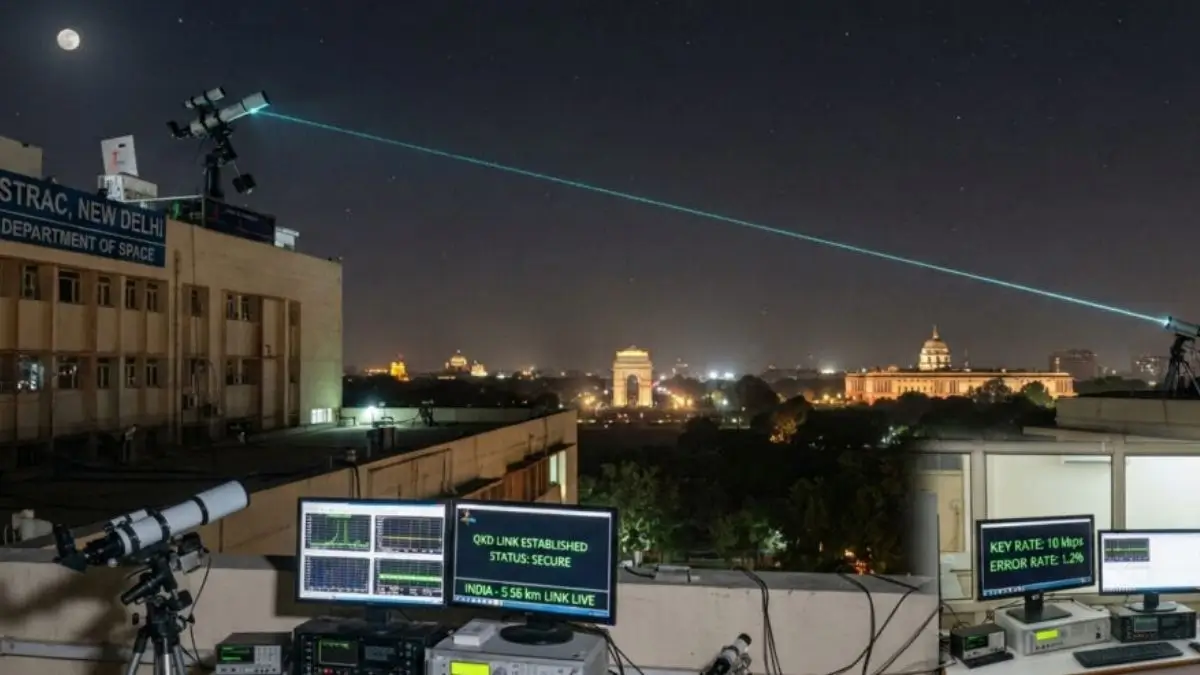
India has accomplished its first demonstration of free-space Quantum Key Distribution (QKD), over 5.56 km. This is the first milestone towards the development of the quantum-secured communication network in India. The demonstration was carried out on the night of September 27–28, 2026, to set up a quantum secured communication network between BISAG-N and IIT Gandhinagar. This achievement was a result of a collaboration between QNu Labs and BISAG-N, IIT Gandhinagar. The quantum communication network maintained the Quantum Bit Error Rate of less than 5%, which generated secure keys with a rate of 230-260 bits per second (bps).

Details of Quantum Communication Network Demonstration

The trial was conducted using QNu Labs’ Pointing, Acquisition and Tracking (PAT) system to establish and sustain the free-space optical link.

This trial delivered the following results,

  • Total Distance: 5.56 km
  • Communication Mode: Free-space optical
  • Quantum Bit Error Rate (QBER): Below 5%
  • Total secured key generation rate: 230–260 bps
  • Trial dates: Night of September 27–28, 2026
  • Connected locations: BISAG-N and IIT Gandhinagar
  • Encryption: End-to-end encryption and decryption of test messages

The quantum keys generated have been integrated with BISAG-N’s Vedic Kavach, which has post-quantum cryptography capabilities.

Operation of the Quantum Security Architecture Using Two Layers

The system utilized the integration of QKD hardware security and post-quantum cryptography (PQC).

Armos QKD from QNu Labs was deployed over free space optical links for the creation and distribution of cryptographic keys based on quantum technologies. In software terms, BISAG-N’s Vedic Kavach offered post-quantum cryptography and quantum random number generator (QRNG).

It ensures a two-layer approach to security. According to the involved organizations, such an architecture design is intended to ensure resiliency even in case the physical layer of quantum communication becomes unavailable.

What is Quantum Key Distribution?

Quantum Key Distribution is a technique used for secure exchange of cryptographic keys based on quantum mechanics.

While conventional key distribution schemes are based mostly on computational assumptions about mathematical problems, QKD utilizes quantum properties to identify the attempts to spy on the communication link. Attempting to measure quantum information can perturb its state, which indicates the presence of possible intrusion.

Thus, QKD is seen as one of the promising technologies to protect sensitive communication in the future, when quantum computers become too powerful to break current cryptosystems.

Quantum Bit Error Rate and Key Generation

Two specific technical parameters from the trial have a special importance.

The Quantum Bit Error Rate (QBER) is an indicator showing the percentage of quantum bits with errors after their transmission and measurement. In general, the lower the QBER, the better quality of the quantum channel. The QBER remained stable at less than 5% in the course of the trial.

The system produced secure keys at 230-260 bps, i.e., 230 to 260 bits of the key were generated every second.

Relation with India’s National Quantum Mission

The recent demonstration is part of India’s larger efforts towards indigenously developed quantum technologies via the National Quantum Mission (NQM).

The National Quantum Mission was sanctioned by the Union Cabinet with a budget of ₹6,003.65 crore for eight years. The goals include the development of quantum computing, quantum communication, quantum sensing and metrology, and quantum materials and devices.

Goals of communication under the NQM include the development of inter-city QKD networks spanning up to 2,000 km and satellite quantum-secured communication between ground stations over 2,000 km within India.

India has demonstrated QKD over greater distances using optical-fibre networks. A 500-km QKD network was demonstrated in 2025 by QNu Labs, and a 2026 update highlighted 1,000-km quantum communication networks under the National Quantum Mission. This is different from the current 5.56-km free-space optical demonstration.

Ministry of Education Approves Five Centres of Excellence for Studies in Classical Languages

Centres of Excellence (CoEs) have been sanctioned by the Department of Higher Education, Ministry of Education, for conducting research into Classical Assamese, Classical Bengali, Classical Marathi, Classical Pali and Classical Prakrit languages. The notification has been issued on 3rd October 2026. These Centres shall facilitate higher research, documentation, conservation and digitization of the literature, in addition to spreading awareness regarding classical languages of India. The CoEs are situated in Assam, West Bengal, Maharashtra, Odisha and Gujarat.

Five Centres of Excellence and Host Institutions

The five Centres have been assigned to higher education institutions that have regional and academic significance for the respective languages.

Classical Language  Centre of Excellence State
Classical Assamese Tezpur University Assam
Classical Bengali Visva-Bharati University West Bengal
Classical Marathi Deccan College Post-Graduate and Research Institute (Deemed to be University), Pune Maharashtra
Classical Pali Central University of Odisha Odisha
Classical Prakrit Central University of Gujarat Gujarat

Thus, the five Centres have been established in five different states of India, thereby establishing institutional support for research on classical languages in the country.

Areas of focus

These five Centres of Excellence will operate on four main areas of activity,

  • Academic research and scholarship: Establishment of platforms for advanced research and scholarship in the respective languages.
  • Preservation and Digitization: Documentation, preservation and digitization of linguistic and literary resources and textual traditions.
  • Dissemination: Promotion of greater accessibility of linguistic and literary traditions of the five languages.
  • Higher Education Ecosystems: Enhancing the capacity of higher education institutions and research networks focused on classical language study in the five states.

Classical Languages of India

The current development is an addition to the list of Classical Language in India, which was extended in 2024. On 3rd October, 2024, the Union Cabinet granted Classical Language status to Marathi, Pali, Prakrit, Assamese and Bengali, making the total of Classical Languages in India reach 11.

There were six languages which had been granted the status before this development, namely Tamil, Sanskrit, Telugu, Kannada, Malayalam and Odia. Tamil became the first Classical Language of India in 2004.

Classical Language Year of Recognition
Tamil 2004
Sanskrit 2005
Telugu 2008
Kannada 2008
Malayalam 2013
Odia 2014
Marathi 2024
Assamese 2024
Bengali 2024
Pali 2024
Prakrit 2024

The five languages added in 2024 were based on the recommendations of Linguistics Experts Committee which modified the standards for Classical Languages.

Classical Language Criteria

The modified set of criteria includes several historical and literary factors. A language must possess,

  • Antiquity of early texts and recorded history of about 1,500 to 2,000 years.
  • A corpus of ancient literature or text which is considered a legacy of generations of speakers of the language.
  • Texts related to knowledge especially prose as well as poetry and epigraphy/inscription.
  • A classical language as well as literature which might be different from the current state of the language or not continuous with later states of its offshoots.

The committee of linguists of the Sahitya Akademi amended the criteria in July 2024 and recommended Marathi, Pali, Prakrit, Assamese and Bengali as Classical Languages.

Importance of the Five Centres

The newly established Centres are dedicated institutional facilities for the five languages that were designated as Classical Languages in 2024. Their emphasis on research, documentation, digitization and dissemination can help in preserving ancient texts and traditions of knowledge in addition to creating robust academic environments for the study of Classical Languages.

This scheme also involves the linking of the designation of Classical Languages with higher education institutions, thereby giving the newly designated languages a platform for scholarly study and preservation.

World Habitat Day 2026: Theme, History, Significance and Global Housing Crisis

World Habitat Day is celebrated every year on the first Monday in the month of October as a way of bringing to light the state of the human settlements and the crucial need for adequate housing. For the year 2026, it will be celebrated on October 5. The United Nations has decided on “Adequate Housing for All” as the theme for this year’s celebration.

Why is World Habitat Day Celebrated?

The United Nations General Assembly declared World Habitat Day in 1985, and its first observance took place in 1986.

It urges governments, organisations, and communities to reflect on human settlements planning and development.

It covers issues such as,

  • Access to adequate housing
  • Sustainable urban development
  • Inclusive cities
  • Affordable housing
  • Urban infrastructure
  • Basic services
  • Sustainable human settlements

World Habitat Day is also the starting point for Urban October, which is a UN-Habitat led month long campaign on sustainable urban development.

Theme of World Habitat Day 2026

Theme for World Habitat Day 2026 will be,

  • “Adequate Housing for All”

The theme highlights the ongoing global issue related to housing and the necessity of making housing safe, affordable, accessible and adequate for habitation.

The concept of adequate housing does not only include a physical shelter over one’s head. In terms of international human rights, adequate housing is associated with issues like security of tenure, affordability, basic services, habitability, accessibility and location.

What Does Adequate Housing Mean?

The adequate housing includes many inter-related aspects,

  • Security of tenure: The residents should receive protection against forced evictions.
  • Services availability: The housing should have access to all basic services including water, sanitation and energy services.
  • Affordability: The housing should not prevent anyone from fulfilling their basic needs.
  • Habitability: The housing should be safe for the inhabitants.
  • Accessibility: The housing should be easily accessible for persons with disability, elderly people and other vulnerable groups.
  • Location: The houses should have access to employment opportunities, schools and health care facilities and others.

Global Housing Crisis

Insecurity of housing is becoming a pressing issue for both developed countries and developing ones.

Factors including fast-paced urbanization, high housing costs, shortage of housing supply, economic uncertainty and poor urban planning contribute to the problem.

The problem of housing security has gained another dimension due to climate change since natural disasters including floods, cyclones, droughts, wildfires and others may damage the houses and cause displacement.

Protracted housing insecurity may be caused by conflicts and humanitarian crises since refugees and IDPs face this problem.

Therefore, the theme of the International Year of 2026 will include problems that relate to housing together with other issues, including poverty, climate change adaptation, urbanization and others.

Urbanization and Housing

Urbanization increases the demand for housing, infrastructure and social services.

According to UN projections, about 68% of the world’s population may live in urban areas in 2050.

Fast-paced urbanization may lead to the emergence of such problems as,

  • Shortage of housing
  • Slums
  • Traffic congestion
  • Strain on water and sanitation
  • Solid waste management
  • Air pollution
  • Urban disparities
  • Climate vulnerability

Thus, sustainable urban planning is closely related to the goal of adequate housing provision.

World Habitat Day and SDG 11

World Habitat Day is directly connected to Sustainable Development Goal 11 (SDG 11), which seeks to make cities and human settlements inclusive, safe, resilient and sustainable.

This goal includes objectives such as,

  • Affordable housing and slum upgrading
  • Sustainable transport
  • Inclusive urbanization
  • Cultural and natural heritage protection
  • Disaster reduction
  • Reducing negative environmental impact of cities
  • Public space provision

Thus, housing plays an important part in the overall sustainable development framework established by the UN.

Global observance of World Habitat Day 2026

The global observance of World Habitat Day 2026 will be held in Muscat, Oman, between October 5 and October 8, 2026.

It will include discussions involving policy makers, urban planners, researchers, development organizations and communities regarding housing and sustainable urban development.

Moreover, it will have discussions and workshops on urban development and housing.

The UN-Habitat Scroll of Honour Award is connected to the World Habitat Day observance.

World Teachers’ Day 2026: History, Theme and UNESCO’s Teacher Shortage Warning

World Teachers’ Day is observed each year on October 5 to pay tribute to the contributions made by teachers to education as well as to the working environment of teachers. For 2026, the day observes 60 years of the adoption of the ILO-UNESCO Recommendation concerning the Status of Teachers in 1966, with the theme, “Standing with teachers: 60 years of protecting the profession, advancing its status and shaping our futures.

‘Why Is World Teachers’ Day Celebrated on October 5?

October 5 was chosen for the observance of the adoption of the 1966 Recommendation concerning the Status of Teachers.

This recommendation was adopted on October 5, 1966, in an intergovernmental conference called by UNESCO in collaboration with the International Labour Organization (ILO).

It established international standards regarding,

  • Rights and responsibilities of teachers
  • Teacher preparation
  • Professional development
  • Recruitment
  • Employment
  • Conditions of teaching and learning

Theme of World Teachers Day 2026

Theme of UNESCO for 2026 is,

  • “Standing with teachers: 60 years of defending the profession, elevating its status and shaping our future.”

It acknowledges the sixty years of the Recommendation from 1966, yet focuses on the current problems faced by teachers.

The theme of 2026 also reflects the process of revision of the Recommendation from 1966 initiated by UNESCO due to the changes within the profession.

Why Is the Teaching Profession under Pressure?

There have been identified some emerging issues, related to teachers and education systems by UNESCO.

They are,

  • Digital technologies
  • Climate change
  • Inclusion
  • Migration and displacement
  • Professional autonomy of teachers
  • Teachers’ participation in decision-making in the field of education
  • Salaries and compensations
  • Workload
  • Work environment

UNESCO Raises Alarm Over 44 Million Teachers Shortage

One of the major issues raised by UNESCO includes the teachers’ shortage across the globe.

UNESCO estimates that 44 million additional teachers will be needed to attain universal primary and secondary education by 2030.

Shortage is the result of not only recruiting of teachers but also the problem associated with retention and improvement of working conditions for them.

This shortage has consequences for education, especially for those regions which are lacking in qualified teaching professionals.

Celebration of 2026 World Teachers Day in Paris

The global event dedicated to the celebration of 2026 World Teachers’ Day will take place in Paris at UNESCO headquarter on October 5, 2026.

Teachers and education ministers as well as other stakeholders will attend discussions regarding the present status and future of the teaching profession.

The programme will include the ceremony of awarding of the ninth edition of UNESCO-Hamdan Prize for Teacher Development.

UNESCO-Hamdan Prize for Teacher Development

The UNESCO-Hamdan Prize for Teacher Development is awarded for the recognition of any projects contributing to teaching and learning.

This prize has connections with projects that support teachers’ development and the improvement of education quality.

The 2026 World Teachers’ Day event will feature the ceremony of the ninth edition of the prize.

India’s Russia-Ukraine Ceasefire Proposal Called ‘Broadest’ Among Four Offers

The offer for a ceasefire between Russia and Ukraine from India has been called by Ukrainian foreign minister Andrii Sybiha the “broadest” out of four proposals currently on the table. As per Sybiha, the Indian proposal encompasses a ceasefire regarding the Black Sea and energy infrastructure. The other three proposals have been offered by the US, Egypt, and Turkiye. This news comes at a time when there has been growing diplomacy by India with both Moscow and Kyiv.

Four Ceasefire Proposals On Table

As per the Ukrainian officials, four separate proposals are currently on the table.

Country Proposals
India Broad ceasefire proposal relating to energy infrastructure and the Black Sea
US Ceasefire proposal under consideration
Egypt Black Sea related proposals
Turkiye Black Sea related proposals

Ukraine has stated that it is open to an energy and Black Sea ceasefire, so long as it is a comprehensive one.

Indian Proposal for Energy Infrastructure and Black Sea

The Indian proposal is important since it is said to cover more than just stopping fighting activities.

The Indian framework consists of,

  • A ceasefire for energy infrastructure.
  • Protection of energy infrastructure from any attacks.
  • Port infrastructure.
  • Black Sea ceasefire.
  • Ceasefire framework that will include the two parts.

Ukraine has highlighted the need to address the two aspects – energy and Black Sea – simultaneously.

Diplomatic Relations of India with Russia and Ukraine

India has continued having diplomatic relations with Russia and Ukraine despite the ongoing conflict.

India’s external affairs minister, S. Jaishankar, visited Ukraine and Poland, during which he held talks with Ukrainian President Volodymyr Zelenskyy and Andrii Sybiha, who is the Ukrainian foreign minister.

Later on, Jaishankar had talks with Sybiha at the United Nations General Assembly (UNGA) in New York in September 2026.

The above diplomatic relations are happening while India continues having diplomatic talks with Russia.

Indian Stance on the War between Russia and Ukraine

India has been promoting dialogue and diplomacy as the tools for resolving the Russia-Ukraine dispute.

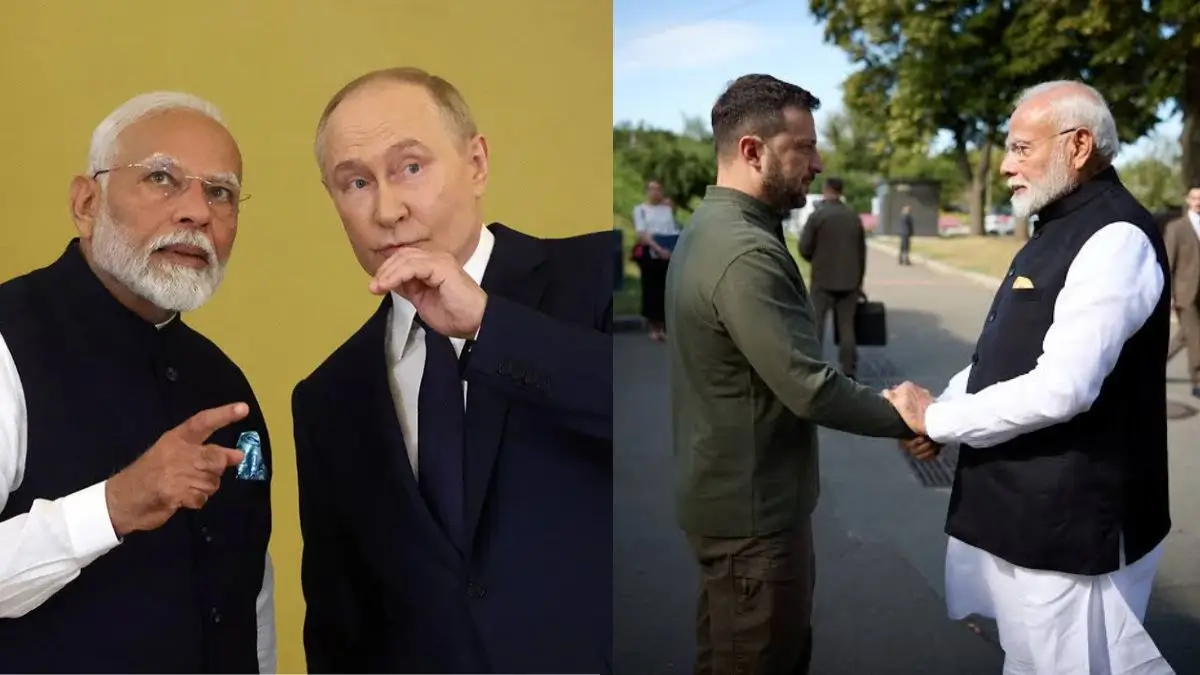
The Prime Minister of India, Narendra Modi, has been in touch with the leaders of both nations. While meeting with Russian President Vladimir Putin at the SCO summit held in Kyrgyzstan, he asked for efforts to shift from an “endless war” to peace with regard to the conflict.

India’s foreign policy strategy has been to maintain the long-standing ties with Russia but also establish ties with Ukraine diplomatically.

The Black Sea and Grain Deal

The Black Sea has been strategically important during the Russia-Ukraine conflict due to the involvement of food and agriculture exports.

The previous Black Sea Grain Deal, which was facilitated by Turkiye and UN, had helped in exporting Ukrainian grains from the Black Sea.

However, Russia decided to withdraw from the deal in July 2023.

After the failure of the deal, Ukraine has established its alternative sea route for exports. But continued military operations in the Black Sea have caused disruptions in maritime trade and infrastructure.

Importance of Energy Infrastructure in the Russia-Ukraine Conflict

Energy infrastructure has emerged as an important aspect of the Russia-Ukraine conflict.

Impact on energy production, transmission and delivery infrastructure can impact electricity generation and civilian lives along with industries and other critical facilities.

In other words, a ceasefire agreement on energy infrastructure will be a bigger move than just ending battlefield activities.

Diplomatic Stand of India

What makes the diplomatic stand of India interesting is that it shares strategic and economic interests with Russia but also interacts with Ukraine and western countries.

India has not stopped importing energy from Russia and has been calling for peaceful resolution of the conflict.

New Delhi has made it clear time and again that the conflict has much larger implications in terms of food security, energy security and global supply chains, especially for the developing world.

Russia-Ukraine Conflict and India

The Russia-Ukraine conflict affects India in the following ways,

  • Oil and energy prices
  • Fertilizers
  • Food security
  • Defence collaboration
  • Global supply chain
  • Shipping trade
  • India-Russia relations
  • India-Europe relations

Weekly Current Affairs One Liners (28th September to 4th October, 2026)

Weekly Current Affairs One-Liners

Current Affairs 2026 plays a very important role in competitive examinations and hence, aspirants have to give their undivided attention to it while preparing for the government examinations. The banking, SSC, Railways or insurance examinations comprise a section of “General Awareness” to evaluate how much the aspirant is aware of the daily happenings taking place around the world. To complement your preparation, we are providing you with a compilation of the current affairs of the last week.

The Weekly One-Liners provides all-important news from 28th September to 4th October, 2026. Here is the list of some of the most important news of the last week:

  • Asian Games 2026 Medal Tally
  • Lalit Kala Akademi Award
  • UPSC Completes 100 Years

The inclusion of current affairs in these examinations highlights the importance of being well-informed about both national and international events. It tests the aspirants’ understanding of their environment and their ability to interpret and analyze global trends. These topics often cover a wide range of subjects, from political developments and economic changes to scientific advancements and cultural shifts.

Our weekly compilation aims to provide a concise yet thorough overview of significant events, enabling aspirants to efficiently grasp key details necessary for their exam preparation. By integrating current affairs into their study regimen, candidates can significantly enhance their General Awareness, a critical factor in achieving success in competitive exams. This approach not only prepares them for the specific requirements of the exam but also broadens their overall perspective, an essential attribute in today’s interconnected world.

To revise the current affairs of 28th September to 4th October, 2026 click on the link below to download the PDF.

Download The Weekly One Liners 28th September to 4th October, 2026

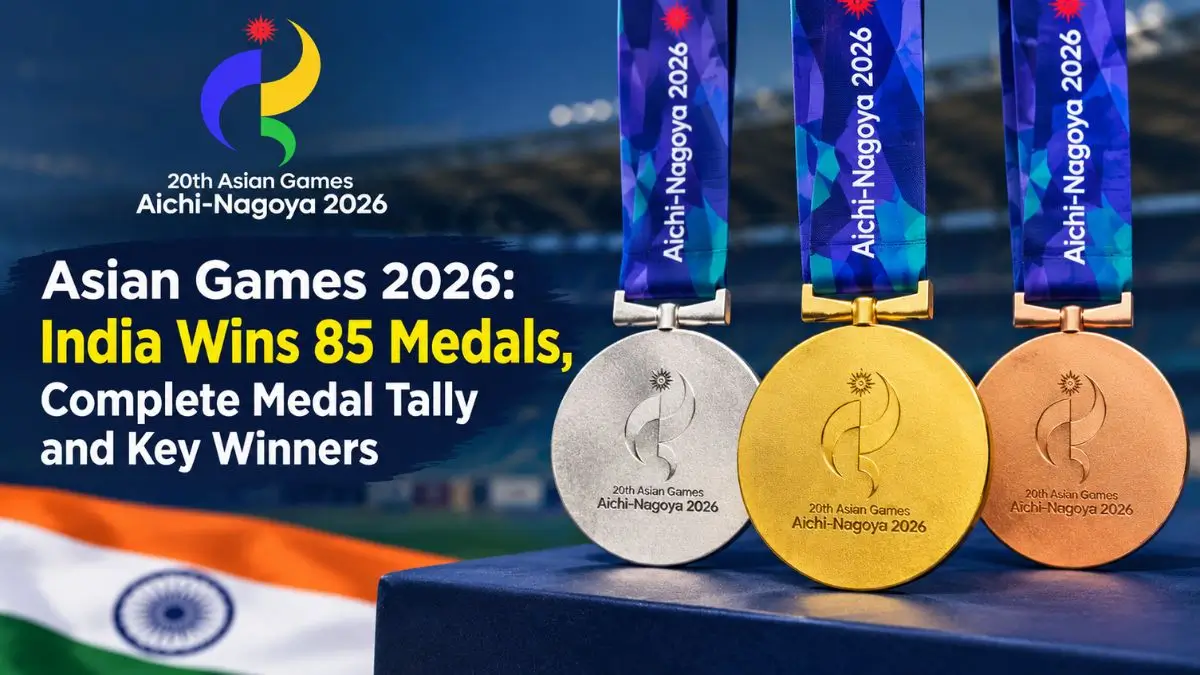
Asian Games 2026: India Wins 85 Medals, Complete Medal Tally and Key Winners

India finished their Asian Games 2026 with a fourth place performance after achieving an impressive medal haul on the 15th day. The team managed to secure 85 medals, including 21 gold medals, 27 silver medals, and 37 bronze medals, and thereby overtook Uzbekistan who managed to win 21 gold medals but fewer silver medals than India. India won gold medals in archery, golf, wrestling, cricket, and men’s hockey.

Final Medal Tally of Asian Games 2026

Rank Country Gold Silver Bronze Total
1 China 169 89 83 341
2 Japan 83 95 91 269
3 South Korea 39 43 68 150
4 India 21 27 37 85
5 Uzbekistan 21 25 24 70
6 Iran 19 18 15 52
7 Thailand 18 13 21 52
8 Kazakhstan 12 24 48 84

Indian Medallists at 2026 Asian Games

No. Athlete Sport Event Medal
1 Elavenil Valarivan, Sonam Maskar, Vidarsa Vinod Shooting Women’s 10m air rifle team Silver
2 Elavenil Valarivan Shooting Women’s 10m air rifle Silver
3 Rudrankksh Patil, Parth Mane, Himanshu Dhillon Shooting Men’s 10m air rifle team Silver
4 Himanshu Dhillon Shooting Men’s 10m air rifle Silver
5 Rudrankksh Patil Shooting Men’s 10m air rifle Bronze
6 Suchika Tariyal Mixed martial arts Women’s traditional -60kg Bronze
7 Team India Cricket Women’s event Gold
8 Parinaaz Dhaliwal, Raiza Dhillon, Maheshwari Chauhan Shooting Women’s skeet team Bronze
9 Anantjeet Singh Naruka, Bhavtegh Singh Gill, Mairaj Ahmad Khan Shooting Men’s skeet team Bronze
10 Jay Meena Soft tennis Men’s singles Bronze
11 Mirabai Chanu Weightlifting Women’s 49kg Silver
12 Team India Badminton Men’s team Bronze
13 Satnam Singh, Salman Khan Rowing Men’s double sculls Bronze
14 Roshibina Devi Wushu Women’s 60kg sanda Silver
15 Anantjeet Singh Naruka, Parinaaz Dhaliwal Shooting Mixed skeet team Bronze
16 Seema Kumari Athletics Women’s 10000m Bronze
17 Team India Athletics Mixed 4x400m relay Silver
18 Aishwary Pratap Singh Tomar, Rudranksh Patil, Niraj Kumar Shooting Men’s 50m rifle 3P team Silver
19 Kamaljeet, Suruchi Singh Shooting Mixed team 10m air pistol Gold
20 Diya Chitale, Manush Shah Table tennis Mixed doubles Bronze
21 Manpreet Kaur Athletics Shot put Bronze
22 Gulveer Singh Athletics Men’s 10000m Silver
23 Baranica Elangovan Athletics Women’s pole vault Bronze
24 Sawan Berwal Athletics Men’s marathon Silver
25 Vidarsa Vinod, Ashi Chouksey, Tilottama Sen Shooting Women’s 50m rifle 3P team Silver
26 Joshna Chinappa, Velavan Senthilkumar Squash Mixed doubles Bronze
27 Team India Kabaddi Women’s event Gold
28 Team India Kabaddi Men’s event Gold
29 Tajinderpal Singh Toor Athletics Shot put Silver
30 Prachi Choudhary Athletics Women’s 400m Bronze
31 Abhay Singh Squash Men’s singles Silver
32 Anahat Singh Squash Women’s singles Silver
33 Haritha Bhadra Athletics Women’s 200m Bronze
34 Ancy Sojan Athletics Women’s long jump Silver
35 Tejaswin Shankar Athletics Decathlon Bronze
36 Parul Chaudhay Athletics Women’s 3000m steeplechase Bronze
37 Sarvesh Kushare Athletics Men’s high jump Silver
38 Pincky Balhara Kurash Women’s -78kg Bronze
39 Esha Singh Shooting Women’s 25m pistol Silver
40 Vithya Ramraj Athletics Women’s 400m hurdles Bronze
41 Gulveer Singh Athletics Men’s 1500m Silver
42 Parul Chaudhary Athletics Women’s 5000m Bronze
43 Murali Sreeshankar Athletics Men’s long jump Silver
44 Yash Vir Singh Athletics Men’s javelin throw Silver
45 Rohit Yadav Athletics Men’s javelin throw Bronze
46 Neeru Dhanda, Manisha Keer, Aashima Ahlawat Shooting Women’s trap team Silver
47 Neeru Dhanda Shooting Women’s trap Gold
48 Narender Berwal Boxing Men’s +90kg Bronze
49 Gulveer Singh Athletics Men’s 5000m Bronze
50 Gurindervir Singh, Sneha SS, Animesh Kujur, Harita Bhadra Athletics Mixed 4×100 team relay Bronze
51 Pooja Singh Athletics Women’s high jump Bronze
52 Kiran Pahal, Poovamma MR, Prachi Choudhary, Vithya Ramraj Athletics Women’s 4x400m relay Gold
53 Dharmveer Choudhary, Manu TS, Jay Kumar, Vishal TK Athletics Men’s 4x400m relay Bronze
54 Jyothi Surekha Vennam, Prithika Pradeep, Chikitha Taniparthi Archery Women’s compound team Gold
55 Chikitha Taniparthi, Sahil Jadhav Archery Mixed compound team Gold
56 Priya Ghanghas Boxing Women’s 60kg Bronze
57 Kynan Chenai, Neeru Dhanda Shooting Mixed trap Gold
58 Kapil Pokhariya Boxing Men’s 90kg Bronze
59 Sahil Jadhav, Ganesh Mani Ratnam Thirumuru, Kushal Dalal Archery Men’s compound team Gold
60 Sunil Kumar Wrestling Greco-Roman 87kg Bronze
61 Anahat Singh, Joshana Chinappa, Tanvi Khanna, Shameena Riaz Squash Women’s team Bronze
62 Prince Kurisinkal Noble, Manu Francis Sailing Men’s skiff Silver
63 Ganesh Mani Ratnam Thirumuru Archery Men’s compound individual Bronze
64 Nitesh Kumar Wrestling Greco-Roman 97kg Silver
65 Abhay Singh, Veer Chotrani, Velavan Senthilkumar, Suraj Kumar Chand Squash Men’s team Bronze
66 Harshita Tomar, Shital Verma Sailing Women’s skiff Bronze
67 Ankita Bhakat, Kumkum Mohod, Kirti Sharma Archery Women’s team recurve Gold
68 Kumkum Mohod, Dhiraj Bommadevara Archery Mixed team recurve Silver
69 Nethra Kumanan Sailing Women’s dinghy Bronze
70 Lovlina Borgohain Boxing Women’s 75kg Gold
71 Dhiraj Bommadevara, Neeraj Chauhan, Yashdeep Bhoge Archery Men’s team Silver
72 Team India Sepaktakraw Men’s quadrant Bronze
73 Parveen Hooda Boxing Women’s 65kg Gold
74 Ankush Panghal Boxing Men’s 80kg Gold
75 Sujeet Kalkal Wrestling Men’s 65kg Gold
76 Team India Hockey Women’s event Gold
77 Kumkum Mohod Archery Women’s individual recurve Gold
78 Pranavi Urs Golf Women’s indivdual Gold
79 Pranavi Urs, Aditi Ashok, Diksha Dagar Golf Women’s team Women’s team Silver
80 Neeraj Chauhan Archery Men’s individual recurve Bronze
81 Team India Cricket Men’s event Gold
82 Aman Sehrawat Wrestling Men’s 57kg Gold
83 Deepak Punia Wrestling Men’s 97kg Bronze
84 Antim Panghal Wrestling Women’s 53kg Silver
85 Team India Hockey Men’s Hockey Gold

India’s Asian Games 2026 Medal Tally by Each Sport

Sport Gold Silver Bronze Total
Archery 5 2 2 9
Shooting 3 8 4 15
Boxing 3 0 3 6
Wrestling 2 2 2 6
Cricket 2 0 0 2
Hockey 2 0 0 2
Kabaddi 2 0 0 2
Athletics 1 9 14 24
Golf 1 1 0 2
Squash 0 2 3 5
Sailing 0 1 2 3
Weightlifting 0 1 0 1
Wushu 0 1 0 1
Badminton 0 0 1 1
Kurash 0 0 1 1
Mixed martial arts 0 0 1 1
Rowing 0 0 1 1
Sepaktakraw 0 0 1 1
Soft tennis 0 0 1 1
Table tennis 0 0 1 1
Total 21 27 37 85
_12.1
October 2026
M T W T F S S
 1234
567891011
12131415161718
19202122232425
262728293031