
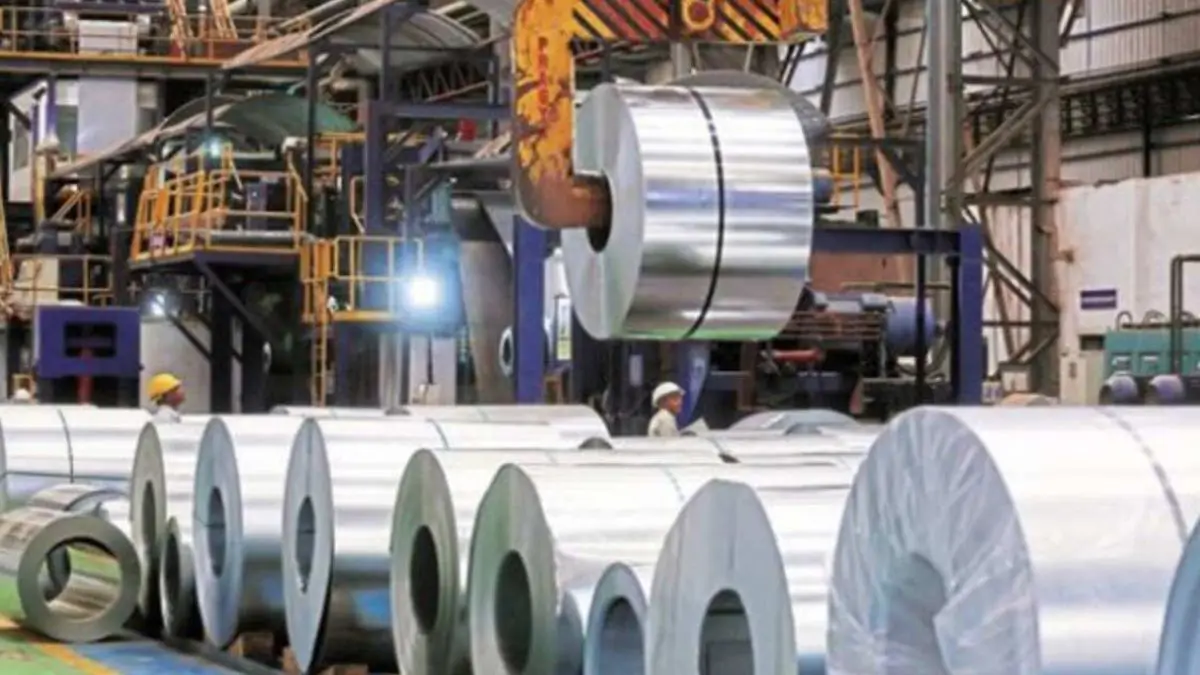
The steel industry in India witnessed robust performance during the first four months of the fiscal year 2026-27, with consumption of finished steel increasing by 7.9 percent to 56 million tonnes (MT) in April-July 2026 compared to 52 million tonnes (MT). Finished steel production showed robust growth too, growing 4.7 percent to 54.7 million tonnes. The stronger growth in consumption suggests robust domestic demand, while higher imports and exports suggest stronger activities in foreign trade. Robust performance was also seen in alloy steel along with firm domestic prices.
Increase in Steel Production and Consumption
Crude steel production in India witnessed an increase of 2.4% to 56.2 MT in April-July 2026 when compared to 54.9 MT in the same period of the previous year. Hot metal production grew 2.7% to 31.9 MT.
During the month of July 2026, finished steel production stood at 14 MT, which was an increase of 3.9% over 13.5 MT of production recorded in July 2025. Consumption also grew 6.8% to 14.4 MT.
The faster growth in consumption signifies strong demand for the product by industries related to infrastructure and construction.
Increase in Steel Trade
Imports of finished steel went up 36.6% to 2.77 MT, whereas exports witnessed a growth of 35% to 2.29 MT. India therefore continued to be a net importer.
China had the maximum import share at 30.9%, South Korea followed at 30.2% and Japan at 14.9%. Vietnam was the leading market in terms of exports of finished steel by India with a share of 15.4%.
Hot-rolled coil and strip continued to remain the biggest trading category with 36.7% share in imports and exports.
Demand for Alloy Steel Experiences Robust Growth
There was an impressive growth witnessed in the alloy steel category. The production grew by 26.7% to reach 3.71 MT, while its consumption saw an increase of 22.1% to 4.02 MT.
There was a significant growth witnessed in alloy steel exports, which registered an increase of 150.7% to 122,200 tonnes, while its imports saw only 9.4% growth to 419,300 tonnes.
On the other hand, the stainless steel category showed a contrasting trend. Though there was an increase of 25% in its consumption to 1.77 MT, its production saw a decline of 4.2% to 1.38 MT. There was a 100% increase witnessed in its imports to 497,000 tonnes.
Growth in Steel Sector via Government Policies
Further, policy actions include securing supply of raw materials and technological advancements in production.
With this view, the Mines and Minerals (Development and Regulation) Amendment Act, 2026, notified on August 17, will work towards making improvements in the investment scenario for mines as well as domestic availability of critical minerals such as iron ore.
The Ministry of Steel has also initiated a monthly webinar on digitalization in steel and mining sectors.
In another development, NMDC’s 2.0 MTPA Iron Ore Beneficiation Plant in Bacheli is in its trial phase whereas MECON and NMDC Steel Limited have inked an agreement pertaining to consultancy services for future projects.








 Index of Eight Core Industries Grows 7.9...
 India’s Current Account Deficit Narrow...
 Direct Tax Collection 2026: Net Revenue ...










