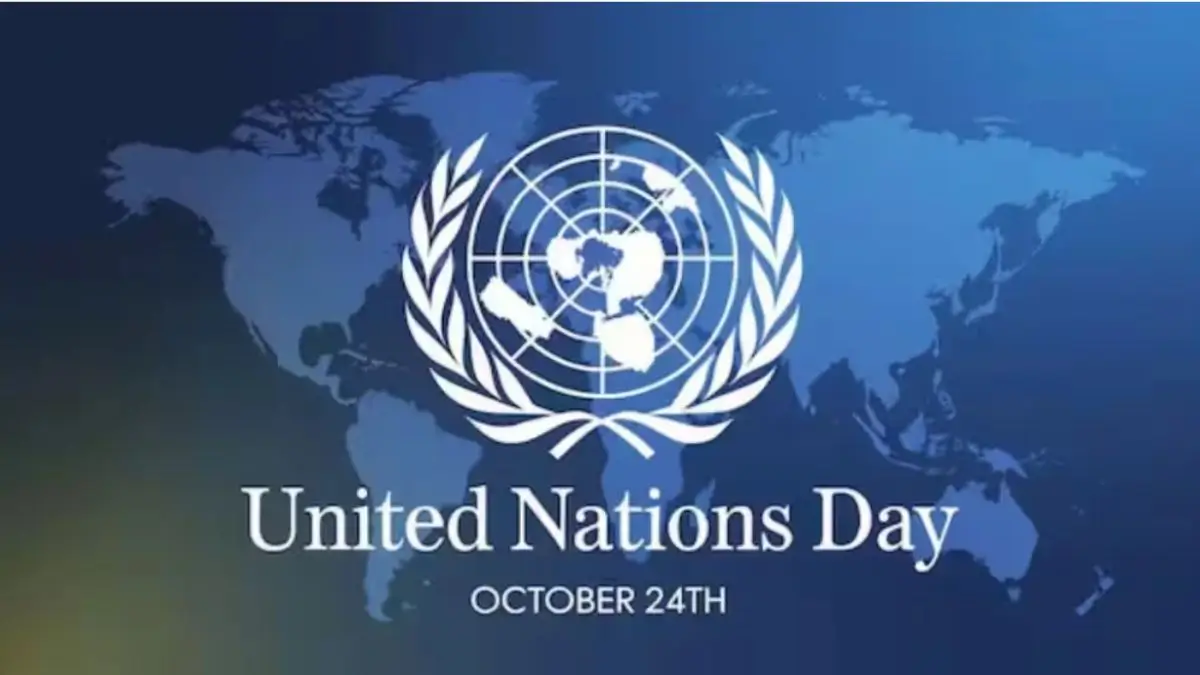
UN Day is celebrated each year on 24 October in recognition of the date on which the UN Charter came into effect in 1945. This year, it is the 81st anniversary of the organisation, marking over eight decades of collaboration across the world on issues related to peace and security, human rights, development, and humanitarian aid. The organisation was formed after the Second World War and offers a forum to nations to collaborate on common problems through diplomacy and multilateralism.
Why Does the United Nations Celebrate United Nations Day on 24 October?
The United Nations is an intergovernmental organisation created in the aftermath of the Second World War, where many countries were left destroyed and where a previous arrangement for collective security proved to be insufficient.
The charter of the United Nations was signed by representatives of 50 countries on 26 June 1945 at the United Nations Conference on International Organisation held in San Francisco, United States. Poland became the 51st signatory of the Charter at a later date. The Charter came into effect on 24 October 1945, having been ratified by the five permanent members of the Security Council and a majority of other signatories.
United Nations Day has been celebrated annually since 1948 and was officially established by the United Nations General Assembly in 1947.
What is the United Nations?
The United Nations is an international organisation that was founded with the purpose of promoting international peace and security, developing friendly relations among nations, promoting human rights and coordinating actions on issues of economics, social problems, humanitarian problems and the environment.
The founding charter of the UN is the UN Charter, which defines the main purposes, principles and organisational structure of the organisation and the obligations of the member countries. The Charter recognises the sovereignty of the states and bans any threats or use of force against the territory or political independence of a state, but subject to the Charter’s provisions.
The United Nations is the organisation where the diplomatic negotiations take place, humanitarian assistance is coordinated and global problems are addressed. Nevertheless, it cannot be considered as a world government because its power and efficiency are determined by its Charter and other factors.
Objectives of the United Nations
1. Maintenance of the international peace and security
Maintaining peace and addressing the any kind of threats to the international peace and security is one of the main UN objectives. It mediates diplomatically and implements peacekeeping missions when necessary. The UN also provides means of settling international disputes.
2. Promotion of human rights
Equality, dignity, and human rights are promoted through the United Nations. An important achievement in this area was the approval of the Universal Declaration of Human Rights (UDHR) by the General Assembly on 10 December 1948.
3. Assistance in sustainable development
The UN works towards solving issues such as poverty, hunger, inequality, healthcare, education, and environmental problems. On 25 September 2015, member states approved the 2030 Agenda for Sustainable Development containing 17 SDGs.
4. Provision of humanitarian aid
Various UN agencies and partner organisations help people suffering from armed conflicts, natural disasters, displacement, food insecurity and health crises. They provide emergency aid, food aid, refugee protection, health care, and help to children.
5. International cooperation
Issues of climate change, pandemics, forced migrations, and international crimes necessitate international cooperation. The UN provides a forum for information exchange, negotiations, treaties and other actions.
Six Principal Organs of the United Nations
The UN Charter establishes the total six principal organs and each organ holds a distinct role in international cooperation and governance.
| Principal organ | Major function |
| General Assembly | Provides a forum for all member states to discuss international issues and make recommendations |
| Security Council | Has primary responsibility for international peace and security |
| Economic and Social Council (ECOSOC) | Coordinates work on economic, social and related development issues |
| International Court of Justice (ICJ) | Settles legal disputes between states within its jurisdiction and provides advisory opinions |
| Secretariat | Conducts the organisation’s day-to-day administrative and operational work |
| Trusteeship Council | Supervised trust territories; suspended regular operations in 1994 after completing its mission |
The General Assembly includes all 193 UN member states. The Security Council has 15 members: five permanent members and 10 elected members serving two-year terms.
The permanent members are China, France, Russia, the United Kingdom and the United States. They hold veto power over substantive resolutions.
India and the United Nations
India is one of the 51 founding member states of the United Nations. India has been active in participating in various international dialogues involving decolonisation, disarmament, development, peacekeeping, and international governance.
India has also provided its own personnel in United Nations peacekeeping operations. In addition, it advocates for reform in the United Nations Security Council since it views the current arrangement in the Council as not representing the new world order adequately, especially in terms of the developing countries and other continents such as Africa.
India has engaged the United Nations in matters of sustainable development, climate change, health, counter-terrorism, and international peace and security.





 World Polio Day 2026: Date, Theme, India...
 International Day of the Snow Leopard 20...
 Ashfaqullah Khan Birth Anniversary 2026:...