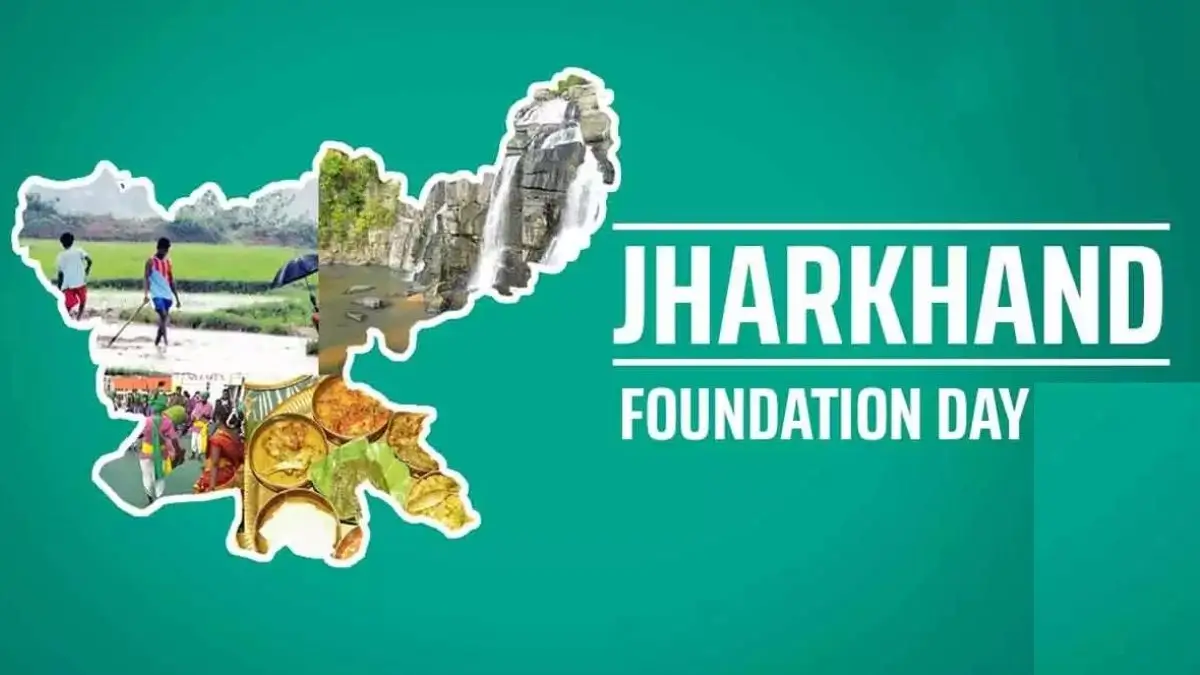
Jharkhand Foundation Day is celebrated on 15th November every year to commemorate the creation of the state of Jharkhand in 2000. This was created from southern Bihar under the Bihar Reorganization Act, 2000, making it the 28th state of India. This date also celebrates the birthday of tribal freedom fighter Birsa Munda, who led the Ulgulan movement which became a significant symbol of the fight for tribal rights, land and identity.
Historical Background of Jharkhand Foundation Day
Jharkhand means the Land of Forests. This region has a long history of tribal people living in the area and fighting against colonialism, oppressive landlords and foreign interference. There are several major tribal communities in this region including Santhal, Munda, Oraon, Ho, Kharia and Bhumij.
Demands for a separate state were driven by the desire to protect tribal land, forest, culture, language and customary rights. Local communities wanted more political power and representation and more of the benefits from developments in this rich mineral region.
Key Tribal Uprisings
There were several key rebellions which took place throughout Chota Nagpur and Santhal Pargana,
| Movement | Year | Key Leaders/Info. |
| Kol Rebellion | 1831-32 | Tribes fought against British intervention and oppressive land rights. Tribes included: Munda, Ho, and Oraon. |
| Santhal Rebellion (Santhal Hul) | 1855-56 | Led by Sidhu, Kanhu Murmu, Chand and Bhairav. They fought against colonialism, moneylenders and landlords. |
| Birsa Munda (Ulgulan) | 1899-1900 | Led by Birsa Munda. Fought against British rule and to retrieve tribal land rights. |
| Tana Bhagat | 1914+ | Led by Jatra Bhagat from Oraon tribe. They fought against exploitation and promoted social and religious reform. |
Birsa Munda & Ulgulan Movement
Birsa Munda (1875-1900) was a tribal freedom fighter, religious reformer and leader of the Munda tribe. He is commonly known as ‘Dharti Aaba’, meaning ‘Father of the Earth’.
- Birthday: 15 th November 1875, Ulihatu village, Khunti District (Currently part of Jharkhand).
- Movement: Led the Ulgulan (Great Tumult) between 1899 and 1900.
- Cause: Opposed British colonialism, money lenders and oppressive land rights. Wanted to retrieve traditional tribal land rights.
- Death: Died in British imprisonment on 9 th June 1900 in Ranchi Jail.
This movement became a key protest for tribal people in Chota Nagpur. Birsa Munda’s birthday is also celebrated as Janjatiya Gaurav Diwas on 15 th November.
Jharkhand Statehood Movement
The idea for a separate Jharkhand state started to become an organized movement.
| Year | Organization/Development | Info. |
| 1921 | Chota Nagpur Unnati Samaj | An organization was created to represent local and Adivasi communities. |
| 1928 | Presented request to Simon Commission | Requested a separate Jharkhand area. |
| 1938/39 | Adivasi Mahasabha | An organization was set up under Jaipal Singh Munda to represent Adivasi political interests. |
| 1950 | Jharkhand Party | Set up under Jaipal Singh Munda. They pushed for a separate state. |
| 2000 | Jharkhand created | The demand for a separate Jharkhand was finally met. |
This movement grew with political activism, wanting more autonomy for the region, to protect tribal culture, land rights and natural resources.
Creation of Jharkhand (15th November 2000)
After years of political activism, Jharkhand was created as a separate state from southern Bihar.
- The Bihar Reorganization Act, 2000 was passed by Parliament. It received assent from the President on 25 th August 2000.
- This act provided the legal reasons for reorganizing Bihar and creating Jharkhand.
- Section 3 of the Act stated that Jharkhand would be created.
- The central government declared that Jharkhand would be created on 15 th November 2000.
- This made Jharkhand the 28th state in the Indian Union. The capital city was Ranchi.
Babulal Marandi became the first Chief Minister and Prabhat Kumar became the first Governor.
Geographical Information
- Location: East of India
- Total Area: 79,714 sq km
- Capital: Ranchi
- Sub Capital: Dumka
- Main Plateau: Chota Nagpur Plateau
- Highest Point: Parasnath Hill
- Main Rivers: Damodar, Subarnarekha, North Koel, South Koel and Barakar.
- Adjacent States: Bihar, West Bengal, Odisha, Chhattisgarh and Uttar Pradesh.






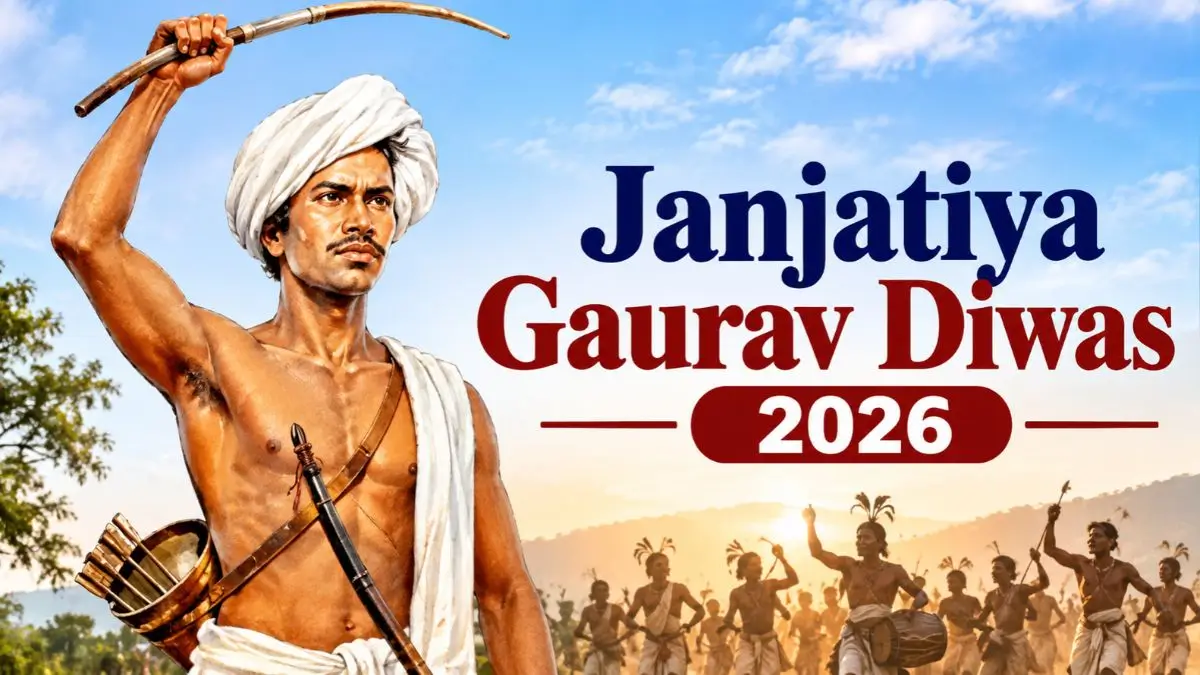 Janjatiya Gaurav Diwas 2026: Date, Histo...
 World Diabetes Day 2026: Theme, Date, Hi...
 Children’s Day 2026: November 14 Date,...