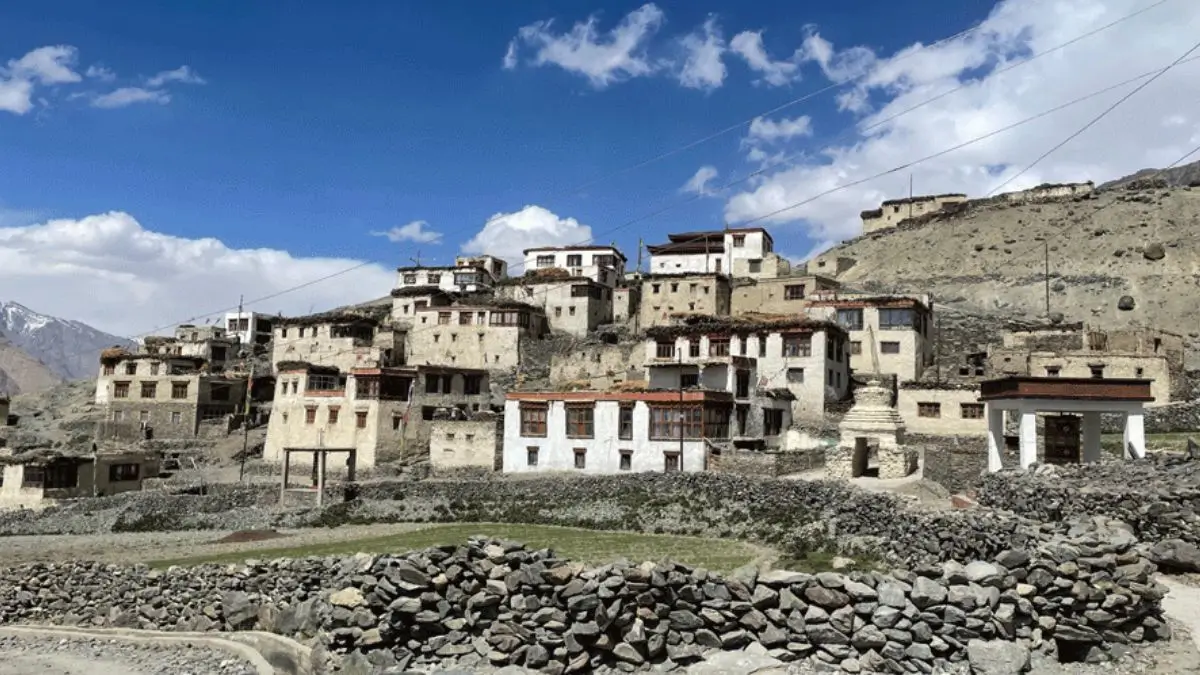
Kumik in Zanskar has become Ladakh’s first ever Heritage Village because of its traditional architecture, Buddhist Kanjur manuscript, farming and other aspects of culture and custom. This declaration was done on 15 September 2026 by the Lieutenant Governor of Ladakh Vinai Kumar Saxena at the Ladakh Zanskar Festival. But the village of Kumik has a strong connection with water scarcity and migration too. The reduction in water availability has forced many families to leave this ancient village and now comes the critical question – how to conserve the heritage of a village when the environmental conditions necessary for sustaining its community life are becoming more and more challenging?
Why Is Kumik Significant?
Kumik is a living heritage with architecture, religion, farming and community activities still continuing there together.
Traditional architecture, sacred buildings, agricultural practices, local custom and Kanjur manuscripts make up the heritage of this village, which is an integral part of the Tibetan Buddhist literary heritage.
What Are Kanjur Manuscripts?
The term Kanjur, also spelled Kangyur, means the Tibetan Buddhist canonical works believed to be Buddha’s teachings. It contains various writings about Buddhism philosophy, monastic rules and tantra.
Numerous Buddhist literature items were translated into Tibetan from Indian and other languages. Hence, manuscripts kept in Himalayan settlements have historical and practical importance not only in terms of religious practices but also in terms of transmission and preservation of Buddhist literature.
Water Scarcity in Kumik
Kumik’s status of a UNESCO heritage site was established amid difficult environmental conditions. Previous studies and journalism provided information about decreasing water supply of the village impacting irrigation and agricultural production.
Yale Environment 360 report from 2015 told about water supply of the village from glaciers and relocation plans due to depletion of water resources. Villagers later migrated to Lower Kumik because there was more water for irrigation but even the new location had its problems with water during winters.
As stated in a Le Monde article in July 2025, most of the village was deserted. Previous articles cannot be taken as a current population estimation of Kumik, however.
Why Is Kumik Described as a “Living Heritage” Settlement?
Living heritage refers to practices, knowledge, and relationships within the community that cannot be maintained only through the preservation of physical structures.
At Kumik, the collective labor for cultivation, religious practices, craftsmanship, and inter-generational knowledge transmission constitute a part of this heritage. Previous research on Zanskar settlements described village members coming together for the purposes of crop harvest and communal building constructions.
These practices require an active community. If people leave the village due to poor living conditions, the maintenance of the traditional housing, cultivation methods, and knowledge would prove more difficult.
What Are the Implications of the Heritage Status?
The recognition officially acknowledges the cultural importance of Kumik and raises awareness about its architecture, Buddhist heritage, farming and other communal practices.
Nevertheless, the announcement does not create a conservation budget, time frame, or water security program.
Kumik Heritage Village: Significant Information
- Name of village: Kumik
- Location: Zanskar, Ladakh
- Status: Heritage Village of Ladakh
- Date of declaration: September 15, 2026
- Announced By: Lieutenant Governor Vinai Kumar Saxena
- Significant elements of heritage: Traditional houses, Buddhist literature, agriculture, and custom
- Significant manuscript: Kanjur/Kangyur
- Major problem: Water shortage and migration
- Festival associated with declaration: Ladakh Zanskar Festival








 Karnataka Declares September 15 Engineer...
 Gujarat Child Protection Policy 2026: Ke...
 Gujarat Passes 24x7 Shops Bill to Boost ...