
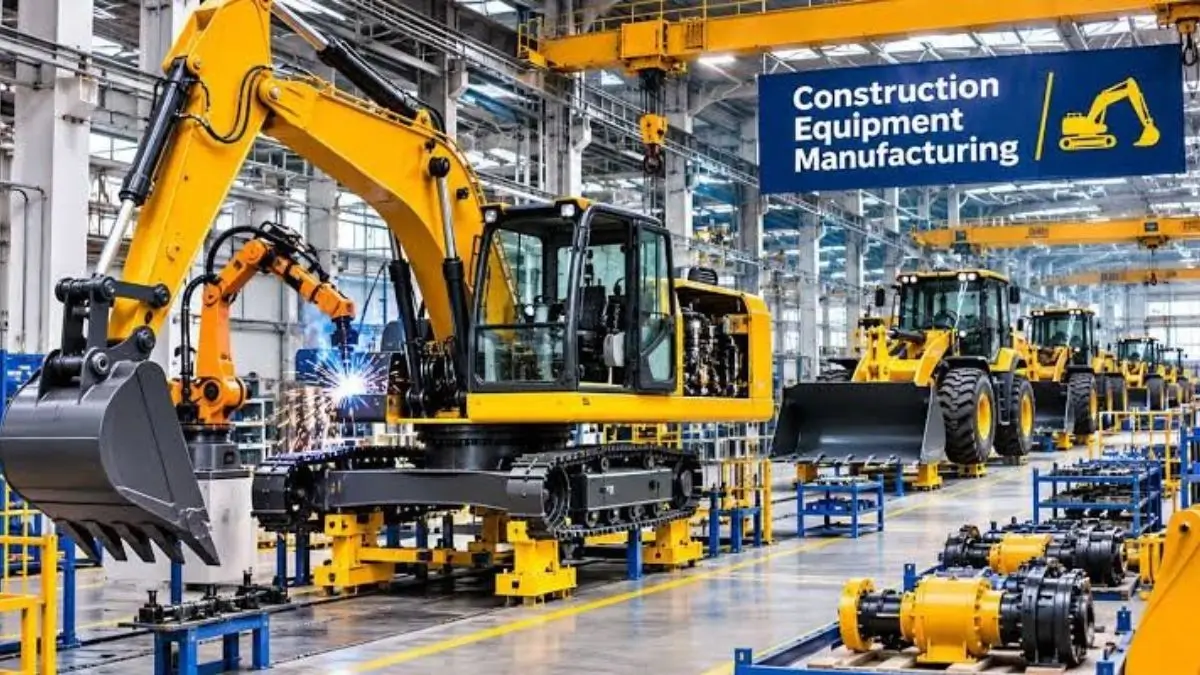
The Union Cabinet chaired by Honorable Prime Minister Narendra Modi has approved the Scheme for Enhancement of Construction and Infrastructure Equipment (CIE) Manufacturing Ecosystem on 25 November 2026. The scheme has a financial outlay of ₹11,000 crore and will be implemented by the Ministry of Heavy Industries. It aims to promote domestic manufacturing of construction and infrastructure equipment, support component manufacturers and establish a dedicated testing facility in India.
CIE Manufacturing Scheme 2026: Key Details
- Scheme: Scheme for Enhancement of Construction and Infrastructure Equipment Manufacturing Ecosystem
- Approval authority: Union Cabinet
- Chairperson of Cabinet: Prime Minister Narendra Modi
- Implementing ministry: Ministry of Heavy Industries
- Total financial outlay: ₹11,000 crore
- Scheme duration: Eight years
- Starting financial year: FY 2026-27
- Main objective: Promote domestic CIE manufacturing
- Key beneficiaries: OEMs and component manufacturers
- Major components: Sales-linked incentives and grant for testing facility
This scheme aims to increase the India’s domestic manufacturing capacity, reduce dependence on imported equipment and strengthen the country’s position in the global construction and infrastructure equipment market.
What is Construction and Infrastructure Equipment (CIE)?
Construction and Infrastructure Equipment refers to machinery and equipment used in construction, infrastructure development and related industrial activities.
These machines are essential for projects involving roads, bridges, tunnels, ports, housing and other infrastructure.
Examples of equipment targeted under the scheme include,
- Ship-to-Shore Cranes
- Tunnel Boring Machines
- Hydraulic Excavators
- Off-Highway Trucks
The scheme seeks to encourage the domestic production of technologically advanced equipment and its components.
India’s Construction and Infrastructure Equipment Industry
India’s CIE industry is currently the world’s third-largest, after China and the United States.
According to the Cabinet announcement, the industry’s market size and projected growth are:
| Indicator | Market Size |
| Market size in FY 2024-25 | ₹97,500 crore |
| Projected market size in FY 2029-30 | ₹2,28,100 crore |
The market is expected to more than double by FY 2029-30. Growth in roads, ports, housing and other infrastructure projects is among the major drivers of demand for construction equipment.
Two Major Components of the CIE Manufacturing Scheme
The scheme has two components: sales-linked incentives for eligible manufacturers and financial support for establishing a dedicated testing facility.
1. Sales-Linked Incentive
The scheme will provide incentives based on the incremental sales value of eligible construction and infrastructure equipment and components.
Two categories of manufacturers are eligible,
- Original Equipment Manufacturers (OEMs): Companies manufacturing and supplying finished construction and infrastructure equipment.
- Component Manufacturers: Companies producing components used in the manufacture of CIE.
The graded incentive rates will range from 13% to 8% of incremental sales value over five years.
This support is intended to encourage companies to expand domestic production, invest in manufacturing facilities and improve the competitiveness of Indian equipment.
2. Grant for CIE Testing Facility
The scheme provides a grant of up to ₹375 crore for establishing a dedicated construction and infrastructure equipment testing facility in India.
The grant will be provided in the form of Viability Gap Funding (VGF).
The facility is expected to support testing and evaluation of equipment, strengthen domestic testing infrastructure and improve the quality and reliability of Indian-manufactured products.
Implementation Timeline of the CIE Scheme
The scheme will run for eight years, beginning in FY 2026-27 and ending in FY 2033-34.
| Phase | Financial Year | Purpose |
| Gestation period | FY 2026-27 to FY 2027-28 | Setting up manufacturing facilities |
| Incentive disbursement period | FY 2028-29 to FY 2032-33 | Disbursement of sales-linked incentives |
| Settlement period | FY 2033-34 | Settlement of incentives based on incremental sales in FY 2032-33 |
The two-year gestation period will allow approved applicants to establish manufacturing facilities before the incentive disbursement phase begins.
Significance of the CIE Manufacturing Scheme
The scheme is expected to strengthen India’s industrial and infrastructure equipment manufacturing ecosystem.
Its major benefits include,
- Domestic manufacturing: Encourages production of advanced construction and infrastructure equipment within India.
- Import substitution: Supports the development of the domestic capabilities and can reduce dependence on imported machinery and components.
- Supply-chain security: Strengthens local manufacturing networks and component availability.
- Employment generation: Expansion of manufacturing facilities can create jobs in industrial and related sectors.
- Technological development: Promotes investment in advanced equipment and testing infrastructure.
- Global competitiveness: Aims to position India as a stronger participant in the global CIE market.
The scheme supports the objectives of Atmanirbhar Bharat Abhiyan and aligns with the broader vision of Viksit Bharat @2047.








 UP Free Tablet Yojana 2026: 25 Lakh Tabl...
 Telangana Indiramma Family Insurance Sch...
 NPCI Introduces UPI Vyapaar Saksham Sche...