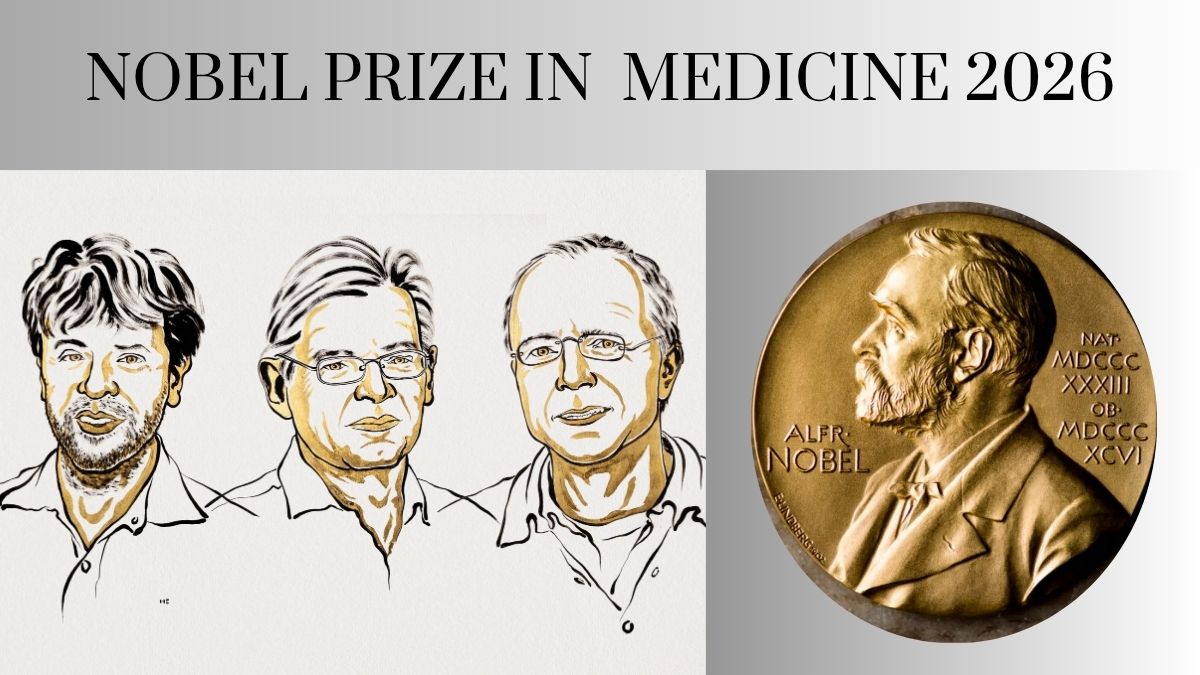
Karl Deisseroth, Peter Hegemann and Georg Nagel Win 2026 Nobel Medicine Prize

The Nobel Prize in Physiology or Medicine for 2026 was awarded jointly to Karl Deisseroth, Peter Hegemann and Georg Nagel in recognition of their discoveries regarding light-gated ion channels and optogenetics. Their research findings have revolutionised neuroscience by providing a means to manipulate the functions of individual neurons with light. The pioneering studies were carried out in connection with the light-reception process of the one-celled alga Chlamydomonas and have paved the way to explore the workings of the brain, which are responsible for memories, emotions and actions.

Who are the 2026 Nobel Medicine Laureates?

The three researchers contributed in a mutually complementary way to the development of optogenetics.

Laureate Institution Major Scientific Contributions
Karl Deisseroth Stanford University & Howard Hughes Medical Institute, USA, Utilization of channelrhodopsin as a light-switch for neurons
Peter Hegemann Humboldt University of Berlin, Germany Identification of light-sensitive channelrhodopsin proteins in algae
Georg Nagel University of Würzburg, Germany Some fundamental aspects of channelrhodopsin identification

The amount of 12 million Swedish kronor will be equally shared by the three laureates.

Why Did They Receive the Nobel Prize?

The Nobel Prize was awarded for groundbreaking discoveries that laid the scientific basis of optogenetics.

Optogenetics is an integration of optical techniques and genetics that allow control of certain cells through light stimulation.

In neurobiology, scientists can introduce light-sensitive proteins encoded by genes into certain neurons and stimulate or inhibit these neurons with the help of light.

Such approach allows establishing clear connections between specific neural circuits and behavior.

What Is A Light-Gated Ion Channel?

A light-gated ion channel is an ion channel that can either be open or closed by being stimulated by light. The Nobel Prize-winning research revolves around the channelrhodopsin, which is a light-gated protein contained in the membrane of a single-cell green algae known as Chlamydomonas.

Hegemann and Nagel found out that upon stimulation by blue light, the channel will be opened and allow charged ions to move across the membrane, thus creating an electrical reaction.

This means that once the channel is introduced to another cell, the new cell will become sensitive to light stimulation.

Optogenetics Definition

Optogenetics is a tool that combines genetics and light to manipulate the function of certain nerve cells.

The gene channelrhodopsin was inserted into nerve cells of rats by Karl Deisseroth. The nerve impulses were produced by the altered cells when the blue light was shined on them. These findings were presented in 2005.

Deisseroth showed that this tool can also be used to manipulate nerve cells in live mice’s brains in 2007. That made optogenetics a useful technique for investigating nerve circuits in vivo.

While traditional tools activate a lot of nerve cells at the same time, optogenetics enables manipulating certain populations of nerve cells.

Why is Optogenetics Relevant to Neurology?

Prior to optogenetics, scientists were able to identify brain areas that are involved in specific functions, but it was not easy to establish a cause-and-effect relationship between those two factors.

This became possible with optogenetics, because it allowed the scientists to stimulate or block specific neurons and observe the behavior of the organism.

Using optogenetics, scientists were able to examine the neural circuits that are responsible for,

  • Formation of memories
  • Feelings and emotions
  • Behavior and movement
  • Perception of stimuli
  • Brain diseases
  • Mental disorders

From Algae to the Brain

In this Nobel Prize-winning work, one can see an example of a rather uncommon relationship between biological sciences and neurosciences.

Step Process
Step-1 Researchers studied light detection in Chlamydomonas
Step-2 Hegemann and Nagel discovered channelrhodopsin
Step-3 The protein was known to make cells sensitive to light
Step-4 Deisseroth used the protein in neurons
Step-5 Blue light was used to induce neuronal action
Step-6 The method was tested in a living brain of a mouse
Step-7 Optogenetics is used worldwide as a neuroscience research tool

According to the Nobel Committee, the research has opened up a new era in neuroscience.

Applications of Optogenetics in Medicine

Despite the fact that optogenetics is still used mainly for research purposes, the applications of optogenetics may also include clinical practice.

One of the ways in which it can be applied is in the recovery of sight in visually impaired patients.

This way the technique is able to provide the ability for chosen cells to react to light and give new opportunities for treatment of diseases that have disrupted the process of visual signalling.

Another way in which optogenetics may be useful is in the study of neurological and psychiatric illnesses.
World Architecture Day 2026: 8 Clever Features of Historic Indian Architecture

Traditional architecture in India is not just about beauty; it also offers practical solutions to climatic, water, and privacy concerns. Whether it is the perforated jaali windows which allow light and air into buildings without the glare or the stepwell which caters to variations in water level, there are numerous instances where ancient architects employed basic architectural solutions for solving difficult environmental issues. On World Architecture Day, these features point out how Indian architects and builders tailored buildings according to their environment along with establishing their own architectural styles in palaces, forts, havelis, temples and even homes.

8 Clever Features of Historic Indian Architecture

1. Jaali: For Ventilation, Shade and Privacy

Jaali is a perforated wall or partition constructed using the materials like stone, wood, or metal. With holes cut in them, they facilitate entry of air and sunlight while providing privacy.

These features in the hot areas would have helped reduce the effect of direct sunlight and cool interiors. They were mainly found in Mughal and Rajput architecture.

2. Jharokha: Projecting Windows

Jharokha is a projecting window, which can be either fully or partly enclosed. It is particularly characteristic of buildings in Rajasthan and some other regions of North India.

Normally, jharokhas were built using decorated brackets and had an ornamental canopy on top; they enabled the occupant of the building to look outside without getting exposed.

An example of jharokha-type windows is the Hawa Mahal in Jaipur.

3. Chhatri: Shade and Architectural Element

The word chhatri means that “umbrella” which is derived from Hindi language. In the architectural context, chhatri is an elevated structure crowned with either a dome or an umbrella-like roof.

The chhatri became an important architectural element of the Rajput style. It was used in palaces, forts and other monuments in Rajasthan and other regions of North India. On top of providing additional height, chhatri served as a shading element.

Moreover, chhatri was often used as a memorial structure for members of royal families.

4. Courtyards: Light and Ventilation

Courtyard is one of the main features of historical Indian architecture, especially havelis and houses in states such as Rajasthan and Gujarat.

Various rooms were placed around an open courtyard which acted as a common place for various household activities. Courtyard also provided light and ventilation to adjacent rooms.

In hot climate, it would allow the creation of more comfortable microclimate in the house.

5. Arches: Structural and Decorative Feature

One of the distinctive features of historical Indian architecture is the use of arches. They were used in entranceways, windows, passages and huge halls.

Different types of arches, such as pointed, horseshoe and cusped ones were developed by the traditions of Indian architecture. Indo-Islamic and Mughal architectural style made wide use of arches together with rich stone decoration and geometrical patterns.

In this way, arch fulfilled two functions – structural and decorative one.

6. Domes: Covering Large Interior Spaces

In the architecture of India, domes can be found in monuments, mosques, tombs, and palaces.

A fine example of a large dome is that of Gol Gumbaz in Vijayapura, Karnataka. The importance of domes can also be seen in the Mughal monuments of India, such as the Humayun’s Tomb and the Taj Mahal.

Apart from being visually pleasing, domes enabled architects to cover large interior areas without having to build many support columns.

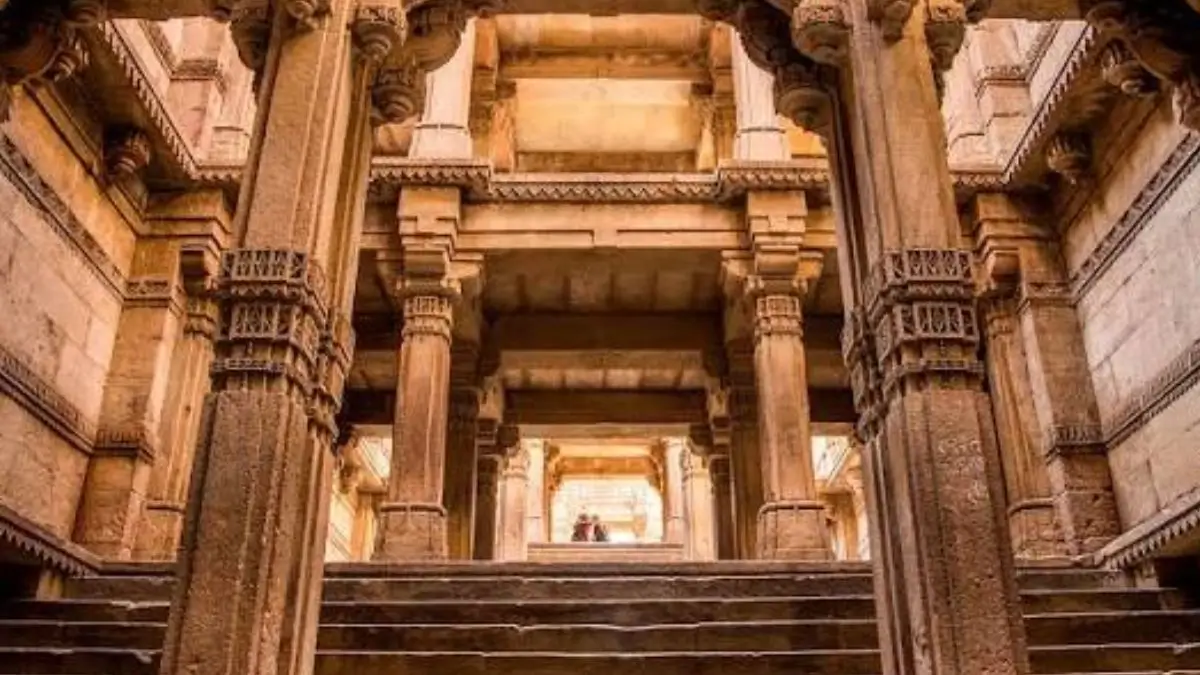
7. Stepwells: Architecture around Water

Stepwells with different names like baoli, baori, and vav are among the most unique water architectures of India.

Instead of making a mere vertical well, staircases were made so that people could access water as per its changing level. Stepwells usually had other features like columns, sculpture, and carvings too.

Some of the most well-known stepwells are found in Gujarat and Rajasthan. Rani ki Vav located in Patan, Gujarat, is a renowned stepwell and is even listed as a UNESCO World Heritage Site.

8. Projecting Balconies and Verandahs

Balconies and verandahs projecting outwards was a practical solution to the varied climatic conditions in India.

Without the aid of air conditioning and improved construction techniques, they served as a means of protecting the wall and other interior surfaces from the direct exposure to sunlight. They also created a buffer zone between the indoors and outdoors.

Verandahs and balconies offered additional spaces for socializing and performing various household chores while ensuring that more shadow falls on the building.

Architecture Adapted to Climate and Culture

As can be seen from the above discussion, historic architecture of India was not merely about aesthetics. Ventilation, providing shade, water drainage, privacy and social functions formed an integral part of architectural design.

The extensive use of courtyards, jaalis, verandahs and stepwells clearly indicates how ancient architects adapted their constructions to the local environment. Simultaneously, such features as arches, domes, jharokhas and chhatris became distinctive elements of the regional and cultural architectural styles.

On World Architecture Day, one can take a closer look at the ancient buildings as climate-adaptive and functional designs.

Russia Suspected Plague Case: Nearly 200 Under Observation in Irkutsk

The death of a worker at the Irkutsk Anti-Plague Research Institute in Russia’s Irkutsk region, who succumbed to pneumonia, prompted a series of health safety measures for nearly 200 people that came into contact with the woman. Nevertheless, no official statement from Russian federal health authorities confirms whether or not the plague caused her death as her illness is labeled as pneumonia of unknown aetiology and is classified as a “particularly dangerous infection.”

What Happened in Irkutsk?

This is the story of a woman in her late 20s, working at the Irkutsk Anti-Plague Research Institute located in Shelekhov city, adjacent to the regional capital Irkutsk.

According to the reports, she developed pneumonia and went to a hospital where she was put on a respirator but unfortunately passed away on October 2. Reports claim that she may have broken a test tube with live bacteria due to some kind of a laboratory accident. The details of the laboratory accident have not been independently verified by the Russian government.

The incident became known because the woman was employed in a research institute dedicated to studying plague and other diseases.

What Have Russian Authorities Suggested About the Case?

According to the Russian federal body for protecting consumers’ health rights and public well-being, Rospotrebnadzor, the woman’s disease is considered to be “pneumonia of unknown aetiology” and not pneumonic plague infection.

The officials reported that certain specialized sanitary measures were taken after the case and the epidemiological situation in Irkutsk, Shelekhov, and the Irkutsk region remains stable.

At the same time, the head of the neighboring Buryatia region Alexei Tsydenov claims that the woman died of some form of plague, although other sources mention his words about possible plague infection. Tsydenov additionally assured that there is no plague outbreak in Buryatia including the territories close to Mongolia.

As the official information does not confirm the infection by plague bacteria, the case can be considered as a suspected plague infection only.

Almost 200 Contacts Under Supervision

Preventive measures have been taken in Shelekhov and Irkutsk.

As reported, 197 people, who potentially interacted with the deceased worker, were put under medical supervision, and more than 100 people are under supervision in hospitals. Shelekhov District Hospital was also put under quarantine as the authorities were considering the situation.

It has also been stated that the identified contacts do not show any symptoms and have been tested negatively so far. This means that the number of people under supervision should not be viewed as the number of infected people.

In addition, public events were canceled in Irkutsk as the authorities launched an investigation on health and safety regulation violations.

What is Pneumonic Plague?

Pneumonic plague is one of the forms of plague caused by Yersinia pestis bacteria and infecting the lungs.

The World Health Organization says that plague has three major clinical forms,

  • Bubonic plague
  • Pneumonic plague
  • Septicaemic plague

The pneumonic plague is especially dangerous for its ability to spread among people through aerosols. It can develop both as a primary pulmonary disease or when another type of plague gets into the lungs.

Signs and symptoms

Symptoms of pneumonic plague may include,

  • Fever
  • Headache
  • Weakness
  • Fast-developing pneumonia
  • Difficulty breathing
  • Chest pain
  • Cough
  • Bloody or watery sputum in some instances

However, the disease has a rapid course. Yet, the plague is treatable using antibiotics. Early diagnosis and treatment of this condition increase the patient’s chances to survive.

Transmission of the Disease

Yersinia pestis is a zoonotic bacteria usually found in populations of small mammals and their fleas.

Humans get the disease as a result of,

  • Bite of an infected flea
  • Contact with tissues and body fluids of an infected person
  • Inhalation of respiratory droplets from a person suffering from pneumonic plague
  • Contact with infectious materials in certain cases.

The mode of transmission depends on the type of the disease. Bubonic plague is usually transmitted via infected fleas, and pneumonic plague is transmitted through respiratory droplets.

Reasons Why The Case Has Attracted Concerns

The case has raised concerns as it is a case involving an employee at a laboratory conducting research on plague.

But some aspects are not yet confirmed,

  • Whether the employee got infected with Yersinia pestis bacteria.
  • Whether the report about the broken test tube was true.
  • Whether her illness had anything to do with her laboratory work.
  • Whether she died of pneumonic plague.
  • Whether there has been any secondary infection.

So far, there have been no confirmed cases of infections among the people under observation by Russian health workers.

2026 Nobel Prize Winners: Categories Wise Complete Winners List

Nobel prizes in 2026 will be declared during the first half of October, and there will be six different types of Nobel prizes, namely, Physiology or Medicine, Physics, Chemistry, Literature, Peace, and Economic Sciences. The Nobel prizes are the most prestigious international prizes that reward outstanding achievement in science, literature, peace and economic sciences. The 2026 Nobel Prize winners will be announced beginning with the Prize in Physiology or Medicine on 5th October and ending with the Economic Sciences prize on 12th October.

Nobel Prize 2026 Winners List

Prize  Date of Announcement Winner’s Name Awarded By Location
Physiology or Medicine 5th of October, 2026 To be Announced Nobel Assembly at Karolinska Institutet` Solna, Sweden
Physics 6th of October, 2026 To be Announced Royal Swedish Academy of Sciences Stockholm, Sweden
Chemistry 7th of October, 2026 To be Announced Royal Swedish Academy of Sciences Stockholm, Sweden
Literature 8th of October, 2026 To be Announced Swedish Academy Stockholm, Sweden
Peace 9th of October, 2026 To be Announced Norwegian Nobel Committee Oslo, Norway
Economic Sciences 12th of October, 2026 To be Announced Royal Swedish Academy of Sciences Stockholm, Sweden

Nobel Prize in Physiology or Medicine 2026

The 2026 Nobel Prize in Physiology or Medicine is due to be unveiled on October 5, 2026.

The prize is to be awarded by the Nobel Assembly at the Karolinska Institute. This prize goes to discoveries of great importance in the field of physiology or medicine.

Winner: To be announced.

Nobel Prize in Physics 2026

The 2026 Nobel Prize in Physics is set for announcement on October 6, 2026.

The Nobel Prize in Physics is awarded by the Royal Swedish Academy of Sciences for major contributions to physics.

Winner: To be announced.

Nobel Prize in Chemistry 2026

The 2026 Nobel Prize in Chemistry is set for announcement on October 7, 2026.

The Nobel Prize in Chemistry is to be awarded by the Royal Swedish Academy of Sciences for achievements in the field of chemistry.

Winner: To be announced.

Nobel Prize in Literature 2026

Nobel Prize in Literature for the year 2026 will be announced on October 8, 2026.

The Swedish Academy decides the recipient of the Literature prize, which goes to a person whose works in the field of literature are highly appreciated.

Winner: To be announced.

Nobel Peace Prize 2026

Nobel Peace Prize for the year 2026 will be announced on October 9, 2026.

Unlike other prizes, the Nobel Peace Prize is decided by Norwegian Nobel Committee.

This award goes to those who have made any contribution for peace and international cooperation.

Winner: To be announced.

Nobel Prize in Economic Sciences 2026

Nobel Prize in Economic Sciences for the year 2026 will be announced on October 12, 2026.

This award is given by Royal Swedish Academy of Sciences to recognize achievements in economic sciences.

Winner: To be announced.

The Nobel Prize – Key Information

The Nobel Prizes were created according to the will of Alfred Nobel, a Swedish inventor, engineer, and industrialist.

They relate to accomplishments in physics, chemistry, physiology or medicine, literature, and peace.

In addition, the prize for economic sciences was instituted in 1968 by Sveriges Riksbank in memory of Alfred Nobel.

Among well-known Nobel Prize winners of history, there are such names as Marie Curie, Albert Einstein, Nelson Mandela, and Bob Dylan.

Parliamentary Panel Reshuffle 2026: Full List of New Chairpersons

For the period 2026-27, the Lok Sabha and the Rajya Sabha have renewed their department-related Parliamentary Standing Committees and the majority of the previous chairpersons have been continued and only some committees have new chairpersons. Of the new appointments, Tiruchi Siva is the new chairperson of the Industry Committee and Sujeet Kumar is the new chairperson of the Personnel, Public Grievances, Law and Justice Committee.

Here is the Full List of the New Parliamentary Panel Chairpersons

Name of Parliamentary Standing Committee  Name of Chairperson  Associated Party Status From Last Position
External Affairs Shashi Tharoor Congress Reappointed
Agriculture Charanjit Singh Channi Congress Retained
Transport Sanjay Kumar Jha JD(U) Reappointed
Coal, Mines and Steel Anurag Thakur BJP Retained
Health and Family Welfare Ram Gopal Yadav Samajwadi Party Retained
Industry Tiruchi Siva DMK New appointment
Personnel, Public Grievances, Law and Justice Sujeet Kumar BJP New appointment
Education, Women, Children and Youth Mukul Wasnik Congress Retained
Commerce Sudhanshu Trivedi BJP New appointment
Energy Shrirang Barne Shiv Sena Reappointed
Science and Technology, Environment, Forests and Climate Change Medha Vishram Kulkarni BJP Retained
Communications and Information Technology Nishikant Dubey BJP Reappointed
Home Affairs Radha Mohan Das Agarwal BJP Reappointed
Rural Development and Panchayati Raj Saptagiri Ulaka Congress Reappointed
Defence Radha Mohan Singh BJP New appointment
Consumer Affairs, Food and Public Distribution K. Kanimozhi DMK Reappointed

Changes in Parliamentary Committees

There have been some significant changes in the leadership of department related standing committees, apart from some exceptions.

Tiruchi Siva has been designated as the chairperson of the Standing Committee on Industry. Tiruchi Siva was already known to be part of the Industry Committee and also as chairperson from the parliamentary records.

There have also been some changes in the personnel of Personnel, Public Grievances, Law and Justice Committee wherein Sujeet Kumar has been made the chairperson.

In the case of Commerce Committee, there has been change in the chairpersonship from the Trinamool Congress party member Dola Sen to the BJP member Sudhanshu Trivedi, who headed the Commerce Committee till March 2026 when it produced its 196th report.

Radha Mohan Singh has been made the chairperson of the Defence Committee, whereas others like Shashi Tharoor and Radha Mohan Das Agarwal continue to be at the same places respectively.

Department-related Parliamentary Standing Committees

Department-related Parliamentary Standing Committees (DRSCs) are standing committees in Parliament which review the working of certain ministries and departments.

Functions of DRSCs include reviewing the following,

  • Demands for Grants of ministries and departments.
  • Bills referred to the committee.
  • Annual reports of ministries and departments.
  • National policies and programmes.
  • Issues concerning the working of the respective ministries.
  • Actions taken by the government on committee recommendations.

This helps in the detailed review of government policies and expenditures by the Parliament beyond the business of the House.

For instance, the Department-related Standing Committee on Home Affairs reviewed the Demands for Grants for 2026-27 of the Ministry of Home Affairs and the Ministry of Development of North Eastern Region.

Role of the Standing Committees in Parliament

The standing committees of parliament have played a very crucial role in legislative and executive accountability.

They give an opportunity to the MPs to study the government’s policies and expenditure in much greater detail and also interact with the representatives from ministries, departments, etc.

They can also suggest recommendations to the government. Although such suggestions are not always binding on the government, it is expected that the government will respond to such recommendations.

19th Pravasi Bharatiya Diwas Convention to be Held in Kolkata from January 7-9, 2027

The 19th Pravasi Bharatiya Diwas (PBD) Convention is scheduled to take place in Kolkata, West Bengal, during January 7 to 9, 2027. The three-day convention will be hosted by the Ministry of External Affairs (MEA) along with the West Bengal Government. The convention will see the participation of members of the Indian diaspora community as well as other stakeholders from all around the world. The convention will be inaugurated by the Prime Minister Narendra Modi whereas President Droupadi Murmu will confer Pravasi Bharatiya Samman Awards and will preside over the valedictory session.

Pravasi Bharatiya Diwas 2027 Key Details

The convention will act as a platform to interact with members of the Indian diaspora and stakeholders both in India as well as abroad.

  • Event: 19th Pravasi Bharatiya Diwas Convention
  • Date: January 7–9, 2027
  • Venue: Kolkata, West Bengal
  • Organizer: Ministry of External Affairs
  • Partner: Government of West Bengal
  • Inaugurated by: Prime Minister Narendra Modi
  • Pravasi Bharatiya Samman Awards Conferred by: President Droupadi Murmu
  • Valedictory session presided over by: President Droupadi Murmu
  • Youth segment: Youth PBD

Youth PBD and Diaspora Participants

Besides this 19th convention, there is going to be a Youth PBD component as well. The youth members of diaspora are going to join along with the entrepreneurs, professionals, intellectuals, innovators and other members of the Indian diaspora.

Youth PBD is an opportunity to interact with the younger members of the overseas Indian community as well as engage in areas such as innovations, entrepreneurship, professional networking and knowledge exchange.

What is Pravasi Bharatiya Diwas?

Every year Pravasi Bharatiya Diwas (PBD) is celebrated on January 9 as it is the anniversary of the arrival of Mahatma Gandhi from South Africa to India on January 9, 1915.

It is also the day which marks the engagement of India with its overseas Indian community. PBD Convention is a forum to interact with the Government of India, state governments and members of the Indian diaspora.

First PBD Convention was celebrated in 2003.

Pravasi Bharatiya Samman Awards

The Pravasi Bharatiya Samman Award (PBSA) acknowledges outstanding contributions made by overseas members of the Indian diaspora community.

Some of the areas in which the award acknowledges contributions include,

  • Creating awareness about India in the foreign countries.
  • Improving ties between India and other nations.
  • Contributions for the welfare of the Indian community abroad.
  • Charitable and social service work.
  • Social work and philanthropy.
  • Excellence in a particular field contributing to the prestige of India in the international arena.
  • Achievements and contributions by the overseas Indians.

The President of India awards the Pravasi Bharatiya Samman Awards at the PBD Convention

India Demonstrates First 5.56-km Free-Space Quantum Key Distribution Link

India has accomplished its first demonstration of free-space Quantum Key Distribution (QKD), over 5.56 km. This is the first milestone towards the development of the quantum-secured communication network in India. The demonstration was carried out on the night of September 27–28, 2026, to set up a quantum secured communication network between BISAG-N and IIT Gandhinagar. This achievement was a result of a collaboration between QNu Labs and BISAG-N, IIT Gandhinagar. The quantum communication network maintained the Quantum Bit Error Rate of less than 5%, which generated secure keys with a rate of 230-260 bits per second (bps).

Details of Quantum Communication Network Demonstration

The trial was conducted using QNu Labs’ Pointing, Acquisition and Tracking (PAT) system to establish and sustain the free-space optical link.

This trial delivered the following results,

  • Total Distance: 5.56 km
  • Communication Mode: Free-space optical
  • Quantum Bit Error Rate (QBER): Below 5%
  • Total secured key generation rate: 230–260 bps
  • Trial dates: Night of September 27–28, 2026
  • Connected locations: BISAG-N and IIT Gandhinagar
  • Encryption: End-to-end encryption and decryption of test messages

The quantum keys generated have been integrated with BISAG-N’s Vedic Kavach, which has post-quantum cryptography capabilities.

Operation of the Quantum Security Architecture Using Two Layers

The system utilized the integration of QKD hardware security and post-quantum cryptography (PQC).

Armos QKD from QNu Labs was deployed over free space optical links for the creation and distribution of cryptographic keys based on quantum technologies. In software terms, BISAG-N’s Vedic Kavach offered post-quantum cryptography and quantum random number generator (QRNG).

It ensures a two-layer approach to security. According to the involved organizations, such an architecture design is intended to ensure resiliency even in case the physical layer of quantum communication becomes unavailable.

What is Quantum Key Distribution?

Quantum Key Distribution is a technique used for secure exchange of cryptographic keys based on quantum mechanics.

While conventional key distribution schemes are based mostly on computational assumptions about mathematical problems, QKD utilizes quantum properties to identify the attempts to spy on the communication link. Attempting to measure quantum information can perturb its state, which indicates the presence of possible intrusion.

Thus, QKD is seen as one of the promising technologies to protect sensitive communication in the future, when quantum computers become too powerful to break current cryptosystems.

Quantum Bit Error Rate and Key Generation

Two specific technical parameters from the trial have a special importance.

The Quantum Bit Error Rate (QBER) is an indicator showing the percentage of quantum bits with errors after their transmission and measurement. In general, the lower the QBER, the better quality of the quantum channel. The QBER remained stable at less than 5% in the course of the trial.

The system produced secure keys at 230-260 bps, i.e., 230 to 260 bits of the key were generated every second.

Relation with India’s National Quantum Mission

The recent demonstration is part of India’s larger efforts towards indigenously developed quantum technologies via the National Quantum Mission (NQM).

The National Quantum Mission was sanctioned by the Union Cabinet with a budget of ₹6,003.65 crore for eight years. The goals include the development of quantum computing, quantum communication, quantum sensing and metrology, and quantum materials and devices.

Goals of communication under the NQM include the development of inter-city QKD networks spanning up to 2,000 km and satellite quantum-secured communication between ground stations over 2,000 km within India.

India has demonstrated QKD over greater distances using optical-fibre networks. A 500-km QKD network was demonstrated in 2025 by QNu Labs, and a 2026 update highlighted 1,000-km quantum communication networks under the National Quantum Mission. This is different from the current 5.56-km free-space optical demonstration.

Ministry of Education Approves Five Centres of Excellence for Studies in Classical Languages

Centres of Excellence (CoEs) have been sanctioned by the Department of Higher Education, Ministry of Education, for conducting research into Classical Assamese, Classical Bengali, Classical Marathi, Classical Pali and Classical Prakrit languages. The notification has been issued on 3rd October 2026. These Centres shall facilitate higher research, documentation, conservation and digitization of the literature, in addition to spreading awareness regarding classical languages of India. The CoEs are situated in Assam, West Bengal, Maharashtra, Odisha and Gujarat.

Five Centres of Excellence and Host Institutions

The five Centres have been assigned to higher education institutions that have regional and academic significance for the respective languages.

Classical Language  Centre of Excellence State
Classical Assamese Tezpur University Assam
Classical Bengali Visva-Bharati University West Bengal
Classical Marathi Deccan College Post-Graduate and Research Institute (Deemed to be University), Pune Maharashtra
Classical Pali Central University of Odisha Odisha
Classical Prakrit Central University of Gujarat Gujarat

Thus, the five Centres have been established in five different states of India, thereby establishing institutional support for research on classical languages in the country.

Areas of focus

These five Centres of Excellence will operate on four main areas of activity,

  • Academic research and scholarship: Establishment of platforms for advanced research and scholarship in the respective languages.
  • Preservation and Digitization: Documentation, preservation and digitization of linguistic and literary resources and textual traditions.
  • Dissemination: Promotion of greater accessibility of linguistic and literary traditions of the five languages.
  • Higher Education Ecosystems: Enhancing the capacity of higher education institutions and research networks focused on classical language study in the five states.

Classical Languages of India

The current development is an addition to the list of Classical Language in India, which was extended in 2024. On 3rd October, 2024, the Union Cabinet granted Classical Language status to Marathi, Pali, Prakrit, Assamese and Bengali, making the total of Classical Languages in India reach 11.

There were six languages which had been granted the status before this development, namely Tamil, Sanskrit, Telugu, Kannada, Malayalam and Odia. Tamil became the first Classical Language of India in 2004.

Classical Language Year of Recognition
Tamil 2004
Sanskrit 2005
Telugu 2008
Kannada 2008
Malayalam 2013
Odia 2014
Marathi 2024
Assamese 2024
Bengali 2024
Pali 2024
Prakrit 2024

The five languages added in 2024 were based on the recommendations of Linguistics Experts Committee which modified the standards for Classical Languages.

Classical Language Criteria

The modified set of criteria includes several historical and literary factors. A language must possess,

  • Antiquity of early texts and recorded history of about 1,500 to 2,000 years.
  • A corpus of ancient literature or text which is considered a legacy of generations of speakers of the language.
  • Texts related to knowledge especially prose as well as poetry and epigraphy/inscription.
  • A classical language as well as literature which might be different from the current state of the language or not continuous with later states of its offshoots.

The committee of linguists of the Sahitya Akademi amended the criteria in July 2024 and recommended Marathi, Pali, Prakrit, Assamese and Bengali as Classical Languages.

Importance of the Five Centres

The newly established Centres are dedicated institutional facilities for the five languages that were designated as Classical Languages in 2024. Their emphasis on research, documentation, digitization and dissemination can help in preserving ancient texts and traditions of knowledge in addition to creating robust academic environments for the study of Classical Languages.

This scheme also involves the linking of the designation of Classical Languages with higher education institutions, thereby giving the newly designated languages a platform for scholarly study and preservation.

World Habitat Day 2026: Theme, History, Significance and Global Housing Crisis

World Habitat Day is celebrated every year on the first Monday in the month of October as a way of bringing to light the state of the human settlements and the crucial need for adequate housing. For the year 2026, it will be celebrated on October 5. The United Nations has decided on “Adequate Housing for All” as the theme for this year’s celebration.

Why is World Habitat Day Celebrated?

The United Nations General Assembly declared World Habitat Day in 1985, and its first observance took place in 1986.

It urges governments, organisations, and communities to reflect on human settlements planning and development.

It covers issues such as,

  • Access to adequate housing
  • Sustainable urban development
  • Inclusive cities
  • Affordable housing
  • Urban infrastructure
  • Basic services
  • Sustainable human settlements

World Habitat Day is also the starting point for Urban October, which is a UN-Habitat led month long campaign on sustainable urban development.

Theme of World Habitat Day 2026

Theme for World Habitat Day 2026 will be,

  • “Adequate Housing for All”

The theme highlights the ongoing global issue related to housing and the necessity of making housing safe, affordable, accessible and adequate for habitation.

The concept of adequate housing does not only include a physical shelter over one’s head. In terms of international human rights, adequate housing is associated with issues like security of tenure, affordability, basic services, habitability, accessibility and location.

What Does Adequate Housing Mean?

The adequate housing includes many inter-related aspects,

  • Security of tenure: The residents should receive protection against forced evictions.
  • Services availability: The housing should have access to all basic services including water, sanitation and energy services.
  • Affordability: The housing should not prevent anyone from fulfilling their basic needs.
  • Habitability: The housing should be safe for the inhabitants.
  • Accessibility: The housing should be easily accessible for persons with disability, elderly people and other vulnerable groups.
  • Location: The houses should have access to employment opportunities, schools and health care facilities and others.

Global Housing Crisis

Insecurity of housing is becoming a pressing issue for both developed countries and developing ones.

Factors including fast-paced urbanization, high housing costs, shortage of housing supply, economic uncertainty and poor urban planning contribute to the problem.

The problem of housing security has gained another dimension due to climate change since natural disasters including floods, cyclones, droughts, wildfires and others may damage the houses and cause displacement.

Protracted housing insecurity may be caused by conflicts and humanitarian crises since refugees and IDPs face this problem.

Therefore, the theme of the International Year of 2026 will include problems that relate to housing together with other issues, including poverty, climate change adaptation, urbanization and others.

Urbanization and Housing

Urbanization increases the demand for housing, infrastructure and social services.

According to UN projections, about 68% of the world’s population may live in urban areas in 2050.

Fast-paced urbanization may lead to the emergence of such problems as,

  • Shortage of housing
  • Slums
  • Traffic congestion
  • Strain on water and sanitation
  • Solid waste management
  • Air pollution
  • Urban disparities
  • Climate vulnerability

Thus, sustainable urban planning is closely related to the goal of adequate housing provision.

World Habitat Day and SDG 11

World Habitat Day is directly connected to Sustainable Development Goal 11 (SDG 11), which seeks to make cities and human settlements inclusive, safe, resilient and sustainable.

This goal includes objectives such as,

  • Affordable housing and slum upgrading
  • Sustainable transport
  • Inclusive urbanization
  • Cultural and natural heritage protection
  • Disaster reduction
  • Reducing negative environmental impact of cities
  • Public space provision

Thus, housing plays an important part in the overall sustainable development framework established by the UN.

Global observance of World Habitat Day 2026

The global observance of World Habitat Day 2026 will be held in Muscat, Oman, between October 5 and October 8, 2026.

It will include discussions involving policy makers, urban planners, researchers, development organizations and communities regarding housing and sustainable urban development.

Moreover, it will have discussions and workshops on urban development and housing.

The UN-Habitat Scroll of Honour Award is connected to the World Habitat Day observance.

World Teachers’ Day 2026: History, Theme and UNESCO’s Teacher Shortage Warning

World Teachers’ Day is observed each year on October 5 to pay tribute to the contributions made by teachers to education as well as to the working environment of teachers. For 2026, the day observes 60 years of the adoption of the ILO-UNESCO Recommendation concerning the Status of Teachers in 1966, with the theme, “Standing with teachers: 60 years of protecting the profession, advancing its status and shaping our futures.

‘Why Is World Teachers’ Day Celebrated on October 5?

October 5 was chosen for the observance of the adoption of the 1966 Recommendation concerning the Status of Teachers.

This recommendation was adopted on October 5, 1966, in an intergovernmental conference called by UNESCO in collaboration with the International Labour Organization (ILO).

It established international standards regarding,

  • Rights and responsibilities of teachers
  • Teacher preparation
  • Professional development
  • Recruitment
  • Employment
  • Conditions of teaching and learning

Theme of World Teachers Day 2026

Theme of UNESCO for 2026 is,

  • “Standing with teachers: 60 years of defending the profession, elevating its status and shaping our future.”

It acknowledges the sixty years of the Recommendation from 1966, yet focuses on the current problems faced by teachers.

The theme of 2026 also reflects the process of revision of the Recommendation from 1966 initiated by UNESCO due to the changes within the profession.

Why Is the Teaching Profession under Pressure?

There have been identified some emerging issues, related to teachers and education systems by UNESCO.

They are,

  • Digital technologies
  • Climate change
  • Inclusion
  • Migration and displacement
  • Professional autonomy of teachers
  • Teachers’ participation in decision-making in the field of education
  • Salaries and compensations
  • Workload
  • Work environment

UNESCO Raises Alarm Over 44 Million Teachers Shortage

One of the major issues raised by UNESCO includes the teachers’ shortage across the globe.

UNESCO estimates that 44 million additional teachers will be needed to attain universal primary and secondary education by 2030.

Shortage is the result of not only recruiting of teachers but also the problem associated with retention and improvement of working conditions for them.

This shortage has consequences for education, especially for those regions which are lacking in qualified teaching professionals.

Celebration of 2026 World Teachers Day in Paris

The global event dedicated to the celebration of 2026 World Teachers’ Day will take place in Paris at UNESCO headquarter on October 5, 2026.

Teachers and education ministers as well as other stakeholders will attend discussions regarding the present status and future of the teaching profession.

The programme will include the ceremony of awarding of the ninth edition of UNESCO-Hamdan Prize for Teacher Development.

UNESCO-Hamdan Prize for Teacher Development

The UNESCO-Hamdan Prize for Teacher Development is awarded for the recognition of any projects contributing to teaching and learning.

This prize has connections with projects that support teachers’ development and the improvement of education quality.

The 2026 World Teachers’ Day event will feature the ceremony of the ninth edition of the prize.

_12.1
October 2026
M T W T F S S
 1234
567891011
12131415161718
19202122232425
262728293031