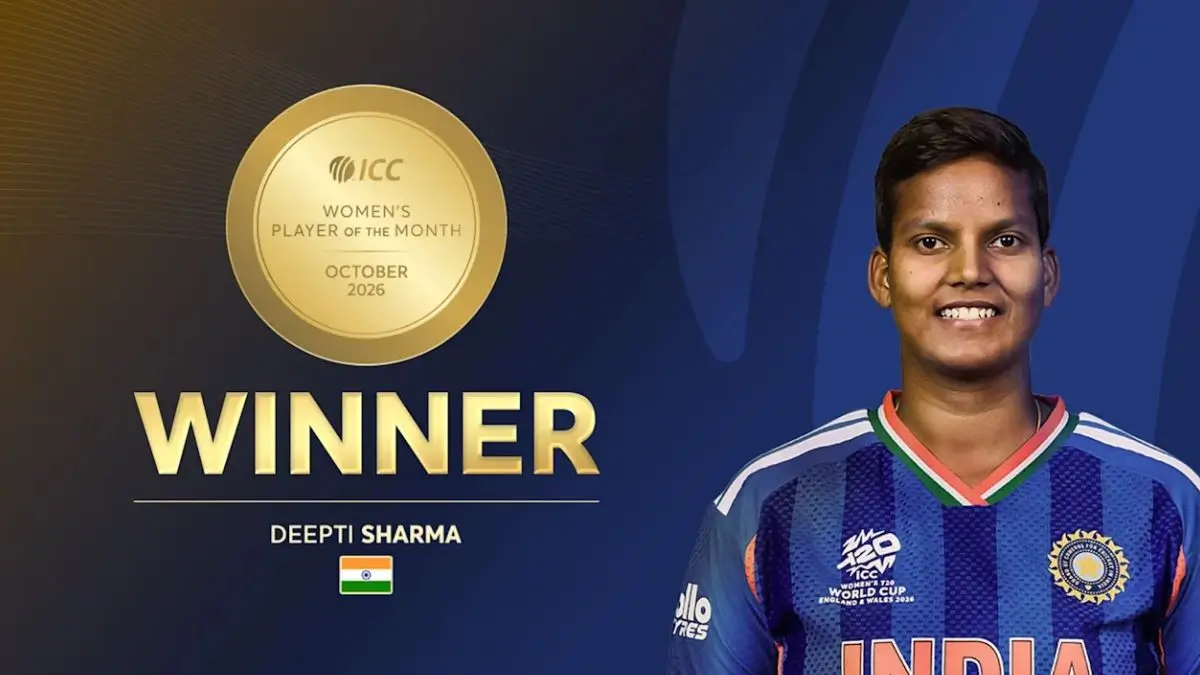
Deepti Sharma Wins ICC Women’s Player of the Month for October 2026

India’s Deepti Sharma has won the ICC Women’s Player of the Month award for October 2026 for the second time in her career. She bested Bangladesh’s Sobhana Mostary and Australia’s Annabel Sutherland. Sharma made a stunning all-round contribution during Zimbabwe’s tour of India with 155 runs and 7 wickets in the T20I and ODI series. She hit a century in the 2nd ODI.

Deepti Sharma vs Zimbabwe

Sharma put on a great all-round show during the tour of India by Zimbabwe in October 2026. She scored 155 runs taking 7 wickets in 6 internationals.

Key contributions include,

  • Scored 49 runs off 37 balls in the 1st T20I in Raipur. This helped India recover from losing 4 wickets for just 19 runs.
  • Took 2 wickets in the T20I series to help India win the series.
  • Took 2 wickets in the 1st ODI.
  • Scored an unbeaten century of 106 in the 2nd ODI which was her 2nd century in ODIs. She also took 3 wickets to help India win by 121 runs. This put them into an unassailable 2-0 lead in the 3-match series.

Her performances helped India go undefeated in all 6 internationals against Zimbabwe.

ICC Women’s Player of the Month – October 2026

Sharma was chosen over Sobhana Mostary from Bangladesh and Annabel Sutherland from Australia.

Player Country Performance
Deepti Sharma India 155 runs, 7 wickets (6 matches)
Sobhana Mostary Bangladesh 129 runs (3 ODIs)
Annabel Sutherland Australia 118 runs, 7 wickets (6 matches)

Mostary’s standout performance was hitting 118 against Australia in Brisbane. This was the highest individual score by any Bangladeshi woman in ODIs. Sutherland put in a brilliant all-round performance in the Australian white-ball matches.

Deepti Sharma’s Previous Award

This is Sharma’s second time winning the ICC Women’s Player of the Month. She won the award back in December 2023.

She also played a key role in helping India win the ICC Women’s Cricket World Cup 2025 last October. Her performances in October 2026 built upon her great form in internationals.

ICC Player of the Month Award

The International Cricket Council (ICC) launched the Player of the Month awards in January 2021 to recognise incredible performances from international cricketers in all formats.

Plant Genome Saviour Awards 2026: Bibi Fathima SHG and Karnataka Farmers Honoured for Seed Conservation

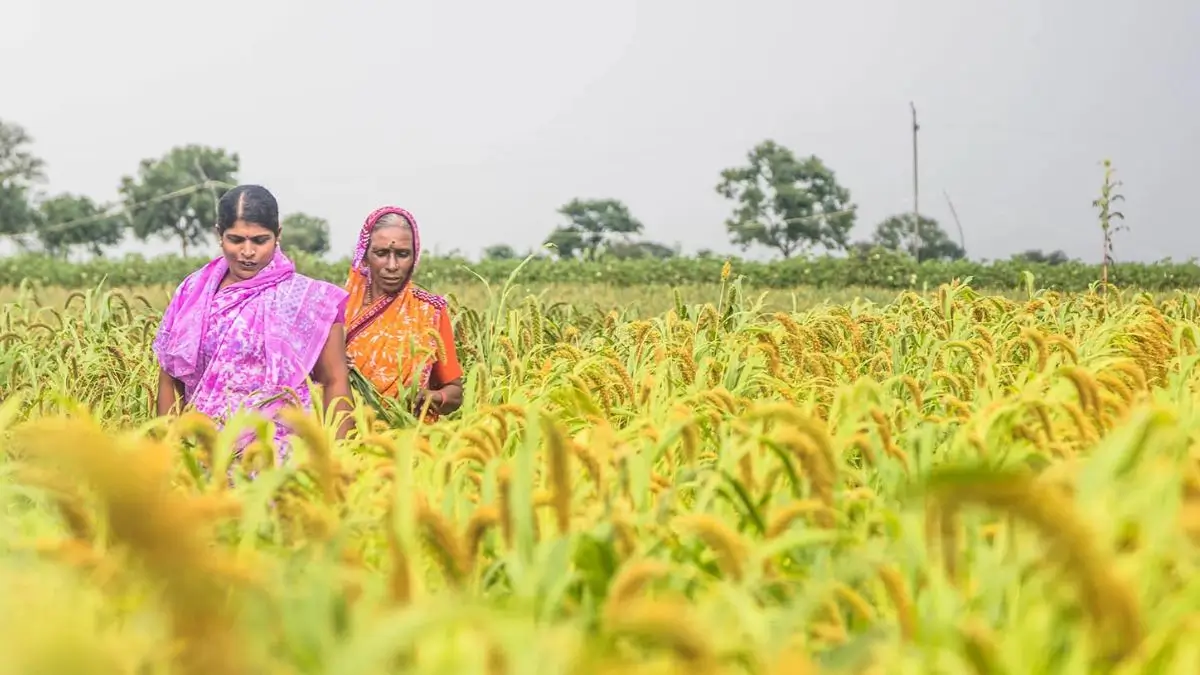
The Bibi Fathima SHG of Theertha village and farmer Eshwaragouda Patil of Mattigatti village, Karnataka were awarded with the Plant Genome Savior Awards at the 22nd Foundation Day celebrations of PPVFRA held on 12th November 2026 in New Delhi for their contributions towards the conservation of indigenous crop varieties, traditional seeds and agricultural biodiversity.

Bibi Fathima SHG for conserving traditional seeds

Bibi Fathima Self Help Group is a women-driven group based out of Theertha village of Kundgol Taluk of Dharwad district, Karnataka. They work towards the conservation of indigenous crop varieties, traditional seeds and local food culture.

The SHG was awarded with the Plant Genome Savior Community Award, comprising of a prize money of Rs 10 Lakhs, a citation and a memento. Desi Seed Producers Company Limited of Mysuru were also chosen for this award from Karnataka.

Eshwaragouda Patil for conserving millet

Eshwaragouda Patil, a farmer from Mattigatti village, Kundgol Taluk, started his seed conservation journey in the year 2015 under Organic Village Program of the Agriculture Department and with the support from Sahaja Samrudha.

This helped him reintroduce two traditional millet varieties which were almost lost in North Karnataka,

  • Proso Millet (Baragu)
  • Brown Top Millet (Korale)

These varieties are well-suited for the local climatic conditions and are grown on hundreds of hectares in Kundgol and Shiggaon Taluks.

Another two farmers from Karnataka, C.P. Krishna of Gulurdoddi village, Mandya district and Asma Banu of Sanoor village, Udupi district, were also awarded for their efforts towards conserving traditional crop varieties and indigenous crop varieties.

Plant Genome Savior Awards

This is an award given to farmers and communities working towards conservation of plant genetic resources, indigenous crop varieties and traditional knowledge.

The awards are managed by PPVFRA under the Ministry of Agriculture and Farmers Welfare.

The Plant Genome Savior Community Award was established by the Authority under Rule 70(2)(a) of Protection of Plant Varieties and Farmers’ Rights Rules, 2003. This award comprises of prize money of Rs 10 Lakhs along with a citation and memento. There is another award system for farmers to reward them individually for their contribution.

About PPVFRA and PPV&FR Act, 2001

Protection of Plant Varieties and Farmers’ Rights Authority was set up under the Protection of Plant Varieties and Farmers’ Rights (PPV&FR) Act, 2001.

This Act helps provide a system to protect plant varieties and recognize the rights of plant breeders and farmers. It also helps with conservation of agro-biodiversity.

Important facts,

  • Set up under: Protection of Plant Varieties and Farmers’ Rights Act, 2001.
  • Ministry: Ministry of Agriculture and Farmers Welfare.
  • Headquarters: New Delhi.
  • 22nd Foundation Day: 12th November 2026.
  • 25 Years of the Act: This marked 25 years since the enactment of the PPV&FR Act, 2001.

Pratap Singh Appointed MD and CEO of Fino Payments Bank: RBI Approval, Tenure and Career

The Reserve Bank of India has approved Pratap Singh’s appointment as the Managing Director and Chief Executive Officer (MD & CEO) of Fino Payments Bank for the period of 3 years from November 27 2026. The appointment has been approved by the Bank’s shareholders. Singh has over 29 years of experience in the banking industry and has held positions in ICICI Bank and SBI.

Pratap Singh appointed as MD & CEO at Fino Payments Bank

Fino Payments Bank announced the news regarding the Reserve Bank of India’s approval on November 13 2026. The Board of Directors will now take the next steps to appoint Singh.

Singh will be appointed as MD & CEO of Fino Payments Bank for a period of 3 years from November 27, 2026. Until the leadership changes, Ketan Merchant will continue as Interim CEO of the bank.

  • Bank: Fino Payments Bank
  • MD & CEO: Pratap Singh
  • Approved by: Reserve Bank of India
  • Duration: 3 Years
  • Start Date: November 27, 2026
  • Approval Pending: Bank Shareholders
  • Interim CEO: Ketan Merchant

Who is Pratap Singh?

Pratap Singh is a senior banker with over 29 years of experience working in the financial services industry. He has worked across several areas within the bank including retail, SME, Liability Management, Digital Transformation and Branch led Profitability and Banking.

He has worked for ICICI Bank India, ICICI Bank UK and SBI UK.

ICICI Bank UK Role

Singh was appointed as Head of Retail & SME Banking for the UK and Europe at ICICI Bank UK. During his time at the bank he helped drive the business through to become more diverse, moving away from a predominantly corporate focus.

During his time he worked on developing current accounts, remittance, commercial property lending, corridor banking and digital services.

Qualifications

MBA Marketing – Maastricht School of Management

BSc Botany – University of Delhi

Reasons for Appointing New CEO

The change in leadership comes after former MD & CEO Rishi Gupta was arrested by the Directorate General of GST Intelligence (DGGI) in February 2026. He was arrested on allegations of breaching Goods and Services Tax laws.

Gupta was accused of using shell companies and payment aggregators to move funds earned from online money gaming. As a result, Ketan Merchant became Interim CEO of the bank.

These are allegations, and have not been proven.

What is Fino Payments Bank?

Fino Payments Bank is a payments bank in India. Payments banks are regulated by the Reserve Bank of India, and are focused on deposit taking, payments and remittance services.

Unlike universal commercial banks, payments banks cannot provide any lending. However, they can take deposits from eligible customers up to the set regulatory limit, and offer remittances, debit cards and digital services.

57th International Film Festival of India (IFFI) 2026: Theme, Dates, Venue, Films and Key Facts

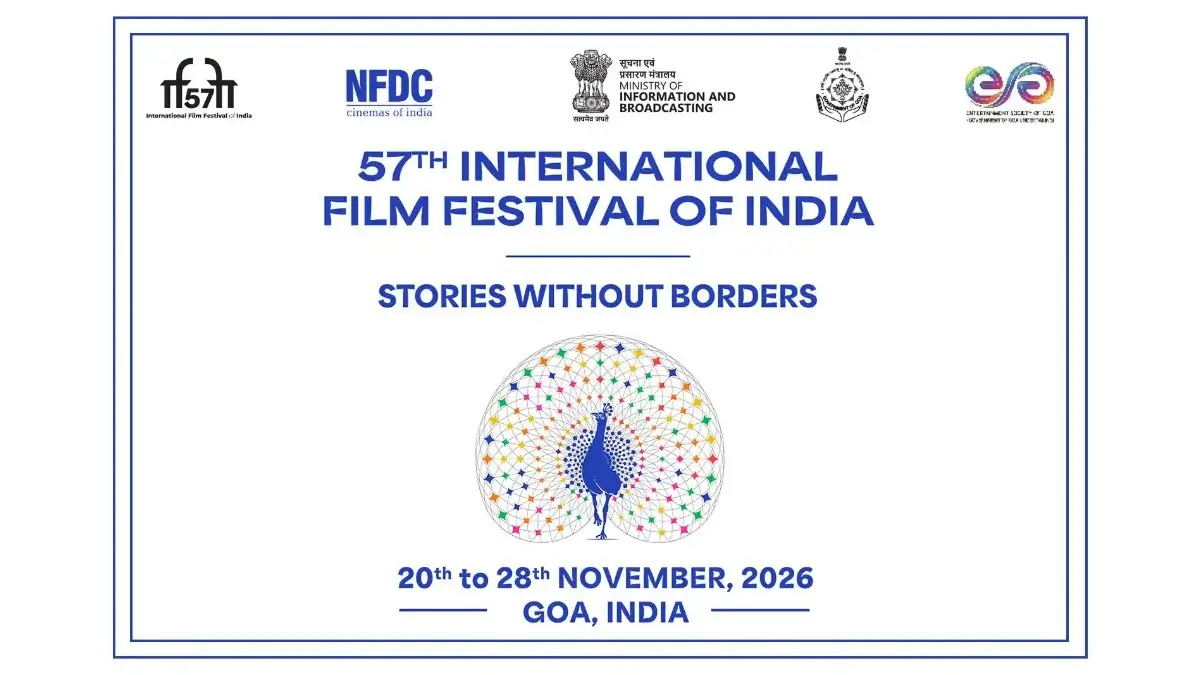
The International Film Festival of India (IFFI) will be held from the 20th to 28th November 2026 with the theme ‘Stories Without Borders’. This will showcase films from various countries, languages, and cultures. The film director Ashutosh Gowariker has been appointed as the Festival Director. There will be international competition, Indian Panorama, debut film competition and Best Web Series award.

IFFI 2026 – Date, Venue and Theme

The 57th International Film Festival of India will be held in the Goa from 20th to 28th November 2026. This year theme revolved around ‘Stories Without Borders’ demonstrates how cinema can help connect people worldwide with no barriers.

The trailer event was on the 13th November 2026 at Taj Cidade de Goa Horizon. This included Goa Chief Minister Pramod Sawant and Festival Director Ashutosh Gowariker.

Key Highlights From The 57th IFFI

There will be 159 films displayed from 86 different countries after being chosen from 1400 submissions. This was announced by the Festival Director during the trailer event.

  • Edition: 57th
  • Date: 20th-28th November 2026
  • Location: Goa
  • Theme: Stories Without Borders
  • Director: Ashutosh Gowariker
  • Opening Film: Fatherland
  • Indian Panorama Opening Film: Dhurandhar
  • Guest Country: Spain

International Competition

159 Films from 86 Countries

Opening Film – Fatherland

  • The festival will begin with Fatherland. This film is directed by Paweł Pawlikowski and follows the story of Nobel prize winner Thomas Mann and his daughter Erika as they travel across post-war Germany in 1949.

Indian Panorama Opening Film – Dhurandhar

  • The Indian Panorama will begin with Dhurandhar. The Indian Panorama displays a selection of feature and non-feature films.

Guest Country – Spain

  • For IFFI 2026 Spain will be the Guest Country. This is part of the Spain-India Dual Year 2026.

Best Web Series (OTT) Award

  • IFFI 2026 will have a new Best Web Series (OTT) Award. This has a prize of ₹10 lakh and a certificate.

Key Competitions Within The Festival

  • International Competition – Displays selected films from various countries.
  • Best Debut Feature Film Competition – Celebrates new filmmakers.
  • ICFT-UNESCO Gandhi Medal – Celebrates films promoting peace, tolerance and understanding between cultures.

History Of The International Film Festival of India

The International Film Festival of India was first held back in 1952. The first festival was held in Mumbai and ran across the 24th January to the 1st February 1952 with approximately 40 feature films and 100 short films.

Key moments in the history are as follows,

  • 1952 – 1st festival held in Mumbai.
  • 1965 = Became a competitive festival at the 3rd edition.
  • 1978 – Indian Panorama introduced.
  • 2004 – Moved to Goa where it is still hosted.

According to the official Directorate of Film Festivals the Indian Panorama was introduced in 1978. Therefore, please note that it is often mentioned that it was introduced in 1977 but this may not be accurate.

Who Organises The IFFI?

The festival is organised in collaboration between the National Film Development Corporation of India (NFDC) Ministry of Information and Broadcasting and the Government of Goa. It is also associated with the Entertainment Society of Goa.

The festival gives an opportunity to view international films, compete in competitions, and celebrate culture whilst promoting Indian cinema.

World Diabetes Day 2026: Theme, Date, History, Significance and Key Facts

World Diabetes Day 2026 aims to raise awareness for diabetes and ensure people can receive early diagnosis and quality care. The theme of World Diabetes Day 2026-27 is ‘Early action on diabetes’. This aims to ensure people can receive early diagnosis for diabetes, reduce the risk of type 2 diabetes and reduce stigma around living with diabetes. Over 40% of people with diabetes globally are undiagnosed (World Health Organization). The campaign encourages everyone to take action and make changes.

World Diabetes Day 2026

Theme: Early action on diabetes

Focus areas,

  • Early diagnosis, reduce risk, quality care and reduce stigma.
  • The International Diabetes Federation created the theme of ‘Early action on diabetes’ in 2026-27. This focuses on closing the diagnosis gap on November 14th 2026.

6 key focus points include,

  • Know the signs. Be aware of common symptoms and seek medical advice.
  • Know the signs of type 1 diabetes. It can occur at any age and may be overlooked or misdiagnosed in adults.
  • Ensure diagnosis. Ensure people can easily access timely and affordable tests and healthcare.
  • Healthier environments. Ensure better access to healthy foods, physical activity and quality healthcare.
  • Continuous care. Ensure people can receive continuous care and treatment.
  • Reduce stigma. Change blame and discrimination to understanding and support.

Why is World Diabetes Day on November 14th?

World Diabetes Day is celebrated on November 14th as this was the birthday of Sir Frederick Banting. He and Charles Best discovered insulin in 1921, which became a lifesaving treatment for those with diabetes.

The date was created in 1991 by the International Diabetes Federation with support from the World Health Organisation. This was due to increasing concerns regarding diabetes and its impact on health and economy.

In 2006 the United Nations General Assembly passed a resolution (A/RES/61/225) making November 14th an official United Nations Day. The resolution encouraged countries to raise awareness around diabetes, complications, prevention and care.

What is Diabetes?

Diabetes is a chronic metabolic condition which causes blood glucose (blood sugar) levels to increase abnormally. This occurs if there is not enough insulin being produced by the pancreas or insulin isn’t being used effectively in the body.

Insulin is a hormone which helps glucose enter cells in the body from the blood. If blood glucose levels are consistently high this can cause damage to blood vessels and affect organs such as the heart, kidneys and eyes. It can also cause damage to nerves.

The main types of diabetes are,

Type and It’s Description

  • Type 1 diabetes: Little/no insulin produced by the pancreas. Can occur at any age. Requires insulin treatment.
  • Type 2 diabetes: Body cannot use insulin effectively or doesn’t produce enough. Usually occurs slowly.
  • Gestational diabetes: High blood glucose during pregnancy. Can cause increased health risks to mother and baby.

Type 1 and type 2 diabetes have different causes and require different treatment. Type 2 diabetes is associated with factors such as obesity, lack of physical activity and genetic predisposition.

Common symptoms of diabetes

Being aware of symptoms can help people get medical attention and diagnosis sooner. Common symptoms include,

  • Thirst
  • Urinating frequently
  • Weight loss
  • Fatigue
  • Blurred vision
  • Wounds taking longer to heal
  • Frequent infections

Type 1 diabetes usually occurs quickly whereas type 2 diabetes can occur slowly. Type 2 diabetes can cause few/mild symptoms. Type 1 diabetes can also occur in adults.

Over 40% of People with Diabetes are Undiagnosed.

This is a huge issue for public health globally. Those who are undiagnosed may not receive treatment, monitoring and preventative measures.

According to estimates from the International Diabetes Federation in 2025,

  • There are 589 million adults living with diabetes globally.
  • Around 4 out of 10 people with diabetes are undiagnosed.
  • 635 million adults are at high risk of developing type 2 diabetes.

If people can receive early diagnosis and the correct care, this can help prevent/ slow complications, such as cardiovascular problems, kidney damage, eye damage and nerve damage.

WHO Global Diabetes Coverage Targets 2030

In May 2022 the 75th World Health Assembly agreed to 5 global diabetes coverage targets to help improve diagnosis, treatment and long term care by 2030.

Some of the Target by 2030

  • 80% of people diagnosed will have good glycaemic control.
  • 80% of people diagnosed will have good blood pressure control.
  • 60% of people aged 40+ with diabetes will be on statins.
  • 100% of people with type 1 diabetes will have access to affordable insulin and self-monitoring of blood glucose.

These targets are part of the WHO Global Diabetes Compact which was launched in 2021 to improve diabetes prevention, diagnosis and treatment globally.

What needs to Be Done to Address Diabetes?

The 2026 campaign encourages collaboration between various stakeholders.

Stakeholder and Action

  • General Public: Be aware of symptoms and encourage early diagnosis.
  • People living with diabetes: Share experiences to reduce stigma.
  • Healthcare workers: Encourage timely testing, diagnosis, referral and continuous care.
  • Governments: Invest in affordable medication, diagnosis facilities and diabetes services.
  • Civil Society Organisations: Provide accurate information and help link to healthcare services.

The campaign also highlights the need for healthier foods, physical activity and affordable healthcare.

International Diabetes Federation

The International Diabetes Federation is an international umbrella group which represents the global diabetes community. They work alongside national diabetes associations, healthcare professionals and others to increase awareness, prevention, care and access to treatment.

They publish a Diabetes Atlas called the IDF Diabetes Atlas.

World Diabetes Day was set up in 1991 by the IDF and WHO.

Children’s Day 2026: November 14 Date, History, Significance and Celebrations

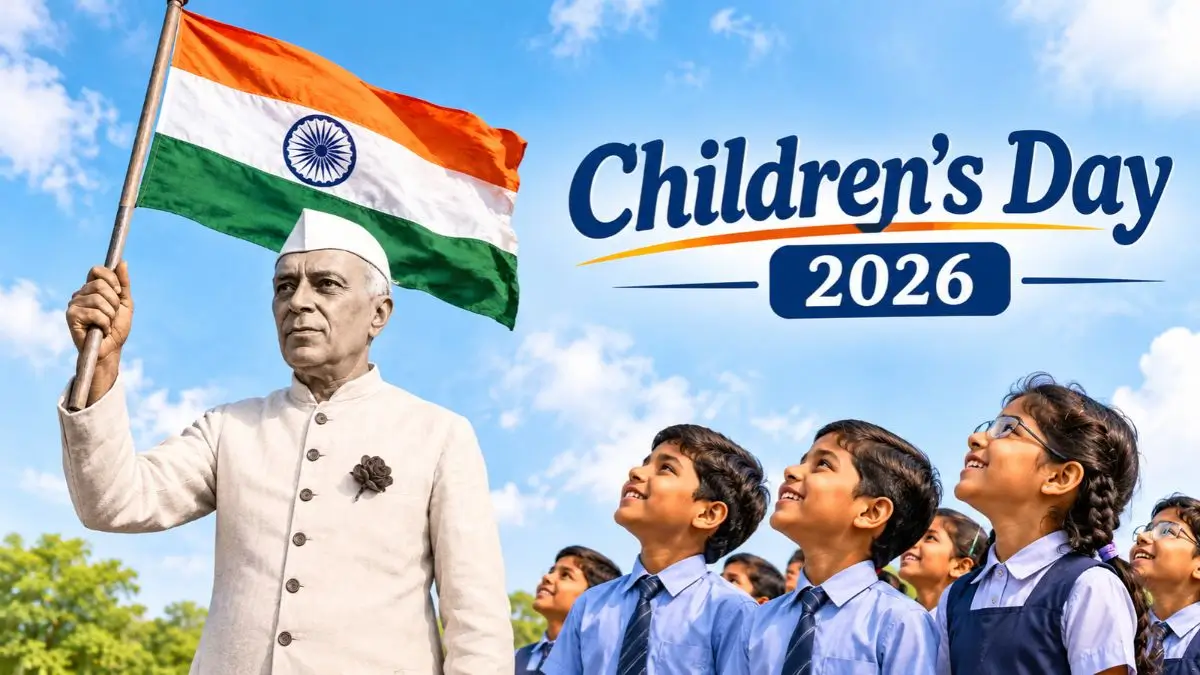
In India, Children’s Day or Bal Diwas is celebrated on November 14 every year to commemorate the birthday of the first Prime Minister Jawaharlal Nehru. In 2026, Children’s Day will be celebrated on Saturday to commemorate the 137th birthday of Nehru, who is popularly known as Chacha Nehru. He is well known for being fond of children and placing great importance on providing them with education. On this day, we recognise how important it is to give children their rights.

History of Children’s Day in India

Children’s Day in India is directly linked to Jawaharlal Nehru. He was born on 14th November 1889 in Allahabad, now known as Prayagraj, Uttar Pradesh. He became the first Prime Minister of India in 1947 and served until his death in 1964.

Jawaharlal Nehru was well known as Chacha Nehru due to his love for children. He believed that children should be provided with education, care and development.

Interestingly, Children’s Day was being celebrated on the 14 th November whilst Nehru was alive. In a note written in the Nehru Archive on 13 th November 1957, it states that Nehru said that the day should be celebrated as Children’s Day instead of his birthday. Additionally, Nehru stated in a speech on 14 th November 1957 that the day should be celebrated as Children’s Day.

Did Children’s Day Change to 14th November After Nehru Died?

A common story is that after Nehru died in 1964, Children’s Day in India was moved to the 14 th November to commemorate him via a parliamentary resolution. However, it has been recorded that Children’s Day was celebrated on 14 th November in 1957.

The Nehru Archive also states that the Indian Council for Child Welfare had requested that it be celebrated on the 14 th November. Therefore, we should not state that it was officially moved after Nehru passed away.

Importance of Children’s Day

Children’s Day is not just celebrated in schools. It is to remind us that we have a responsibility to give children their rights.

It reminds us that children need;

  • Education – All children deserve quality education.
  • Health and nutrition – Children need good healthcare, good nutrition and a safe environment.
  • Protection – Children need to be protected from abuse, exploitation, trafficking and child labour.
  • Opportunities – All children should have the opportunity to learn.
  • Fun – Children need to play sports, be creative and have fun.

How Children’s Day is Celebrated in Schools and Communities

Schools, educational institutions and community groups all celebrate Children’s Day with lots of activities to get the children involved.

Schools often hold;

  • Cultural events – Songs, dance, plays and performances organised by teachers and pupils.
  • Sport – Fun sports days, outdoor activities and team games.
  • Creative activities – Children get to be creative by drawing, painting, storytelling and craft competitions.
  • Learning – Children often go on educational trips such as museums, science centres and historical sites.

Community groups often run

  • Health days – Health camps, educational resources and awareness activities about children’s rights.
  • Parents and families can also celebrate by having;

Storytelling sessions, going on nature walks, playing board games, going on picnics and doing activities the children want to do.

National Children’s Day vs World Children’s Day

National Children’s Day in India and World Children’s Day by the United Nations are celebrated on different days.

Specifically National Children’s Day (India) World Children’s Day
Date 14th November 20th November
Commemorates Birthday of Jawaharlal Nehru Child rights milestones by the UN
Celebrated in India Worldwide
Main Focus Children’s well-being, education and development. Children’s rights.
Mainly Linked To Chacha Nehru United Nations and UNICEF

Why is World Children’s Day Celebrated on the 20 th November?

In 1954 the United Nations General Assembly passed Resolution 836 (IX) on 14 December, proposing that countries should create a Universal Children’s Day.

The 20 th November was chosen as it is a significant date for child rights globally. This is because,

  • Declaration of the Rights of the Child was adopted by the United Nations General Assembly in 1959.
  • Convention on the Rights of the Child (UNCRC) was adopted by the United Nations General Assembly in 1989.

The Convention on the Rights of the Child is an international treaty that recognises children’s rights to survival, development, protection and participation. It came into effect on the 2 nd September 1990.

India Records 38% Decline in TB Mortality and 94% Treatment Success Rate

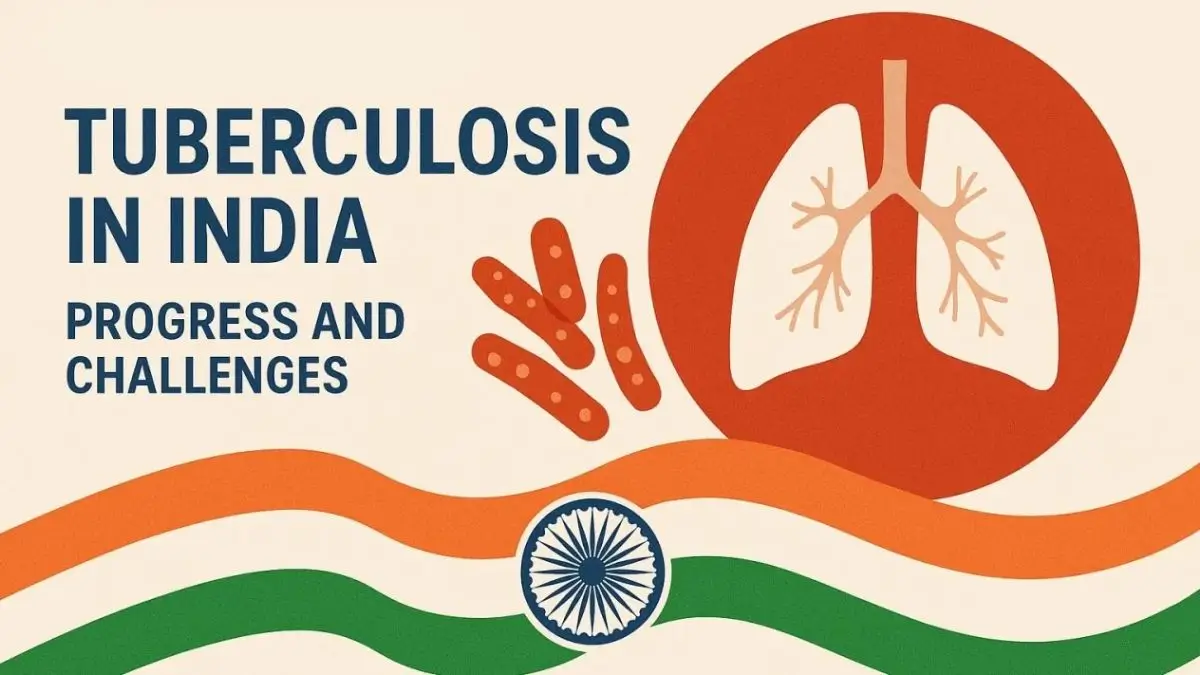
India had a 38% reduction in Tuberculosis deaths in comparison to 35% globally. This has been achieved due to increased screening, early diagnosis, tech-based solutions and dietary support. According to the WHO Global Tuberculosis Report 2026, India achieved this through 94% success rate in treating TB patients. These improvements have been made through increased screening, early diagnosis, tech-based solutions and dietary support.

Key Findings of WHO Global Tuberculosis Report 2026

The report outlines that India has made great improvements since 2015.

Please note that the 94% success rate in treating TB patients is only for those suffering with Drug susceptible TB.

National TB Elimination Programme (NTEP)

The National TB Elimination Programme is a flagship programme to prevent and control TB. It was introduced in 2020 by renaming the Revised National Tuberculosis Control Programme (RNTCP).

Key features include,

  • Identification of TB cases at an early stage through increased screening.
  • Early diagnosis through molecular diagnostic tests.
  • AI-based chest x-rays to identify those potentially suffering with TB.
  • Immediate treatment of patients and targeted treatment of vulnerable patients.
  • Government-led programmes to provide diet and financial support.
  • Community involvement to increase awareness, screening and support.

TB Mukt Bharat Abhiyaan – Increased Screening

The TB Mukt Bharat Abhiyaan has become a key initiative to help discover TB cases.

The campaign has achieved the following results,

Metric Results
Increased Screening +25 crore
Chest X-Rays +11.1 crore
Molecular Diagnostic Testing +3.1 crore
TB Cases Identified 48.64 lakh
Asymptomatic TB Cases Identified 14.97 lakh

This campaign includes mobile screening, chest x-ray and molecular testing along with community outreach.

What Is Tuberculosis?

Tuberculosis is a contagious disease caused by bacteria from the Mycobacterium tuberculosis complex. It most commonly affects the lungs however can impact other areas of the body such as the brain, kidney and bones.

It is transferred through the air when an individual with infectious pulmonary TB coughs, sneezes or speaks and releases bacteria.

Symptoms include persistent cough, fever, night sweats, weight loss, tiredness and lack of appetite.

Diagnosed through sputum, molecular and chest x-ray tests.

Treated with a combination of Anti-TB medications.

Global TB Statistics

According to the WHO Global Tuberculosis Report 2026,

  • An estimated 10.6 million people worldwide developed TB in 2025.
  • Approximately 1.13 million people died from TB in 2025.
  • TB deaths globally reduced by 35% between 2015-25.

Gunjan and L. Ambekar Meetei Win India’s First-Ever Boxing Gold Medals at Youth Olympics 2026

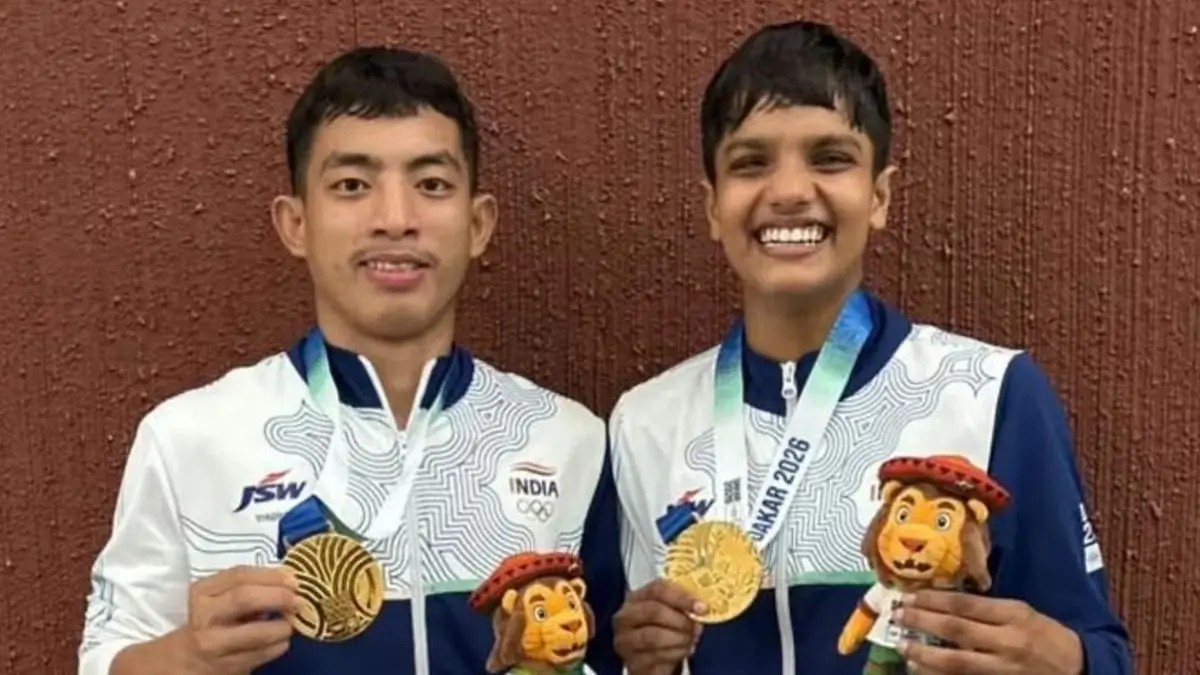
Indian boxing celebrated a landmark moment at the 2026 Youth Olympic Games in Dakar, Senegal, on 12th November, 2026, Lairenlakpam Ambekar Meetei defeated Kristian Jubani (Ireland) in the men’s 50kg final and Gunjan defeated Bouthaina Bensalah (Algeria) in the women’s 48kg final. This meant both boxers won gold medals in their respective finals, giving India a 100% gold medal success rate at the games.

Gold Medalists

Lairenlakpam Ambekar Meetei – 50kg Male

  • After a close final, Ambekar Meetei won 3-2 against Kristian Jubani (Ireland). This makes him the first Indian boxer to win a gold medal at the Youth Olympic Games.

Gunjan – 48kg Female

  • After defeating Bouthaina Bensalah (Algeria) with a score of 5-0, Gunjan became the first Indian female boxer to win gold at the Youth Olympic Games.
  • Both boxers ended their boxing journey with a gold medal. This means India’s two man boxing team have 100% success rate.

India’s Previous boxing medals at the Youth Olympic Games

Prior to the Dakar 2026 edition, India had only won two boxing medals at the Youth Olympic Games. Both of these were at the inaugural edition in Singapore in 2010.

Name Weight Medal
Shiva Thapa Male 54kg Silver
Vikas Krishan Male 60kg Bronze

These were India’s best performance to date in boxing at the Youth Olympic Games. Winning two gold medals at Dakar was India’s first gold medals in boxing at the games.

India’s Performance at the Youth Olympic Games

India had an impressive performance at the 2018 Youth Olympic Games in Buenos Aires, Argentina winning 13 medals overall.

India won two gold, three silver and five bronze medals at the games thanks to the boxing success. This was India’s second highest medal total at the Summer Youth Olympic Games.

General Information About the Youth Olympic Games

Youth Olympic Games (YOG): A multi-sport event held internationally by the International Olympic Committee (IOC).

  • First Summer Youth Olympic Games: Held in Singapore in 2010.
  • Second Edition: Nanjing, China in 2014.
  • Third Edition: Buenos Aires, Argentina in 2018.
  • Fourth Summer Youth Olympic Games: Dakar 2026. First time being held in Africa.
  • Organised by: International Olympic Committee (IOC).

India Receives First Railway Propulsion System Order from Japan, Boosting Railway Technology Exports

Another milestone has been reached with Japan placing the first orders for electronically powered train systems manufactured in India. Now Japan will be added to the global market for railway equipment made in India as the country shows its capabilities in manufacturing railway systems.

India is looking to increase their ambitions by exporting more complete train systems. The Railways Ministry has also spoken about the importance of Indian manufacturing in providing cutting-edge railway systems.

What is a Railway Propulsion System?

A railway propulsion system refers to the collection of equipment to produce, transform, and control the power needed to move a train. This can include a combination of traction motors, converters, and inverters.

A propulsion system is used to control how much power is sent to the train’s motors to help accelerate, control speed, and to brake. They are one of the largest parts of a train’s value comprising of almost 40% of the total.

Japan Order for Indian Railway Manufacturing

India has seen growth in becoming a global supplier of railway components, coaches, bogies, locomotives and propulsion systems, due to the ‘Make in India’ and ‘Make for the World’.

Alstom manufacturing in Gujarat has contributed greatly to the exports,

  • Maneja (Vadodara): Over 5000 propulsion systems were exported.
  • Savli (Vadodara): Over 3800 bogies were exported to countries such as Germany, Egypt, Sweden, Australia and Brazil.
  • Flatpacks: Over 4000 modules were supplied to Vienna, Austria.
  • India has also exported metro coaches to Australia and Canada. We have also supplied propulsion systems to France, Mexico, Romania, Spain, Germany and Italy.

This order from Japan is an exciting development as it means we are now supplying propulsion systems from India to another country. This will be the first order of propulsion systems from India to Japan.

India Targets Exporting Vande Bharat Trains by 2029-30

India’s target is to export complete Vande Bharat train sets made in India by 2029-30, according to Railway Minister Ashwini Vaishnaw.

This shows our goal to stop exporting individual components and start exporting complete passenger train sets.

The Vande Bharat is an important part of our indigenous train manufacturing and railway modernization. As a result, India has improved our capabilities in train design, propulsion, passenger comfort and manufacturing.

Indigenous High Speed Trains for Mumbai-Ahmedabad Corridor

India are also developing an indigenous high-speed train for the 508km Mumbai-Ahmedabad High Speed Rail Corridor.

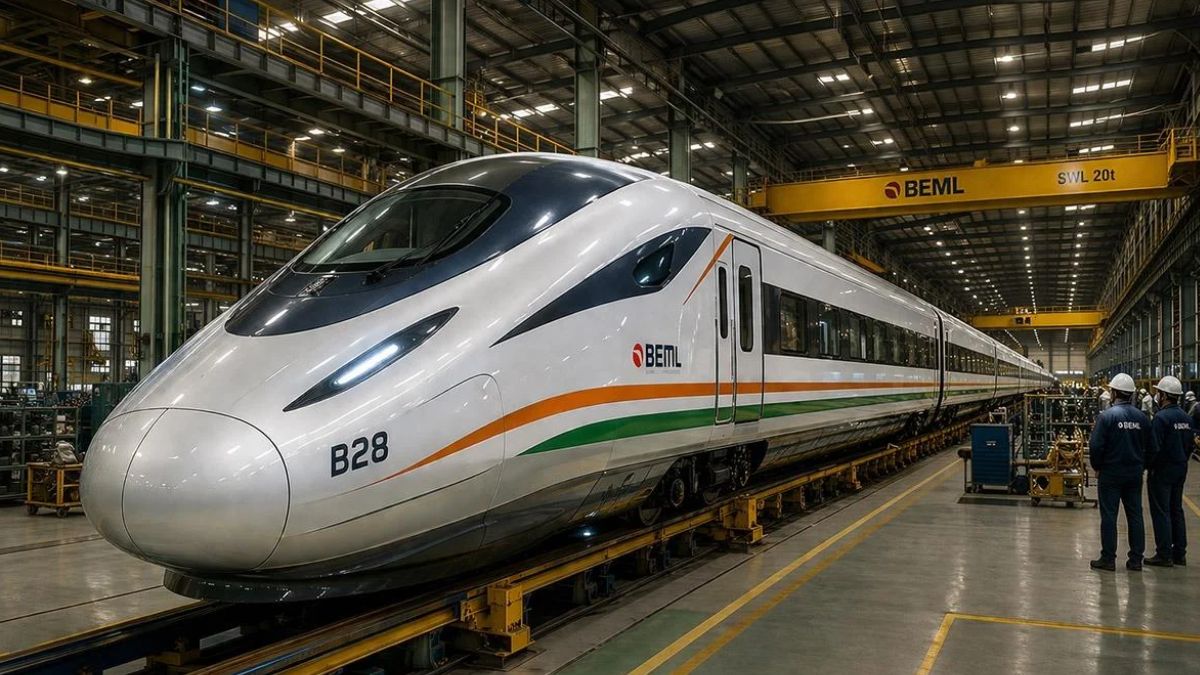
The train set, called the B28 or Vande Bullet, is being manufactured by Bharat Earth Movers Limited (BEML) at their Bengaluru site. It is being developed with the Integral Coach Factory (ICF) in Chennai, who have awarded the contract to BEML to design and manufacture the train sets.

B28 Train Set Features

  • Train Name: B28 / Vande Bullet
  • Manufacturer: BEML
  • Partner: Integral Coach Factory (ICF) in Chennai.
  • Corridor: Mumbai-Ahmedabad High Speed Rail Corridor.
  • Maximum Speed: 280kmph
  • Planned Speed: Approx 250kmph.
  • Number of cars: 8
  • Length: Approx 202m
  • Capacity: Approx 557.

The train has a maximum testing speed of 280 km/h and planned speed of 249kmph. It is being designed to operate in India. The development of indigenous high-speed train sets, along with increasing propulsion system exports shows that India are trying to improve the engineering and manufacturing of railways within the country.

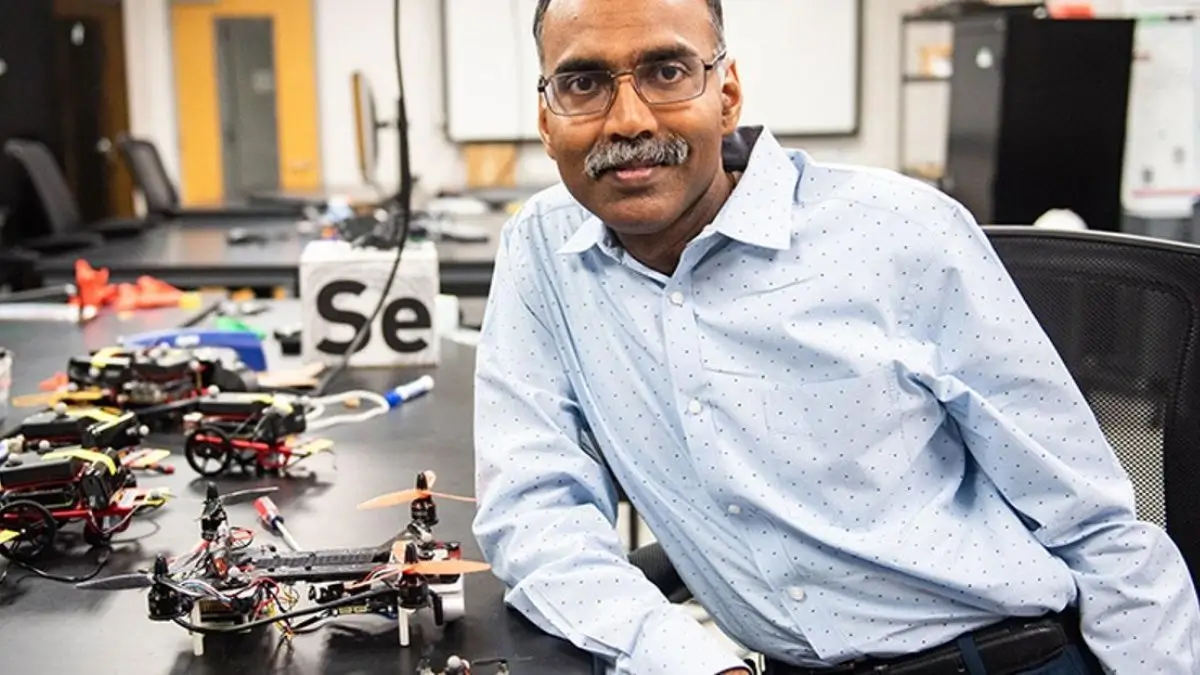
Who Is Maruthi R. Akella? IISc Honours Aerospace Scientist Whose Algorithms Guided the IM-1 Lunar Lander

Maruthi R. Akella, an aerospace scientist and control systems engineer from the University of Texas at Austin has won the Indian Institute of Science (IISc) Distinguished Alumnus Award 2026. As an alumnus of IISc Bengaluru, Maruthi’s research group contributed to the in-situ guidance algorithm for Intuitive Machines’ IM-1 lunar lander ‘Odysseus’, which achieved the first US landing on the Moon since 1972, as well as the first soft landing on the Moon by a privately owned spacecraft. This demonstrates the contribution of Indian academia and researchers to global space exploration.

Who is Maruthi R. Akella?

Maruthi R. Akella is an aerospace scientist and control systems engineer who holds the Cockrell Family Chair in Engineering at the University of Texas at Austin in the USA.

He has been on the teaching faculty at the university since 1999. Maruthi is the head of the Controls Group for Distributed and Uncertain Systems (C-DUS), founder director of the Center for Autonomous Air Mobility and affiliated to the university’s Centre for Space Research.

His research focuses on mathematical and control algorithms for complex aerospace and robotic systems, including those in uncertain conditions. His research group also contributed to the in-situ guidance algorithm for Intuitive

Machines’ IM-1 lunar mission.

Education of Maruthi Akella

Maruthi first studied mechanical engineering before specialising in aerospace engineering.

Qualifications Institution Year
BTech (Honours) Mechanical Engineering National Institute of Technology Calicut 1992
ME (with distinction) Aerospace Engineering Indian Institute of Science, Bengaluru 1994
PhD Aerospace Engineering Texas A&M University, USA 1998

Following his ME qualification from IISc, he became a research associate at Indian Space Research Organisation (ISRO) in their Space Technology Cell in Bengaluru.

In 1994, he moved to the USA to undertake his PhD research at Texas A&M University.

How did Akella’s algorithms enable the IM-1 lander?

One of Maruthi’s notable contributions to space exploration includes his research group contributing to Intuitive Machines’ IM-1 lunar mission.

The Nova-C lunar lander, known as Odysseus, delivered scientific equipment and technology demonstration to the Moon as part of NASA’s Commercial Lunar Payload Services (CLPS).

As stated by UT Austin, Maruthi’s research group contributed to the in-situ guidance algorithm. This allowed the spacecraft to determine how it should move.

What is Guidance, Navigation and Control?

Guidance, Navigation and Control systems allow a spacecraft to do the following,

  • Guidance – Determine what path the spacecraft should take.
  • Navigation – Estimate where the spacecraft is, how fast it is going and its orientation.
  • Control – Control how the spacecraft moves.

During a lunar landing, these systems become very important as they allow the spacecraft to manage how it moves.

Algorithms can be used within the spacecraft to help them make any adjustments required based on data provided from the sensors. This reduces reliance on constant commands from Earth.

Maruthi’s research into nonlinear control, spacecraft attitude estimation and adaptive systems helps develop these autonomous systems.

What was the IM-1 lunar mission?

The IM-1 mission took place in February 2024. The Nova-C lunar lander ‘Odysseus’ was launched on February 15th 2024 using a SpaceX Falcon 9 Rocket.

It successfully landed near Malapert A in the south polar region of the Moon on February 22nd 2024.

This mission achieved two major accomplishments,

  • It was the first successful landing on the Moon by the USA since Apollo 17 in 1972.
  • It was the first successful soft landing on the Moon by a privately owned spacecraft.

The mission was performed as part of the NASA’s Commercial Lunar Payload Services (CLPS). This allows the private companies to be contracted by NASA to deliver scientific tools and technology demonstrations to the Moon.
This is part of NASA’s wider goals to encourage commercial exploration of the Moon.

Minor Planet 5376 renamed Maruthiakella

Maruthi also received recognition from the global astronomical community.

In October 2024, minor planet 5376 was named Maruthiakella by the International Astronomical Union (IAU). This was due to his contributions to astrodynamics and space systems control.

This Minor planet resides in the main asteroid belt between Mars and Jupiter. It was officially named in the IAU’s Working Group for Small Body Nomenclature Bulletin.

IISc Distinguished Alumnus/Alumna Awards 2026

IISc have announced 5 recipients of the Distinguished Alumnus/Alumna Awards and 3 recipients of the Young Alumnus/Alumna Medals for 2026.

Maruthi is one of the 5 recipients for the Distinguished Alumnus/Alumna Awards.

The other 4 recipients are,

  • B.S Manjunath
  • Dipankar Das Sarma
  • Jagannath Nayak
  • Rajat Moona

The 3 recipients for the Young Alumnus/Alumna Medals are,

  • Abhishek Sinha
  • Geethu Joseph
  • Himanshu Joshi.

The awards will be presented on the 19 th December 2026 at the JN Tata Auditorium on the IISc campus in Bengaluru.

_12.1
November 2026
M T W T F S S
 1
2345678
9101112131415
16171819202122
23242526272829
30