
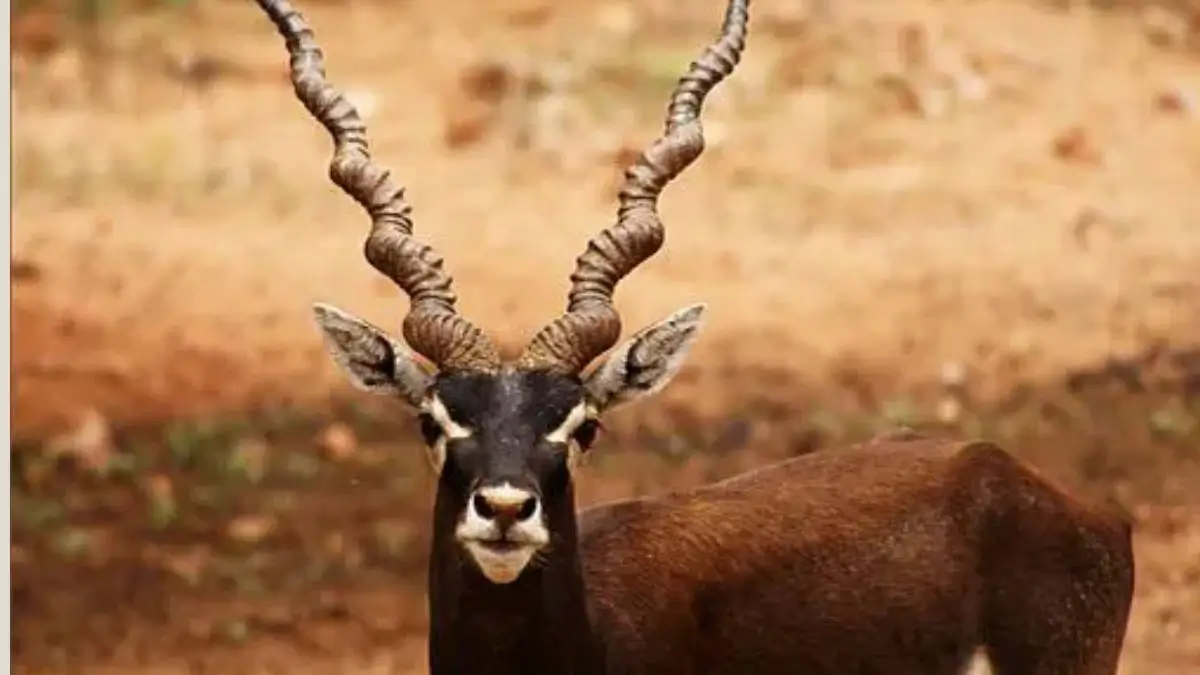
The remarkable conservation success story of blackbucks coming from the State of Chhattisgarh. The state saw the extinction of this species with several efforts the population of blackbuck have the steady comeback in the state. Nearly the century after their last official sighting in 1927 thee state now hosts around the 130 blackbucks roaming freely in the wild and also around 80 blackbuck are awaiting to be release. This reintroduction was began in 2018 and it marks the turning point in wildlife restoration efforts.
From Extinction to Revival – The Journey of Blackbucks
The blackbuck which is an elegant antelope species and which is native to the Indian subcontinent had vanished from the Chhattisgarh due to habitat loss and hunting pressures.
The revival for them began in 2018 at Barnawapara Wildlife Sanctuary where the first batch of 77 blackbucks was introduced. Out of these 50 were translocated from Delhi and 27 were sourced from the Kanan Pendari Zoo in Bilaspur.
Initially they were kept in enclosures and the animals underwent the carefully designed acclimatization process before they are being released into the wild. As the loss of around 15 animals during the Covid-19 period. Despite this setback the population have steadily grew due to effective conservation strategies.
Today Barnawapara hosts approximately,
- 130 blackbucks in the wild
- 60 in the protected enclosures
Scientific Conservation Under Wildlife Protection Act
The reintroduction program of blackbuck has been carried out under the provisions of the the Wildlife Protection Act, 1972. This act is ensuring a scientific and ethical approach.
The process included the,
- Stress-free translocation techniques for them.
- Also the acclimatization enclosures for the gradual adaptation.
- Continuous monitoring by using PTZ IR cameras.
- The daily foot patrols by the forest guards.
By putting this efforts it have minimized the mortality risks and improved survival rates and with this it also making this one of the most promising wildlife restoration projects in India.
Expanding the Habitat: New Plans for Gomardha Sanctuary
As encouraged by the success in Barnawapara the forest department is now planning to introduce other batch of blackbucks in Gomardha Wildlife Sanctuary.
This move aims to,
- Expand the species geographical range
- Reduce the ecological pressure on a single habitat
- To strengthen the long-term sustainability of the population
Why Blackbuck Conservation Matters
Blackbucks are not just the visually striking animals but they play a crucial ecological role.
As coarse grass grazers they help to maintain the health of grassland ecosystems.
Their presence contributes to preventing the spread of unpalatable grass species and also to enhancing the grassland productivity.
They also support the diverse prey base for predators and they maintaining the ecological balance in open habitats.
About Barnawapara Wildlife Sanctuary
| Location | Northern part of Mahasamund district in Chhattisgarh |
| Name Origin | Named after Bar and Nawapara forest villages in the sanctuary |
| Area | Covers 245 sq. km |
| Water Sources | Tributaries of Mahanadi; River Balamdehi (west boundary) and Jonk River (northeast boundary) |
| Vegetation | Tropical dry deciduous forest |
About the Blackbuck
It is the species of antelope native to India and Nepal
Scientific Name: Antilope cervicapra
Distribution: Widespread in Rajasthan, Gujarat, Madhya Pradesh, Tamil Nadu, Odisha and other parts of peninsular India
State Animal: It declared by Punjab, Haryana, and Andhra Pradesh
Habitat: Prefers the open grasslands, dry scrub areas and lightly forested regions
It was placed in Schedule I category under IUCN list.
Question
Q. In which state of India is the population of blackbucks the highest?
A. Gujarat
B. Rajasthan
C. Madhya Pradesh
D. Punjab


 Nitish Kumar to Take Rajya Sabha Oath on...
 Ashwini Bhide Becomes First Woman BMC Co...
 Lok Sabha Passed Resolution For Amravati...











