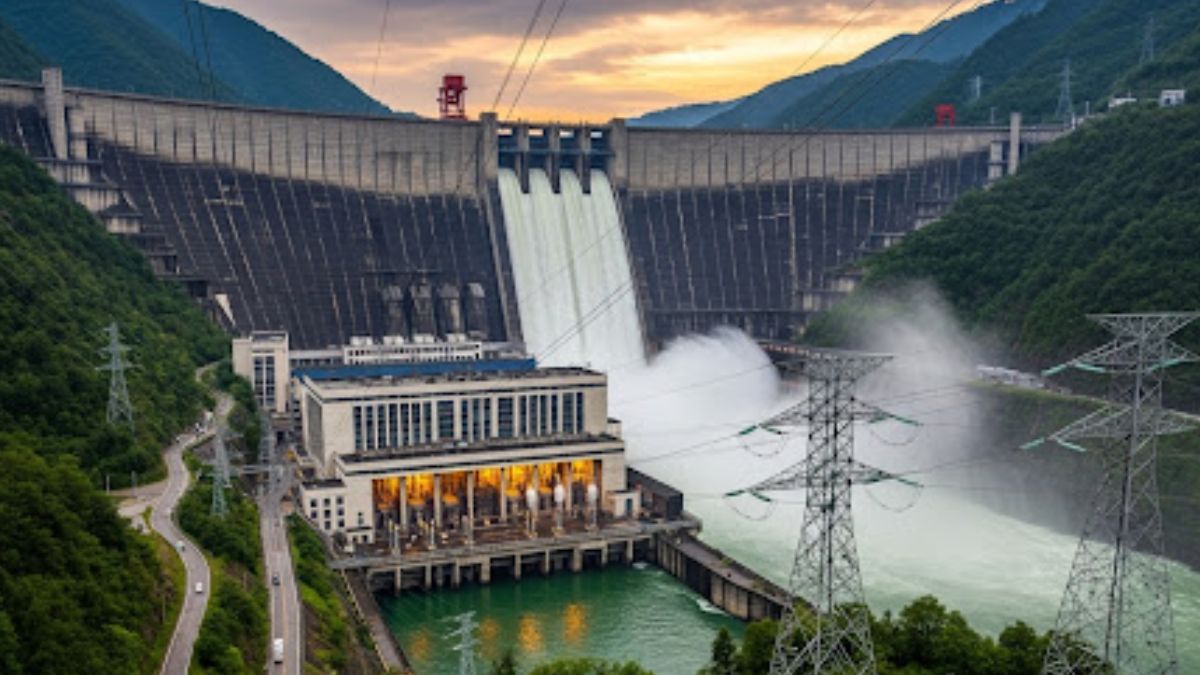
The Cabinet Committee on Economic Affairs (CCEA), chaired by Prime Minister Shri Narendra Modi, has approved the construction of the 700 MW Tato-II Hydro Electric Project (HEP) in Shi Yomi district, Arunachal Pradesh. With an investment outlay of ₹8,146.21 crore and a completion target of 72 months, the project aims to enhance the region’s power supply, strengthen the national grid, and drive socio-economic growth in one of India’s remotest districts.
Project Overview
The Tato-II Hydro Electric Project will have an installed capacity of 700 MW, split into four units of 175 MW each, and is expected to generate 2,738.06 million units (MU) of clean energy annually. The project will be implemented through a joint venture between North Eastern Electric Power Corporation Ltd. (NEEPCO) and the Government of Arunachal Pradesh.
The Government of India will provide ₹458.79 crore as budgetary support for enabling infrastructure, including roads, bridges, and transmission lines, along with ₹436.13 crore as Central Financial Assistance for the state’s equity share.
Economic and Social Benefits
Revenue and Local Gains
Arunachal Pradesh will benefit from 12% free power and 1% additional power allocated to the Local Area Development Fund (LADF). This will contribute directly to community welfare and fund local development projects.
Employment and MSME Support
The project is aligned with the Aatmanirbhar Bharat Abhiyan, offering significant opportunities for local suppliers, MSMEs, and enterprises. Both direct and indirect employment opportunities are expected during the construction and operational phases.
Infrastructure Development
Roads and Connectivity
A total of 32.88 kilometres of roads and bridges will be developed, with most of this infrastructure available for local public use.
Social Infrastructure
From the ₹20 crore dedicated fund, facilities such as hospitals, schools, marketplaces, and playgrounds will be established, improving the quality of life in the project area.
Strategic Importance
The Tato-II HEP is not only a step towards energy self-reliance but also crucial for balancing the national grid with renewable energy. The project will promote clean energy generation, strengthen the North-East’s infrastructure, and integrate remote districts into the national economic framework.


 Nitish Kumar to Take Rajya Sabha Oath on...
 Ashwini Bhide Becomes First Woman BMC Co...
 Lok Sabha Passed Resolution For Amravati...