
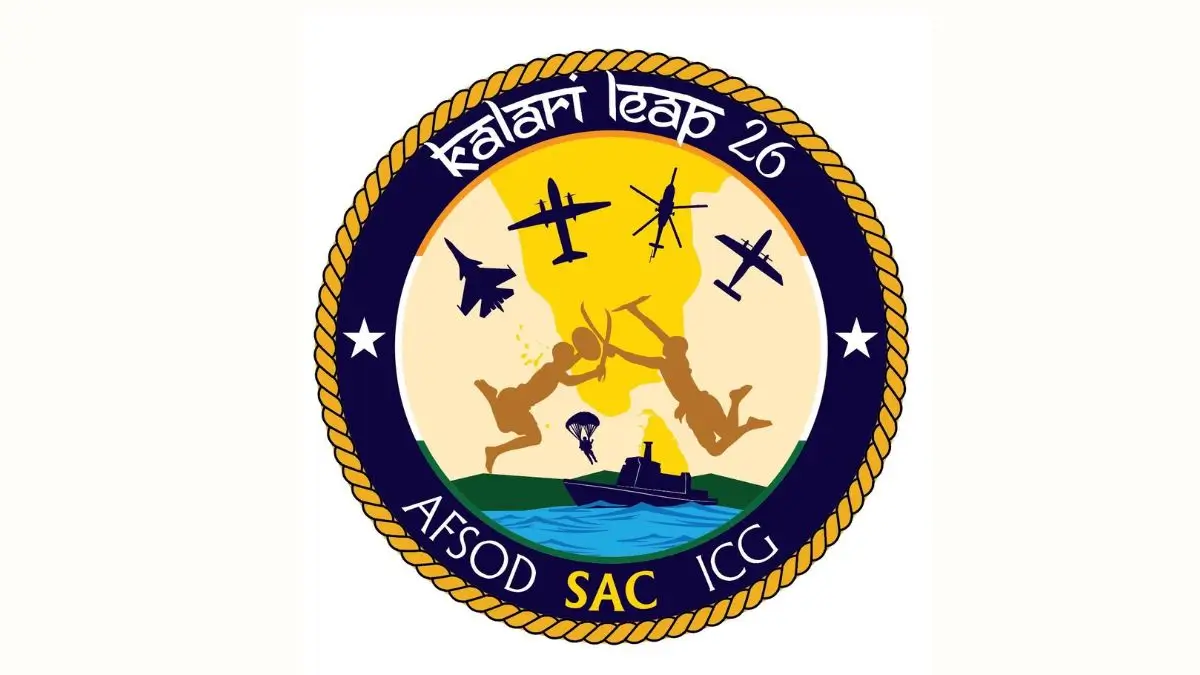
The Southern Air Command of the Indian Air Force successfully conducted a high tempo joint maritime exercise which is named Kalari Leap in the Lakshadweep and Minicoy archipelago. The exercise focused on validating rapid force projection and joint operational planning and precision strikes in complex maritime conditions. With the participation from the Armed Forces Special Operations Division and the Indian Coast Guard the Kalari Leap showcased India’s integrated defence readiness in island territories and strategic sea lanes.
Kalari Leap: Southern Air Command Strengthens Maritime Readiness
The Kalari Leap joint maritime exercise was conducted by the Southern Air Command in the strategically important Lakshadweep and Minicoy islands. The primary objective was to test operational preparedness in a challenging maritime environment.
The drill validated,
- Rapid force projection capability.
- Precision execution of air operations.
- Integrated planning among defence forces.
- Operational coordination in island territories.
By conducting the exercise in the Lakshadweep region, the Indian Air Force (IAF) reinforced its ability to respond swiftly to emerging maritime threats in the Arabian Sea.
Joint Maritime Exercise in Lakshadweep: Why the Location Matters
The Lakshadweep and Minicoy archipelago holds immense strategic value due to its proximity to major international shipping routes in the Arabian Sea.
Through Kalari Leap, the Southern Air Command demonstrated,
- Operational dominance in island domains.
- Surveillance and strike capability across maritime zones.
- Readiness for contingencies involving sea-based threats.
Island territories require seamless coordination between air and maritime forces. The joint maritime exercise ensured that all participating agencies operated under a unified command structure.
Integrated Participation: IAF, Coast Guard and Special Forces
The Kalari Leap exercise witnessed participation from multiple defence agencies.
- The Armed Forces Special Operations Division (AFSOD) played a key role in executing specialized missions.
- The Indian Coast Guard deployed ships, Gemini boats and Dornier 228 aircraft to support surveillance and rescue operations.
- The Indian Air Force contributed its air assets for strike simulations and operational air support.
This integrated structure strengthened interoperability between air, maritime and special forces units a crucial requirement in modern warfare.
Anti-Ship Strikes and Maritime Search and Rescue Operations
- A major highlight of Kalari Leap was the execution of anti-ship strike simulations and maritime search and rescue (SAR) operations.
- Anti-ship strike drills tested the Air Force’s capability to neutralize hostile naval assets.
- Maritime search and rescue operations validated emergency response coordination during sea-based crises.
- The deployment of Coast Guard ships, Gemini boats and Dornier aircraft ensured realistic maritime operational conditions.
- These drills demonstrated that the Southern Air Command can conduct both offensive and humanitarian missions effectively in maritime environments.
Question
Q. Kalari Leap is primarily associated with which domain?
A. Cyber security
B. Maritime operations
C. Space defence
D. Mountain warfare


 INS Aridhaman Nuclear Submarine Joins In...
 INS Sunayna Reaches Male, Boosting Marit...
 BRO's Project Chetak Turns 47: How It St...











