
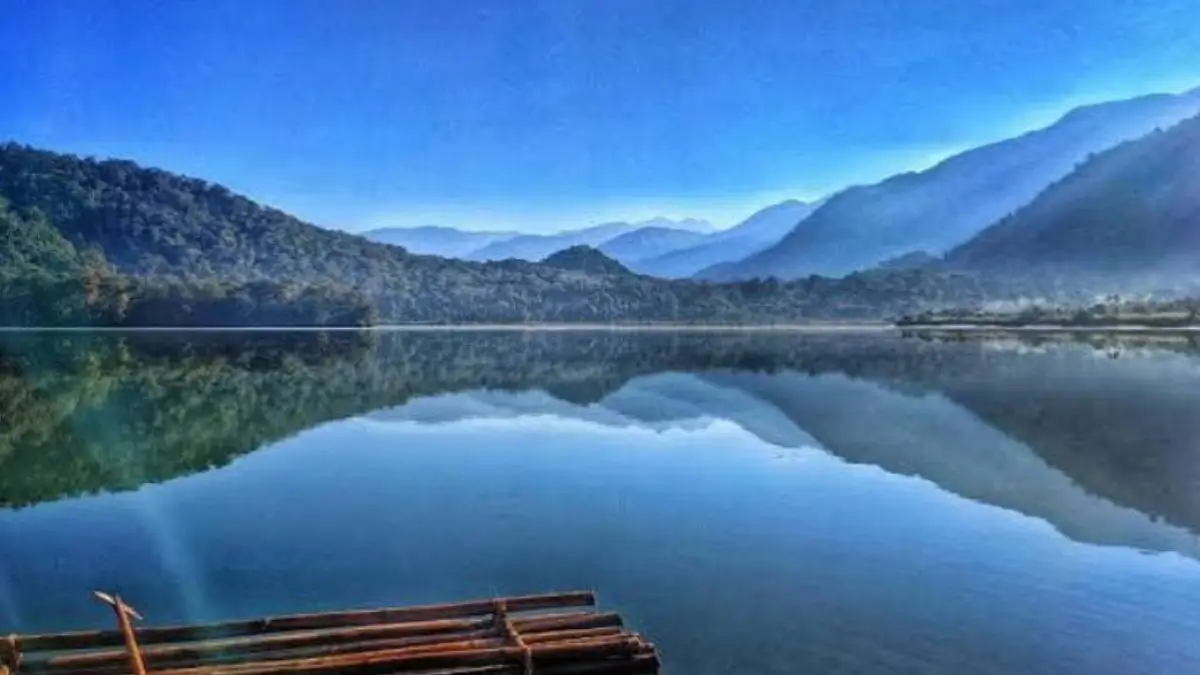
Glaw Lake in Arunachal Pradesh is now India’s 101st Ramsar Site, wthis announcement was made by Union Minister of Environment, Forest and Climate Change Bhupender Yadav on August 3, 2026. With this recognition, Glaw Lake has become the first Ramsar Site in Arunachal Pradesh, which emphasizes importance of wetland ecosystem in the Eastern Himalayas. The designation of Glaw Lake as Ramsar Site furthers India’s commitment towards conservation of biodiversity, climate resilience, water security and sustainable livelihoods.
Glaw Lake Becomes Arunachal Pradesh’s First Ramsar Site
Glaw Lake, situated in Arunachal Pradesh, has been designated as the first Ramsar Site of the state. Consequently, India gains number 101 in Ramsar Sites worldwide.
Importance of this development could be summarized as,
- It is the first Ramsar Site in Arunachal Pradesh
- It adds the growth of Ramsar Sites in India, making its number to 101.
- It supports conservation efforts in Eastern Himalayas region that holds unique biodiversity.
- The announcement was made by Environment Minister Bhupender Yadav officially, stating it as a significant achievement towards the matter of biodiversity conservation and sustainability.
Where is Glaw Lake Located?
Glaw Lake is located in Arunachal Pradesh, which is located within the boundaries of the Kamlang Tiger Reserve and Wildlife Sanctuary.
The lake has the following features,
- It is a natural freshwater wetland.
- It is situated in the Eastern Himalayas.
- The lake is supplied by rivers that flow throughout the year.
- The lake is surrounded by thick forest vegetation.
The location of the lake in a protected forest area gives it great ecological significance.
Rich Biodiversity Contributes to Ecological Importance of Glaw Lake
Glaw Lake is highly valued for its rich plant species and well-preserved freshwater ecosystem.
Ministry of Environment states,
- Over 150 species of tree have made their appearance in the site and adjacent areas.
- The area is home to 49 species of orchids.
- The wetland provides living conditions for many types of native plants and animals.
Various habitats and freshwater ecosystems in the region play a great part in maintaining ecological equilibrium and preserving the biodiversity of the Eastern Himalayas.
Importance of Ramsar Site Designation
The term “Ramsar Site” refers to a wetland classified under the Ramsar Convention, an agreement enacted in 1971 in Ramsar, Iran, for wetland conservation and sustainable utilization.
Benefits That Come With Ramsar Designation,
- To safeguard ecologically important wetlands.
- To preserve biodiversity.
- To guarantee water security.
- To promote climate resilience.
- To create sustainable living opportunities for the local communities.
- To encourage scientific research as well as proper use of wetland resources.








 Centre Permits E100 Ethanol Fuel in Flex...
 Supreme Court Supports Raising District ...
 Cyclone Arnab 2026: Landfall Forecast fo...










