
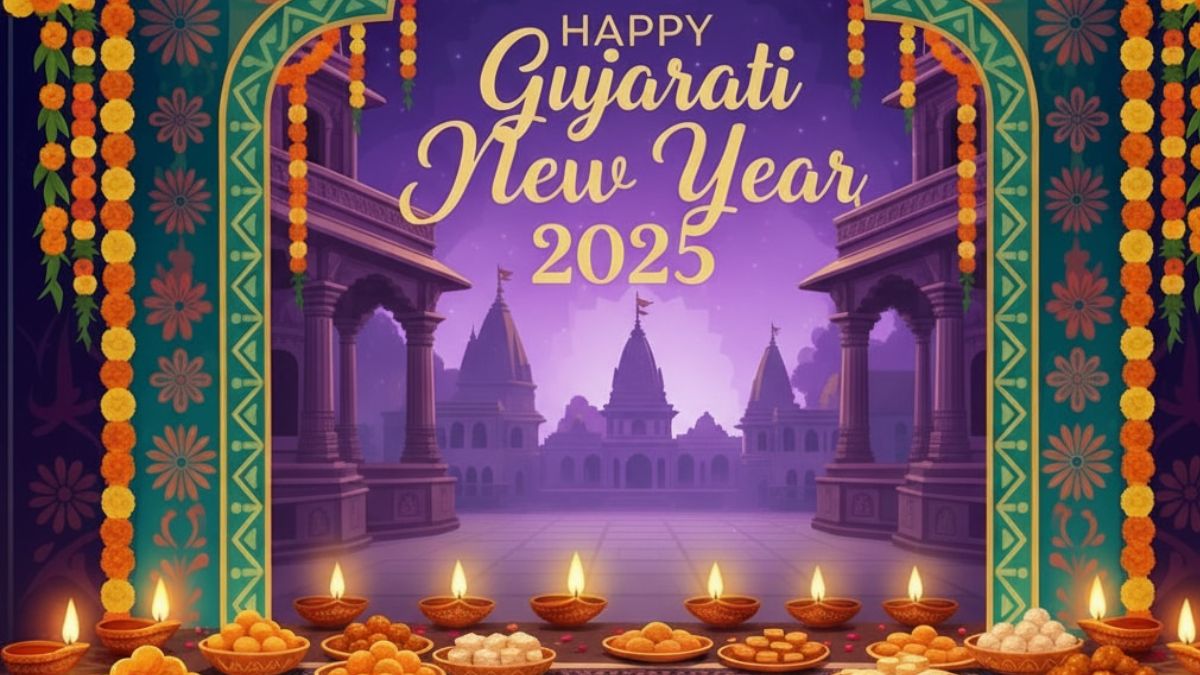
The beautifully festive rhythm of Diwali may be drawing to a close, but for the Gujarati community it marks just the beginning. The very next day heralds the arrival of the Bestu Varas—the Gujarati New Year. In 2025, this special day falls on Wednesday, 22 October. That day opens the door to the new year in the Gujarati lunisolar calendar and is filled with renewal, joy and tradition. This article breaks down the date, history, significance, traditions and meaningful quotes of Bestu Varas—especially useful for competitive‑exam aspirants who may be asked about regional festivals and their cultural contexts.
1. Date & Tithi of Bestu Varas 2025
For the year 2025, Bestu Varas is celebrated on 22 October. This corresponds to the first day (Pratipada) of the month of Kartik (Kartik Sud Ekam) according to the Gujarati calendar. It also marks the beginning of the new year in Vikram Samvat—Samvat 2082.
2. Historical Background
The roots of Bestu Varas lie in the traditional lunisolar calendar system used in Gujarat. The Vikram Samvat calendar, attributed to King Vikramaditya, begins in 57 BCE. For Gujaratis, the New Year is celebrated on the first day of Kartik—after Diwali—rather than in spring as in some other regions.
There is also a popular mythological tale associated with the festival, where Lord Krishna lifted Mount Govardhan to protect villagers from Lord Indra’s wrathful rainstorm. This symbolic act of protection and fresh beginnings ties into the spirit of the New Year.
3. Significance of Bestu Varas
3.1 New Financial & Commercial Cycle
One of the key aspects of the Gujarati New Year is its strong connection to business and trade. On this day, old account books (‘chopda’) are closed, and new ones are opened. The ritual of worshipping the new account books is called Chopda Pujan, invoking blessings for a prosperous year ahead.
3.2 Spiritual Renewal & Home Renewal
Beyond commerce, Bestu Varas represents a spiritual fresh start: homes are cleaned, doors decorated, rangoli made, diyas lit, and new clothes worn. It is a time of renewal of hopes, relationships and inner intentions.
3.3 Cultural & Regional Identity
For Gujaratis, celebrating Bestu Varas reinforces cultural identity and continuity. It is not just a calendar‑marking day but a culturally embedded festival that plays a role in maintaining traditions and values across generations.
4. Traditions & Rituals
Here are some of the common practices associated with Bestu Varas,
- Home cleaning & decoration: Families clean the house thoroughly, decorate the entrance with toran, draw rangoli designs and light diyas.
- Temple visits & prayers: People visit temples, seeking blessings from Goddess Lakshmi and Lord Ganesha.
- Chopda Pujan: Business households perform rituals with new account books, writing auspicious symbols like ‘Shubh’ and ‘Labh’.
- New clothes, greetings, sweets: Wearing new outfits, exchanging sweets, greeting with “Saal Mubarak”, and meeting elders for blessings.
- Community gatherings: Diaspora communities celebrate with traditional foods, music, and cultural programs to keep the spirit alive.
5. Quotes & Wishes for Bestu Varas
Celebrate Bestu Varas with heartfelt wishes and messages like these,
- “Saal Mubarak! May the new Samvat bring joy and success.”
- “Nutan Varshabhinandan! On this new beginning, may your dreams thrive.”
- “Let each moment of Bestu Varas fill your life with peace and prosperity.”
- “As the lamps shine this Bestu Varas, may your path be lit with happiness.”
- “New year, new hopes, new beginnings. Embrace it all with love and light.”

 World Kidney Day 2026: Why Kidney Health...
 No Smoking Day 2026: Why March 11 Is the...
 CISF Raising Day 2026: Date, History &am...











