
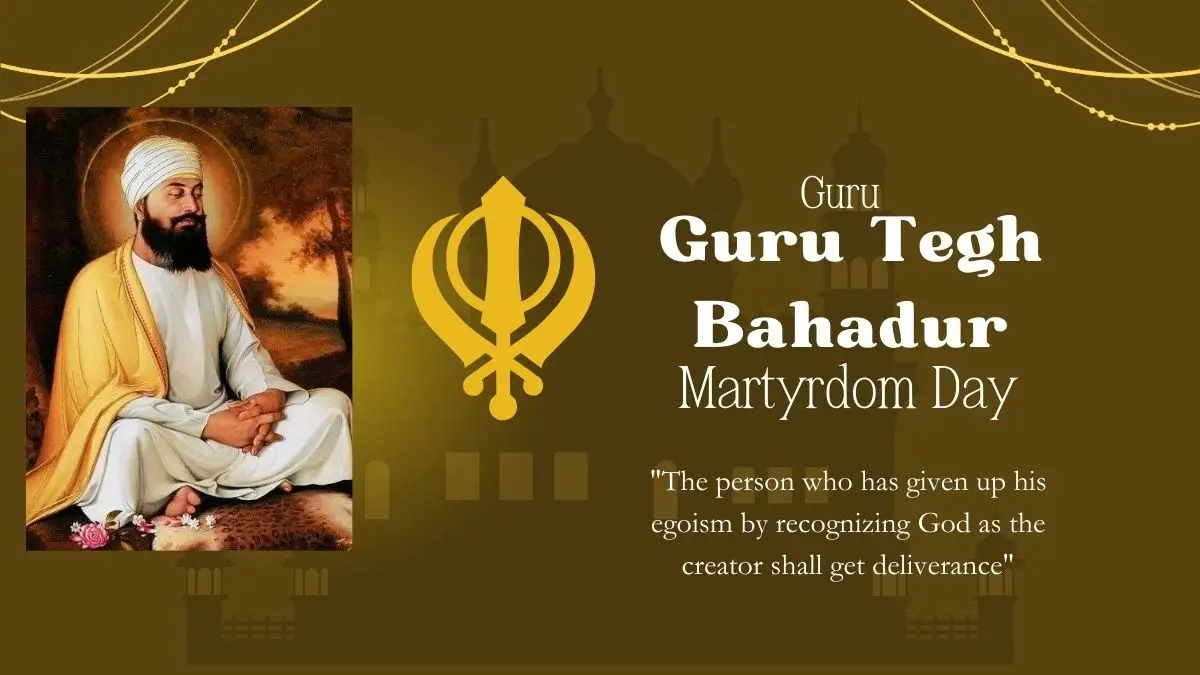
Guru Tegh Bahadur, the ninth Sikh Guru, is venerated for his spiritual wisdom, unshakable courage, and his ultimate sacrifice to defend the right to religious freedom. On 24 November 2025, India commemorates his martyrdom, which occurred in 1675, marking his steadfast resistance to forced conversions under Mughal rule. Known as the “Hind Di Chadar” (Shield of India), Guru Tegh Bahadur’s legacy is etched in history as a beacon of human rights, justice, and faith. His martyrdom continues to inspire generations to uphold the ideals of tolerance and dignity for all.
Guru Tegh Bahadur Shaheedi Diwas 2025
Observed annually on November 24, Guru Tegh Bahadur Martyrdom Day commemorates his unparalleled bravery. In 2025, this solemn day falls on a Monday, and will be marked by,
- Prayers and kirtans at gurdwaras across India and abroad
- Reflections on his teachings and legacy
- Special events and community services to honor his sacrifice
Biography of Guru Tegh Bahadur
Early Life and Background
Born on April 1, 1621, in Amritsar, Guru Tegh Bahadur was the youngest son of Guru Hargobind, the sixth Sikh Guru, and Mata Nanaki. He was originally named Tyag Mal, meaning “Master of Renunciation.” Displaying early signs of spiritual depth and valor, he was renamed Tegh Bahadur (“Brave Sword”) after his courageous role in defending against Mughal aggressions.
He received comprehensive training in martial arts, horsemanship, and spiritual teachings, making him both a warrior and a sage.
Marriage and Family
In 1633, he married Mata Gujri, and their only son, Gobind Rai, later became Guru Gobind Singh, the tenth Sikh Guru who founded the Khalsa and carried forward his father’s mission.
Spiritual Journey and Guruship
Following years of meditation, travel, and service, Guru Tegh Bahadur was bestowed the Guruship on April 16, 1664, after the passing of Guru Har Krishan.
During his tenure as Guru, he,
- Travelled extensively across India to spread Sikh teachings.
- Established Sikh congregations and built community centers.
- Preached a message of truthful living, equality, and detachment from materialism.
- His hymns — 115 of which are included in the Guru Granth Sahib — emphasize spiritual resilience and devotion to God.
Martyrdom and Shaheedi Diwas
In 1675, Guru Tegh Bahadur was executed in Delhi under the orders of Mughal Emperor Aurangzeb. He had refused to convert to Islam and chose to sacrifice his life defending the religious rights of Kashmiri Pandits, who faced persecution and forced conversions.
This act of supreme sacrifice earned him the revered title of “Hind Di Chadar”, symbolizing his role as a protector of freedom of conscience and interfaith dignity.
Significance of His Martyrdom
1. Defender of Religious Freedom: Guru Tegh Bahadur stood against Aurangzeb’s policy of religious oppression, defending Hindus’ right to worship and resist forced conversions.
2. Martyrdom for Justice: His decision to lay down his life rather than compromise religious integrity set a historic precedent for freedom of belief.
3. Legacy of Human Rights: His stand is often cited as one of the earliest recorded martyrdoms for human rights and religious liberty, making his legacy globally relevant.
4. Inspiration for Generations: His son, Guru Gobind Singh, continued his legacy by formalising the Sikh identity and fighting for justice through the Khalsa Panth.
Guru Tegh Bahadur’s Teachings and Legacy
Guru Tegh Bahadur’s teachings form a crucial part of Sikh philosophy and are recorded in the Guru Granth Sahib. He preached,
- Meditation on God’s name (Naam Simran)
- Detachment from material wealth
- Service to humanity (Seva)
- Courage in the face of tyranny
He envisioned a society rooted in compassion, equality, and unshakable faith, values that still guide millions.
Static Facts
Basic Profile
- Birth: April 1, 1621 (Amritsar)
- Parents: Guru Hargobind (Father), Mata Nanaki (Mother)
- Guruship: Assumed in 1664, after Guru Har Krishan
- Martyrdom: November 24, 1675, Delhi
- Title: Hind Di Chadar (Shield of India)
- Successor: Guru Gobind Singh (Tenth Sikh Guru)
Contributions
- Composed 115 hymns included in the Guru Granth Sahib
- Defended Kashmiri Pandits’ religious rights
- Strengthened the Sikh community’s moral and spiritual foundation
- Symbolized resistance against religious persecution and state tyranny
Observance
- Shaheedi Diwas is observed annually on November 24.
- In 2025, it falls on Monday, November 24.
- Commemorated with kirtans, prayers, and community services.


 World Homoeopathy Day 2026: Advancing Ho...
 World Health Day 2026 - Theme, Date, Sig...
 List of Important Days in April 2026, Na...











