
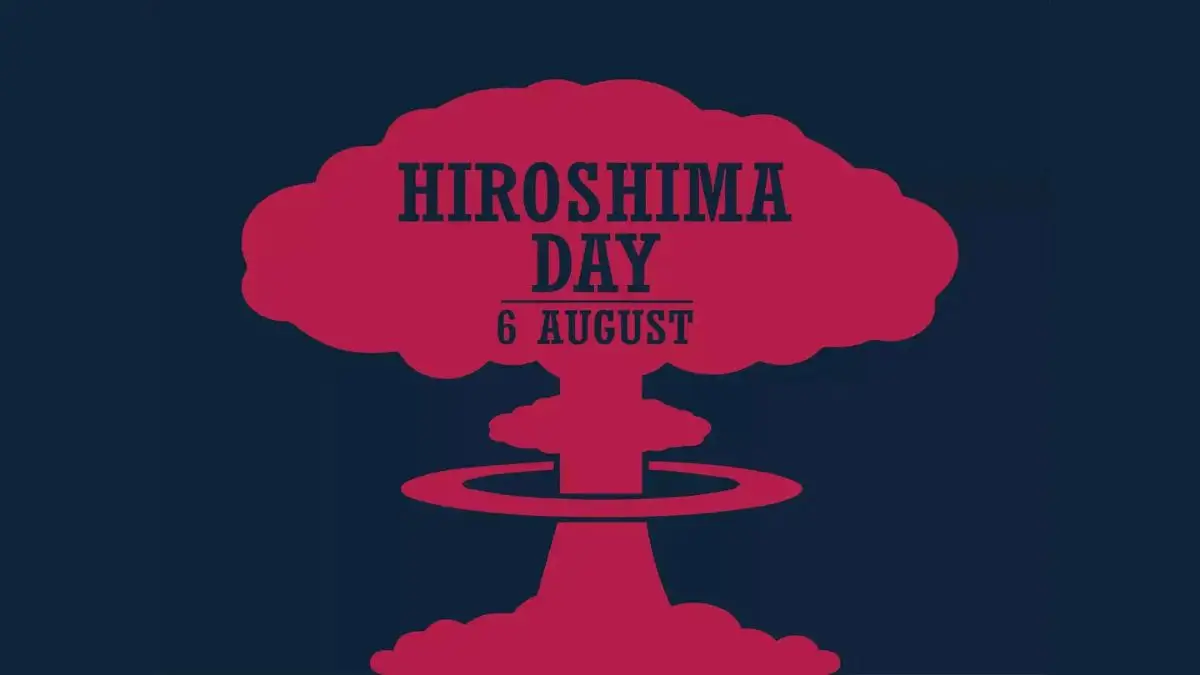
Hiroshima Day 2026 is set to be observed on 6 August 2026, and it marks the 81st anniversary of the bombing of Hiroshima with an atom bomb in the Second World War. This day is set aside to pay tribute to one of the greatest tragedies ever experienced in history, to remember those who have lost their lives in this tragedy, to pay tribute to the survivors who are known as Hibakusha, and to demonstrate the commitment towards peace and non-proliferation of nuclear arms globally.
Why is Hiroshima Day Celebrated?
Hiroshima Day is celebrated every year on August 6 to mark the atomic bombing of the Japanese city of Hiroshima carried out by the United States of America in 1945.
This observance helps in accomplishing many objectives including,
- Honoring those who died as a result of the bombing.
- Commemorating those who survived and lived through the trauma.
- Educating upcoming generations about the humanitarian ramifications of nuclear bombs.
- Achieving peace and nuclear disarmament in the world.
- Diplomacy and peaceful resolution of conflicts.
The day serves as a reminder that not only does the impact of nuclear war reach beyond the battlefields but also impacts generations to come physically, psychologically, socially and environmentally.
Theme of Hiroshima Day 2026
The theme of Hiroshima Day 2026 will be “Remembrance, Responsibility, and Resilience.”
The theme focuses on,
- Memorializing those who were victims of the bombing of Hiroshima.
- Global responsibility to avoid future nuclear conflicts.
- Resilience of the survivors (Hibakusha).
- Efforts for the establishment of a world free from nuclear weapons.
Origin of Hiroshima Day
Hiroshima Day can be dated back to the final days of World War II.
Important Chronology
- 7 December 1941: Japan launched an attack on Pearl Harbor resulting in America joining the World War II.
- 6 August 1945: An atomic bomb “Little Boy” was released over Hiroshima from the US B-29 bomber Enola Gay at 8:15 a.m.
- An estimated number of 70,000 to 80,000 perished immediately whereas the casualty level reached up to 140,000 by the end of 1945 due to injuries and radiation.
- 9 August 1945: Second atomic bomb called “Fat Man” was dropped over Nagasaki.
- 15 August 1945: Japan surrendered resulting in termination of World War II.
- Flame of Peace of Hiroshima Peace Memorial Park started burning continuously since 1964 to denote the global effort to destroy nuclear weapons.
Atomic Bombing of Hiroshima
Atomic bomb of Hiroshima became the first instance of a nuclear weapon in the armed conflicts.
Uranium based atomic bomb “Little Boy” destroyed the majority of the city within a matter of seconds.
Consequences of the explosion include,
- Powerful blast.
- High temperature thermal radiation.
- Fires.
- Radioactive contamination.
- Various health effects on survivors.
Humanitarian Consequences of the Hiroshima Bombing
Consequences of the bombing extended beyond the initial deaths that occurred.
Short-Term Effects
- Many people lost their lives immediately due to the explosion and intense heat.
- Neighbourhoods were completely wiped out.
- Public buildings such as hospitals and schools were destroyed.
- Many people had burns of various degrees of severity.
Health Issues in the Long Term
Many victims suffered from,
- Acute radiation syndrome.
- Leukaemia and other types of cancer.
- Cataracts.
- Disorders of the thyroid gland.
- Chronic conditions.
- Disabilities.
Psychological and Social Consequences
Those who survived the bombing had to suffer from,
- Post-traumatic stress disorder.
- Depression and anxiety.
- Survivors guilt.
- Discrimination in job, education, and marriage markets.
In addition, many children became orphans after the bombing.
Importance of Hiroshima Day 2026
The significance of Hiroshima Day is very important in today’s context, as there are still issues of nuclear security in the current environment.
The observation,
- Commemorates the casualties of nuclear wars.
- Raises consciousness about the humanitarian effects of the use of atomic weapons.
- Advocates nuclear disarmament globally.
- Fosters peaceful conflict resolution through diplomacy.
- Conserves history for posterity.
- Honors the bravery and tenacity of the Hibakusha.








 Vigilance Awareness Week 2026: Theme, Da...
 Indo-Tibetan Border Police (ITBP) Raisin...
 World Polio Day 2026: Date, Theme, India...










