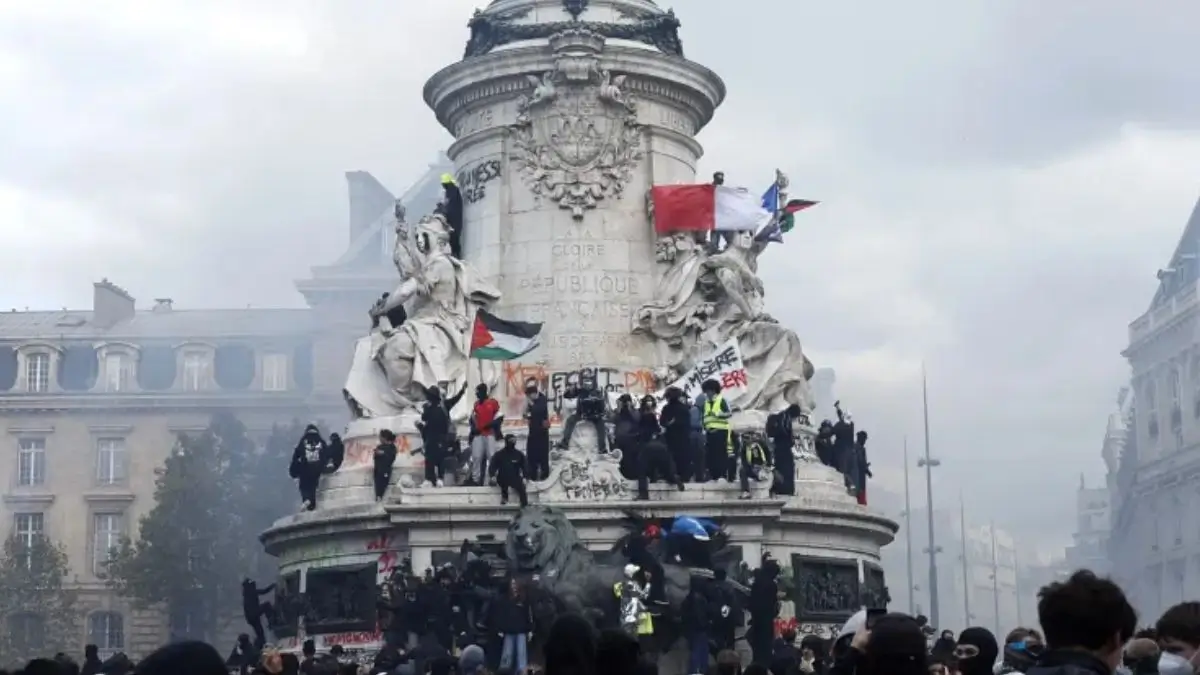
France has a long history of popular revolutions, students’ protests, workers’ strikes and mass movements that have shaped its political structures and social policies. Starting from the revolution of 1789 and the Paris Commune of 1871 and up to the protest actions of 2026, the May 1968 protests of students and the Yellow Vest movement, popular demonstrations have continuously opposed the political regime and demanded reforms.
The recent demonstrations, which started due to issues with the educational system and overcrowding in schools, are an opportunity for analyzing the political history of France, revolutionary movements, civil disobedience and the relations between the people and the state.
Why Do Protests Have Such an Important Place in French Politics?
Protests, strikes and demonstrations are regular phenomena in French politics. Protest movements have opposed royal power, called for political representation, criticized economic policies and called for reforms of labour, education and welfare policies.
Historically, one of the reasons for this phenomenon was the French revolution of 1789 that changed the relations between the monarchy, citizens and political power. Subsequent protest movements used revolutionary symbols like barricades, popular assemblies and citizens’ collective opposition to the government.
The country also has a developed tradition of organized labor and trade unions. Strikes can disrupt transportation, education, energy supply and other public services in order to put pressure on the government and employers.
However, it would be wrong to say that all protests bring changes. While some of the movements won certain concessions, others were suppressed, split or left their demands unfulfilled. Protest is an essential part of French political culture, but its results depend on many factors.
Major Protests and Revolutions in French History
Jacquerie Rebellion of 1358
Jacquerie was the significant peasant rebellion that occurred in northern France during the time of the Hundred Years War. This revolt was fueled by economic hardships and dissatisfaction with the aristocracy, who were supposed to offer protection during a time of military crisis.
The rebellion consisted of raids on the properties of the nobles and was violently suppressed. The Jacquerie did not result in a change in the political system, but it highlighted the conflict between peasants and the ruling class.
Jacquerie can be considered an early example of unrest caused by economic difficulties and social inequalities. However, it cannot be compared to modern-day protests by students and democratic movements.
French Revolution of 1789
French Revolution was an important landmark in the history of Europe. It occurred as a result of financial difficulties, social inequalities, shortage of food, dissatisfaction with privileges and the opposition to the concept of absolute monarchy.
On 14th July 1789, revolutionaries attacked the royal fortress of Bastille located in Paris. This event is considered to be an embodiment of the rebellion against the royal regime.
As a consequence, the Revolution overthrew the traditional social hierarchy, abolished feudal privileges and adopted the Declaration of the Rights of Man and of the Citizen in August 1789.
Furthermore, the Revolution resulted in the abolition of the monarchy in 1792, execution of Louis XVI in 1793 and the emergence of various revolutionary political movements.
General Studies importance: French Revolution gave rise to the political doctrines of liberty, equality, popular sovereignty and citizenship.
The July Revolution of 1830
The July Revolution, which is also referred to as the Three Glorious Days, happened from 27 July through 29 July 1830. The revolutionary action followed the restrictive ordinances issued by King Charles X that limited political rights and press freedom.
Journalists, students, workers and political opponents participated in the revolt in Paris. Barricades were set up throughout Paris, and the monarchy was overthrown.
Louis-Philippe succeeded King Charles X and became the king of France under a constitutional monarchy, referred to as the July Monarchy.
The July Revolution illustrated how political repression and restrictions on press freedom can bring together various social classes in opposition to the existing government.
The Revolution of 1848
The February Revolution of 1848 saw the overthrow of the July Monarchy and the creation of the Second French Republic.
The revolution arose in times of economic difficulties, political demands and dissatisfaction with the restricted electoral system. The workers and the republicans played an important part in the revolution.
Universal male suffrage was established in the Second French Republic. Nevertheless, disagreement over employment, social welfare and the functions of the state led to another revolt.
The Paris Commune of 1871
The Paris Commune came into being as a result of France’s defeat in the Franco-Prussian war and the subsequent political turmoil following the siege of Paris.
The outbreak of an uprising in March 1871, which was caused by the government’s effort to confiscate the National Guard artillery, led to the establishment of a revolutionary municipal government in Paris.
The Paris Commune existed for about two months and took up drastic political and social actions. The Paris Commune was repressed during the Bloody Week of 21-28 May 1871.
May 1968: The Student Protests
Protests of May 1968 started with student demonstrations against poor university conditions and the social hierarchy and authority of President Charles de Gaulle. The protests led to clashes with the police especially in the Latin Quarter of Paris.
The protests gained momentum as industrial workers joined them, leading to strikes all over France. At its height, about 10 million workers were on strike affecting most of the French economy.
In the latter part of May, there were negotiations known as Grenelle between the government, employers and trade unions discussing wage increases and better working conditions. However, the proposals were not acceptable to everyone.
De Gaulle remained in power but the protests affected debates on education, employment issues, individual freedoms and social authority.
The 2005 Suburban Riots: Youth, Inequality and Policing
Unrest broke out in France in the October 2005 following the electrocution death of two youths, Zyed Benna and Bouna Traoré, who were hiding in an electrical substation during a confrontation with the police.
The deaths sparked outrage in communities affected by unemployment, discrimination, social exclusion, and distrust of the police. The unrest lasted for a number of weeks and included car burnings, property destruction, and confrontations with police forces.
The unrest put the situation of the banlieues of France, which are suburban areas of cities, especially the disadvantaged ones, on the national agenda. Unlike May 1968, the unrest did not escalate to a nationwide general strike.
Gilets Jaunes, 2018-2020
The Gilets Jaunes movement was started in the year 2018 in protest against the proposed hike in fuel tax but was later extended to cover issues relating to cost of living and inequality.
The term gilets jaunes refers to the highly visible yellow vests that were worn by the protestors. The movement consisted of individuals from varied political backgrounds especially in the countryside and suburbs.
The protestors believed that fuel taxes affected those who had to travel using their own cars.
Violent acts, clashes with the police and destruction of property were part of this movement.
The larger significance of this movement was that it showed how an issue related to a particular policy could be used to show discontent with living conditions and political representation.
Pension Reform Protests in 2023
In 2023, France saw large protests and strikes due to President Emmanuel Macron’s pension reforms that increased the statutory retirement age to 64 from 62 years.
The trade unions and workers were against this reform, while the government believed that such a reform was necessary to make sure that the pension system would be financially sustainable in the long run. The protesters were also not happy with the invocation of Article 49.3 of the French Constitution, according to which legislation can be passed without being voted on by parliament.
Protest issues: Pensions, social security, labour and executive powers.
Static polity link: Article 49.3 is an important element of the Fifth Republic of France.
Student Protest in France in 2026
Student protests in 2026 were initially triggered by issues related to education, such as lack of teachers, overcrowding of schools, and poor condition of school facilities.
Following that, protests and school blockades took place, involving teachers, parents, university students, and trade unions.
Economic factors and discontentment with government-provided services were among other reasons behind the protests, while social networks were used for organizing demonstrators.
In October, there were riots in several cities. On 17 October 2026, demonstrations took place in all the country, including both peaceful actions and riots, fights with police, looting, and arson. The historic town hall of Limoges was burned down.
How Do the 2026 Protests Compare with Earlier Movements?
| Movement | Main trigger or grievance | Main participants | Historical significance |
| French Revolution, 1789 | Social inequality, fiscal crisis and opposition to absolute monarchy | Urban crowds, peasants and political groups | Transformed the monarchy and political order |
| July Revolution, 1830 | Restrictions on political freedoms | Students, workers, journalists and opposition groups | Overthrew Charles X |
| Paris Commune, 1871 | Post-war crisis and conflict over political authority | Workers, National Guard and revolutionary groups | Established a short-lived revolutionary municipal government |
| May 1968 | University grievances and wider opposition to social authority | Students and millions of striking workers | Produced a major social and political crisis |
| Suburban riots, 2005 | Youth exclusion, inequality and policing concerns | Young people in urban suburbs | Highlighted marginalisation and distrust of police |
| Yellow Vests, 2018-2020 | Fuel taxation and cost-of-living pressures | Decentralised groups of the citizens | Expanded into wider economic and political demands |
| Pension protests, 2023 | Raising the statutory retirement age | Workers, unions and citizens | Intensified debate over pensions and executive power |
Student protests, 2026 Education conditions and wider public-service grievances School students, teachers, parents and supporters Renewed debate over education, inequality and political responsiveness








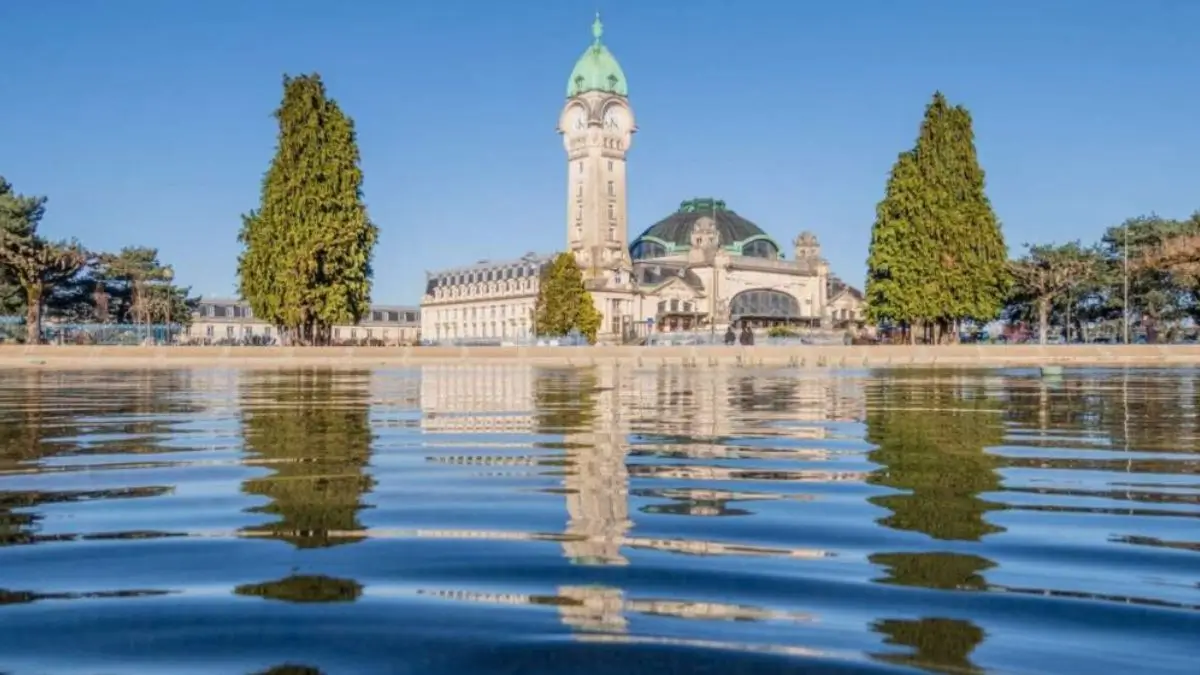 Why Is Limoges Famous? Porcelain, Kaolin...
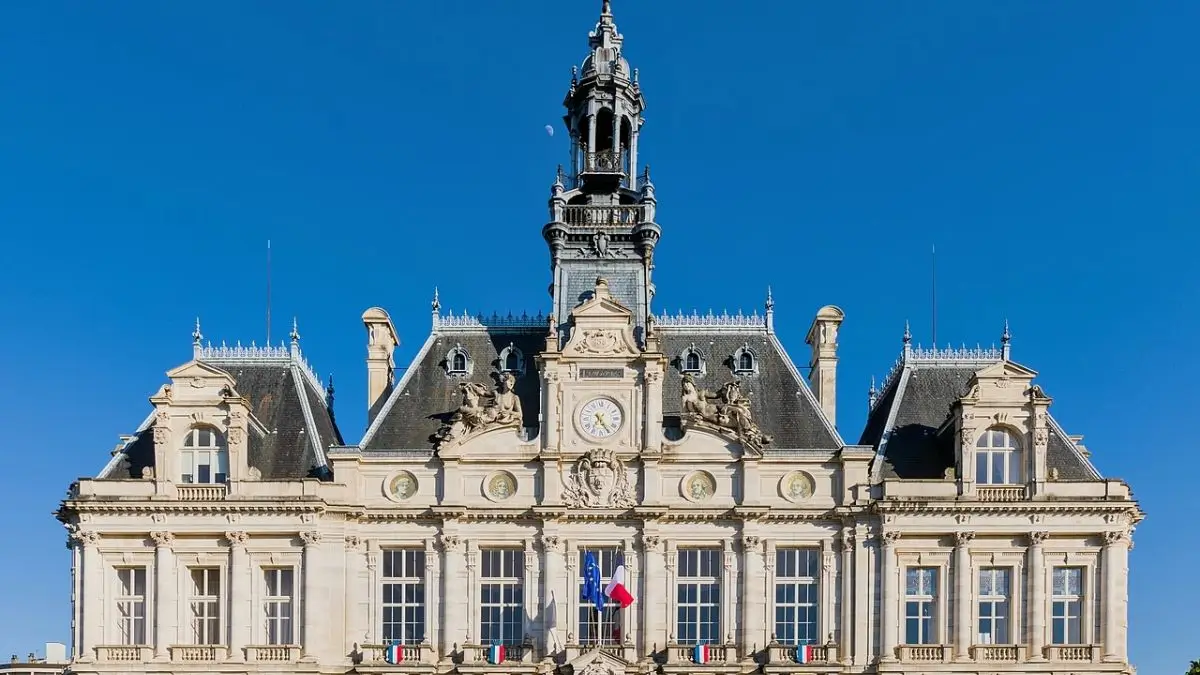 Limoges Town Hall, France: History, Arch...
 Ramsar Sites in India 2026: State-Wise L...