
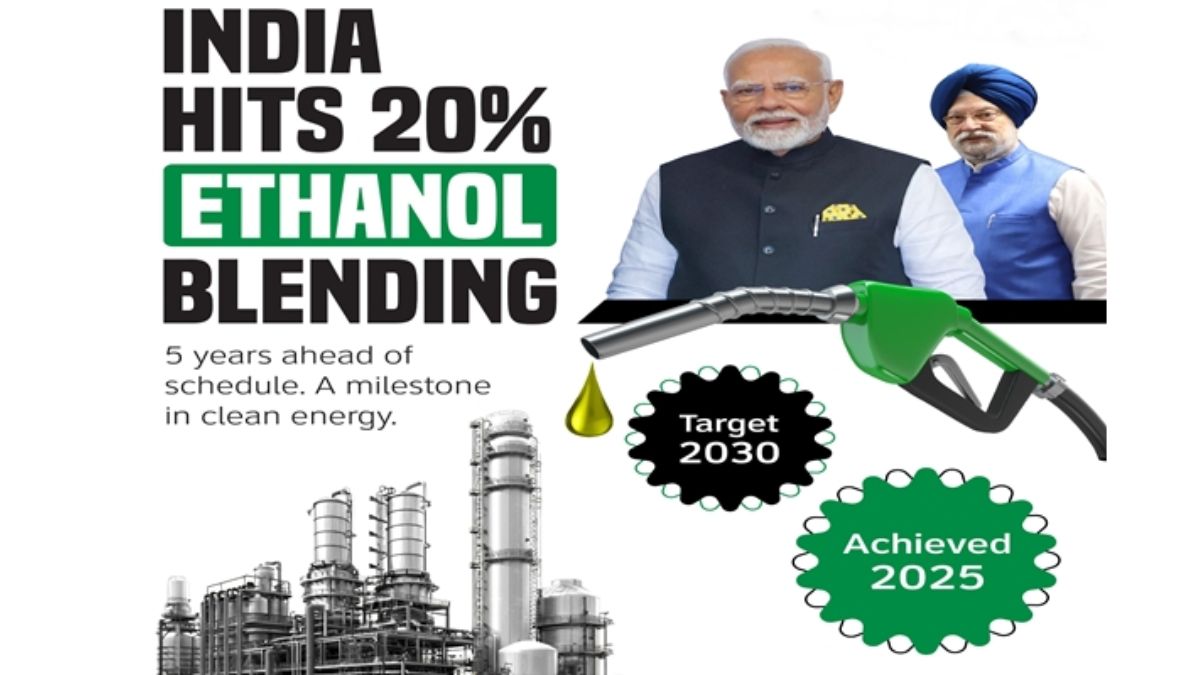
India has reached a historic milestone in its energy transition journey by achieving 20% ethanol blending in petrol in 2025, five years ahead of its original 2030 target. This breakthrough, announced by Union Petroleum and Natural Gas Minister Hardeep Singh Puri, marks a transformative shift in India’s fuel strategy, enhancing energy security, promoting sustainability, and empowering rural economies.
Background: Ethanol Blending Programme (EBP)
The Ethanol Blending Programme (EBP) was initiated in 2003 with the aim to reduce India’s dependence on imported crude oil, promote the use of renewable energy, and support the domestic sugar and agriculture sectors. Over time, the programme has evolved, with a consistent rise in blending targets, reaching 10% in 2022 and now achieving the 20% blending goal in 2025, well ahead of the set timeline.
Significance of the Achievement
The jump from 1.5% ethanol blending in 2014 to 20% in 2025 highlights an 13-fold increase in just 11 years. This significant leap brings multiple benefits,
- Energy Security: Reduces dependency on imported fossil fuels.
- Foreign Exchange Savings: India has saved ₹1.36 lakh crore by lowering crude imports.
- Environmental Gains: A reduction of 698 lakh tonnes of CO₂ emissions contributes directly to India’s climate commitments under the Paris Agreement.
- Economic Impact: Boosts income for farmers and distillers, strengthens the biofuel economy, and incentivizes agro-based industries.
Support to Farmers and Rural Economy
Ethanol is mainly produced from sugarcane, a crop widely grown in rural India. The ethanol initiative ensures,
- Payment of ₹1.18 lakh crore to farmers, enhancing rural incomes.
- Payment of ₹1.96 lakh crore to distilleries, spurring rural industrial development.
- Recently, the Union Cabinet approved a price hike for ethanol made from molasses, further incentivizing production and supporting farmers.
Environmental and Climate Benefits
India’s ethanol push aligns with its net zero emissions target by 2070. The adoption of ethanol-blended fuel helps,
- Lower greenhouse gas emissions.
- Improve air quality in urban centers.
- Promote sustainable agriculture by utilizing crop residues.


 ECINet KYC Feature Explained: How Voters...
 BIRAC-BioNEST Incubation Centre Inaugura...
 E20 Petrol India 2026: Nationwide Rollou...











