
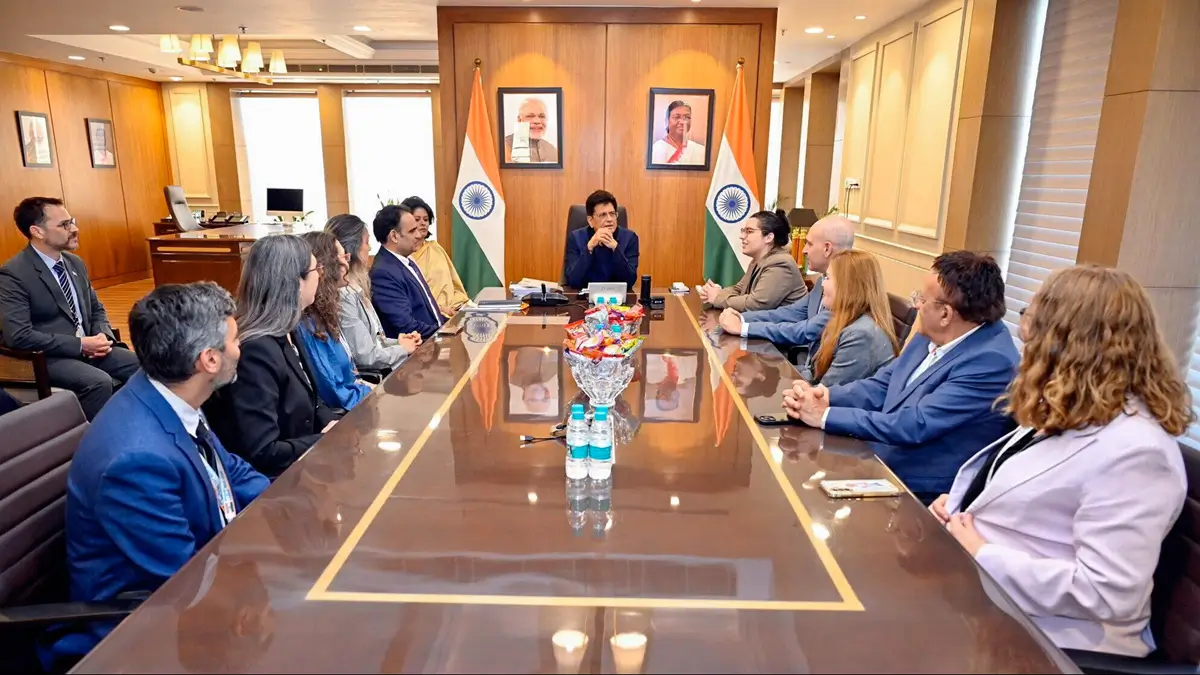
India and Israel have officially launched the first round of negotiations for a proposed Free Trade Agreement (FTA). The discussions began on 23 February 2026 in New Delhi and will continue until 26 February 2026.
The Terms of Reference (ToR) for the negotiations were signed in November 2025, establishing a structured framework to enhance bilateral trade and economic cooperation.
Trade Relations Between India and Israel
Total merchandise trade between the two countries stood at USD 3.62 billion in FY 2024-25.
Both nations share strong complementarities across sectors such as:
- Innovation and Science & Technology
- Artificial Intelligence (AI)
- Cybersecurity
- High-tech manufacturing
- Agriculture
- Services
The FTA is expected to provide certainty and predictability to businesses, including MSMEs, and further boost trade flows.
Areas Covered in the Negotiations
Technical experts from both sides are holding discussions on:
- Trade in goods
- Trade in services
- Rules of origin
- Sanitary and phytosanitary (SPS) measures
- Technical barriers to trade (TBT)
- Customs procedures and trade facilitation
- Intellectual Property Rights (IPR)
Key Officials Involved
During the opening session, Rajesh Agrawal, Commerce Secretary of India, highlighted that the negotiations are taking place at an opportune time, coinciding with Prime Minister Narendra Modi’s visit to Israel on 25–26 February 2026.
India’s Chief Negotiator, Ajay Bhadoo, Additional Secretary in the Department of Commerce, stressed the importance of building a balanced and forward-looking agreement.
Israel’s Chief Negotiator, Yifat Alon Perel, Senior Director Trade Policy & Agreements, noted that the FTA could strengthen supply chains and open new markets for both countries.
Strategic Importance
The negotiations highlight the growing strategic partnership between India and Israel. The proposed FTA is expected to deepen economic engagement, enhance supply chain resilience, and create new opportunities for businesses in both nations.
Both sides are working towards concluding a balanced and mutually beneficial agreement in line with national priorities and global economic aspirations.
MCQs: India–Israel FTA Negotiations
Q1. The first round of India-Israel FTA negotiations began on:
(a) 20 February 2026
(b) 21 February 2026
(c) 23 February 2026
(d) 25 February 2026
(e) 26 February 2026
Ans: (c)
Sol: The negotiations commenced on 23 February 2026 in New Delhi.
Q2. Total merchandise trade between India and Israel in FY 2024-25 stood at:
(a) USD 2.5 billion
(b) USD 3.0 billion
(c) USD 3.62 billion
(d) USD 4.2 billion
(e) USD 5.1 billion
Ans: (c)
Sol: Trade between the two countries was USD 3.62 billion.
Q3. The Terms of Reference (ToR) for the FTA were signed in:
(a) October 2025
(b) November 2025
(c) December 2025
(d) January 2026
(e) February 2026
Ans: (b)
Sol: The ToR was signed in November 2025.
Q4. Who is India’s Chief Negotiator for the FTA?
(a) Rajesh Agrawal
(b) Ajay Bhadoo
(c) Piyush Goyal
(d) Saurabh Kumar
(e) Amitabh Kant
Ans: (b)
Sol: Ajay Bhadoo, Additional Secretary, Department of Commerce, is India’s Chief Negotiator.
Q5. Which of the following is NOT a topic covered under FTA negotiations?
(a) Trade in goods
(b) Intellectual Property Rights
(c) Customs procedures
(d) Monetary policy regulation
(e) Trade in services
Ans: (d)
Sol: Monetary policy regulation is not part of FTA negotiations.


 France Hosts One Health Summit Under G7 ...
 Newcastle Disease Spread in Europe 2026:...
 Mongolia Gets New Prime Minister Amid Po...











