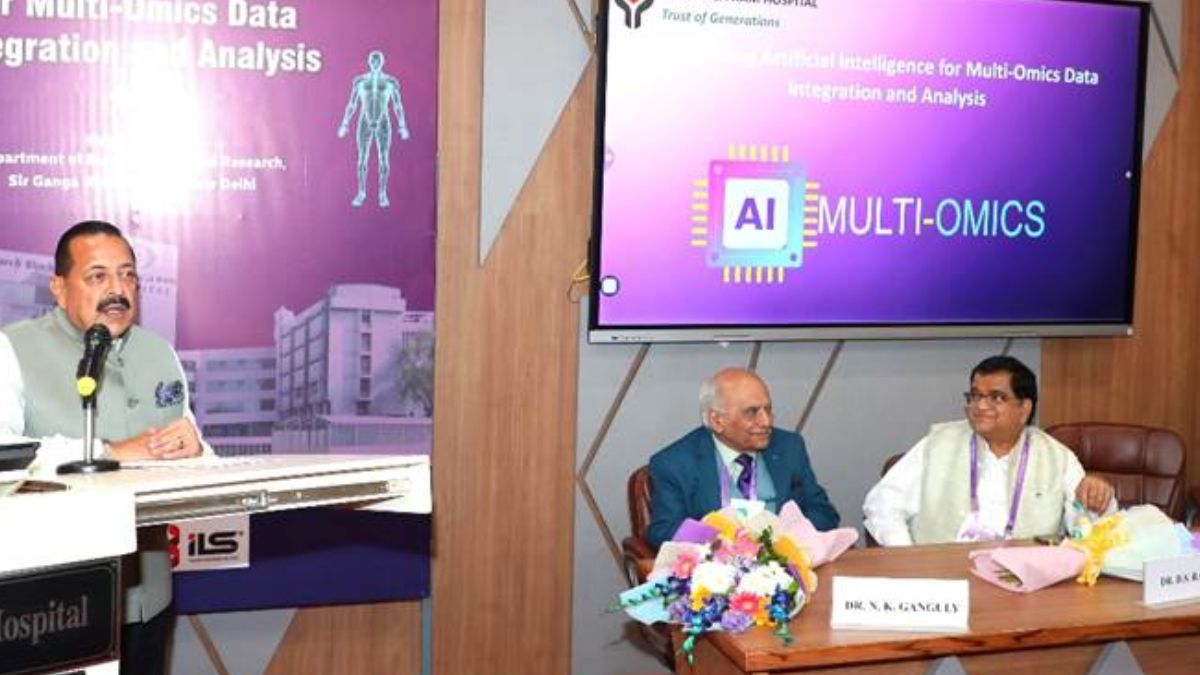
In a landmark moment for Indian science, India has developed its first fully indigenous antibiotic, Nafithromycin, and achieved a major milestone in gene therapy for hemophilia. These breakthroughs, announced by Union Minister Dr Jitendra Singh, reflect the country’s growing capabilities in biotechnology, pharmaceutical innovation, and clinical research.
The announcement highlights India’s move toward biotech self-reliance and a more robust public-private innovation ecosystem, aligning with national goals under the Viksit Bharat 2047 vision.
Nafithromycin: India’s First Homegrown Antibiotic
- India’s first indigenous antibiotic, Nafithromycin, is designed to treat resistant respiratory infections, which are particularly threatening to cancer patients and individuals with uncontrolled diabetes. This antibiotic was,
- Conceptualised, developed, and clinically validated entirely in India
- Created through a collaboration between the Department of Biotechnology and Wockhardt, a private pharmaceutical firm
- Announced as a model for industry-academia partnership, marking a significant departure from India’s previous reliance on foreign drug innovations
This development strengthens India’s pharmaceutical autonomy, particularly crucial in an era of antibiotic resistance and global supply chain vulnerabilities.
Gene Therapy Success in Hemophilia
In addition to the antibiotic milestone, Dr Singh revealed India’s successful indigenous clinical trial for gene therapy targeting hemophilia, a genetic disorder that impairs the body’s ability to make blood clots.
Key highlights of the trial,
- Conducted at Christian Medical College, Vellore
- Supported by the Department of Biotechnology
- Recorded a 60–70% correction rate and zero bleeding episodes
- Published in the globally respected New England Journal of Medicine
This achievement not only signifies India’s growing capability in precision medicine but also puts the country among the few globally that have developed and tested gene-based therapies indigenously.
The Bigger Picture: Genome Sequencing and AI in Healthcare
India has already sequenced over 10,000 human genomes and now plans to expand this database to 1 million, which will,
- Enhance personalised medicine
- Improve disease prediction
- Support advanced drug discovery
ANRF: Redefining Research Funding in India
The Anusandhan National Research Foundation (ANRF) was highlighted as a pivotal institution reshaping India’s research strategy. With a proposed outlay of ₹50,000 crore over five years, including ₹36,000 crore from non-government sources, ANRF aims to,
- Strengthen public-private research partnerships
- Mobilise philanthropic and corporate investments in science
- Promote multi-sectoral, interdisciplinary research
The model seeks to reduce over-dependence on state funding and foster a more entrepreneurial research ecosystem.


 India's First Quantum Computer to be Lau...
 India Strengthens Marine Research with B...
 AP Science City Signs 5-Year MoU with CS...