
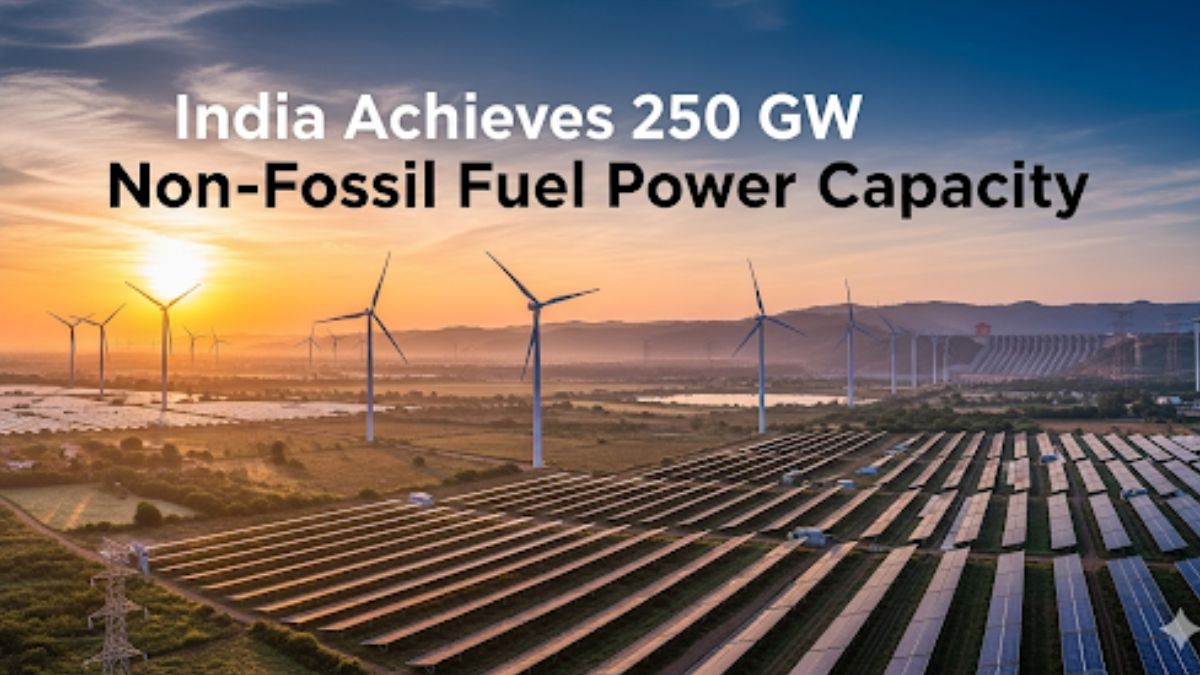
India has officially achieved 250 GW of non-fossil fuel electricity generation capacity, marking a key milestone in the country’s push for a low-carbon, sustainable energy future. Union Minister for New and Renewable Energy Pralhad Joshi made the announcement during the State Review Meeting on Renewable Energy held in New Delhi on 11 September 2025.
This development positions India among the top nations in clean energy capacity and accelerates progress toward the 500 GW renewable energy goal set for 2030 under its Nationally Determined Contributions (NDCs) to the Paris Agreement.
Breakdown of Non-Fossil Capacity
The 250 GW non-fossil fuel capacity includes,
- Solar energy
- Wind power
- Hydropower
- Biomass energy
- Nuclear energy
This figure signifies not just a statistical achievement but a paradigm shift in India’s energy landscape, from fossil-based generation toward clean, sustainable power sources.
Vision for 2030: 500 GW Renewable Energy Target
Minister Joshi reaffirmed the government’s commitment to achieving 500 GW of renewable energy capacity by 2030, in line with India’s climate goals and energy security strategy.
This target is ambitious but achievable, given the policy momentum, investments, and state-level participation being mobilized across the country.
Swachh Bharat and Swachh Energy: Twin Pillars of Sustainability
Calling Swachh Bharat and Swachh Energy the most favoured initiatives of Prime Minister Modi, the minister underscored the link between clean environments and clean energy. Promoting clean power not only combats climate change but also reduces pollution, improves public health, and strengthens energy access for the poor.
Free Electricity to 20 Lakh Households: Utility-Led Model
A standout policy achievement highlighted was the government’s success in providing free electricity to 20 lakh households using a utility-led solar model—a scheme designed for homes without rooftop ownership or infrastructure.
Minister Joshi noted that,
- Andhra Pradesh has shown exceptional progress and submitted detailed implementation proposals.
- The central government aims to scale this model to reach 1 crore households nationwide, boosting energy equity and rural electrification.
- This model brings sustainable power access to marginalized communities while leveraging grid-connected solar systems installed by distribution utilities.
NEXT GEN GST and Economic Impact
The minister also spoke about the NEXT GEN GST reforms, stating they will stimulate GDP growth and indirectly benefit the renewable energy sector through improved investment frameworks and streamlined compliance for clean tech firms.
Key Points to Remember
- Milestone: India achieves 250 GW non-fossil fuel capacity
- Announced by: Union Minister Pralhad Joshi on 11 September 2025
- 2030 Goal: 500 GW renewable energy capacity
- Free Electricity Initiative
- 20 lakh households benefited so far
- Target: 1 crore households
- Implemented via utility-led solar model


 Parliament Rejects Impeachment of Chief ...
 Against All Odds: Indian Cyclist Divya S...
 India’s Most Advanced Atomic Reactor Att...











