
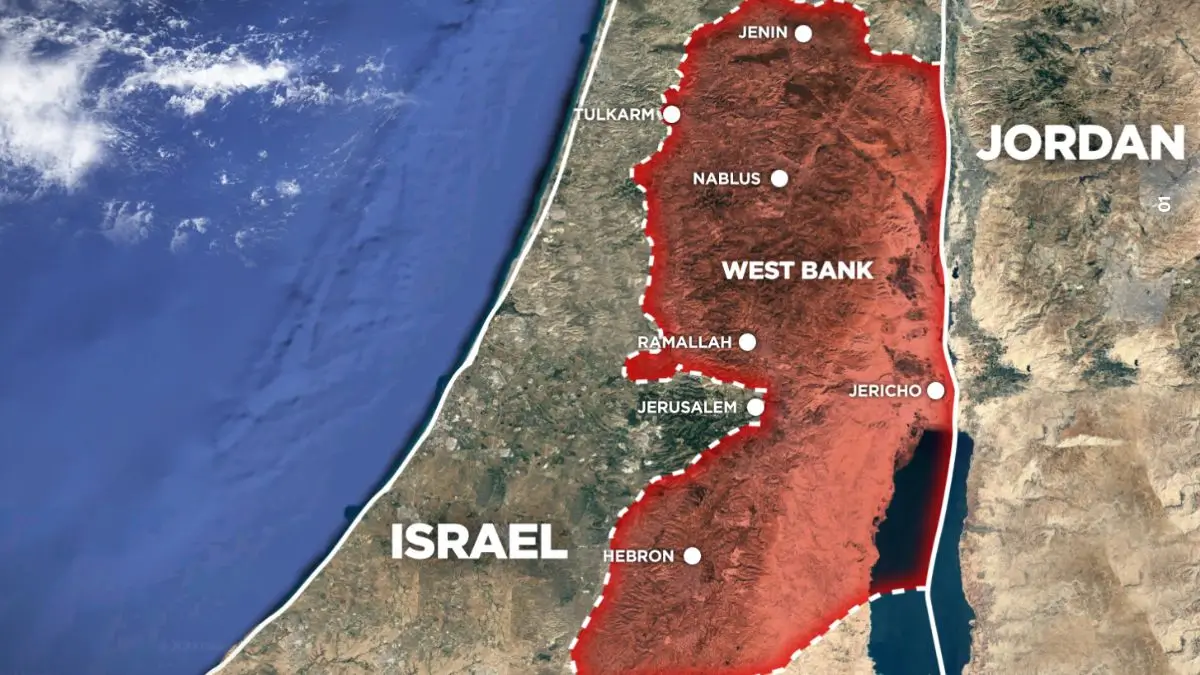
India has joined over 100 countries and global organizations in condemning Israel’s “unilateral decisions and measures” aimed at expanding what the signatories termed Israel’s “unlawful presence” in the West Bank. The joint statement was issued by the Permanent Observer Mission of the State of Palestine to the United Nations at the United Nations. It strongly opposed any actions that could alter the status of the occupied Palestinian territories, including East Jerusalem.
What Does the Joint Statement Say?
The statement “strongly condemns unilateral Israeli decisions and measures” and calls them contrary to international law. It urges immediate reversal of such actions and reiterates strong opposition to annexation.
The signatories rejected,
- Any changes to the demographic composition of the Palestinian Territory occupied since 1967.
- Measures altering the character and status of East Jerusalem.
- Steps undermining ongoing peace efforts in the region.
The statement further noted that such measures,
- Violate international law.
- Undermine peace and stability.
- Jeopardise the prospect of a negotiated settlement.
Initially, 85 nations had signed the February 17 statement. India was not among them at first but later added its name when the number of signatories exceeded 100.
The West Bank Issue: Background
The West Bank has been under Israeli control since the 1967 Six-Day War. The international community largely considers Israeli settlements in the area as illegal under international law, though Israel disputes this interpretation.
The statement also reaffirmed support for,
- Relevant United Nations resolutions.
- The Madrid terms of reference (1991 peace conference framework).
- The Arab Peace Initiative (2002).
- The principle of “land for peace.”
These frameworks support the establishment of an independent Palestinian state alongside Israel.
India’s Position on the Israel-Palestine Issue
India has historically maintained a balanced approach in the Israel–Palestine conflict.
Key Aspects of India’s Stand
- India supports a sovereign, independent, and viable State of Palestine.
- It advocates peaceful coexistence of Israel and Palestine within secure and recognised borders.
- It backs the two-State solution as the only viable path to lasting peace.
Importantly, India was the first non-Arab country to recognize the State of Palestine in 1988.
Diplomatic Significance of India’s Move
India’s decision to join the joint statement carries several diplomatic implications:
- Reaffirmation of International Law: By signing the statement, India underscores its commitment to UN-based multilateralism and international legal frameworks.
- Balancing West Asia Relations: India maintains strong ties with both Israel and Arab nations, including Gulf countries that are key energy and trade partners.
- Strategic Autonomy: India’s move reflects its independent foreign policy stance, aligning with global consensus without undermining its bilateral partnerships.


 Costa Rica Launches Snake Identification...
 WTO 14th Ministerial Conference Conclude...
 Former Suriname President Chandrikapersa...











