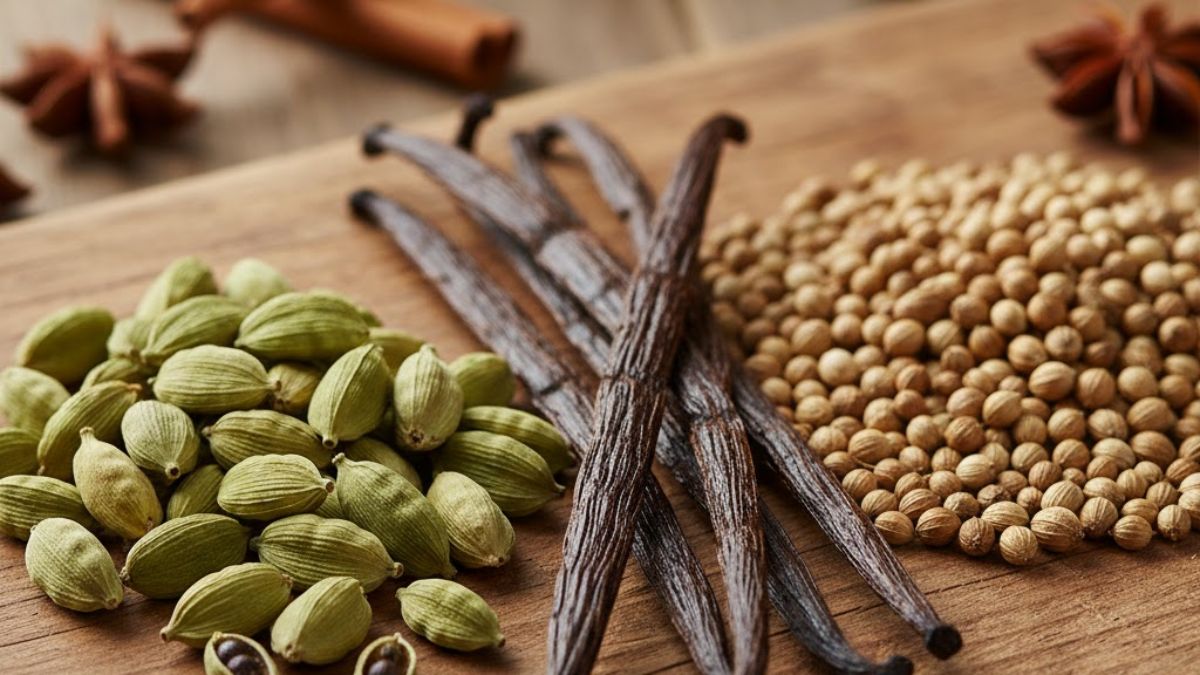
In a significant milestone for global food trade and safety, the 8th session of the Codex Committee on Spices and Culinary Herbs (CCSCH) has finalized Codex standards for three more spices—vanilla, large cardamom, and coriander. With this, a total of 19 international standards for spices have been completed under the committee’s guidance since its inception in 2013.
The session further strengthened India’s leadership in global spice regulation, as the country continues to host the secretariat and spearhead the development of scientifically grounded, consensus-based standards in line with Codex Alimentarius Commission (CAC) protocols.
What Are Codex Standards?
- Codex standards are international food texts—such as standards, codes of hygienic practice, and guidelines—created to protect consumer health and ensure fair trade practices across countries.
- These are developed under the Codex Alimentarius Commission (CAC), a joint initiative by FAO and WHO founded in 1963, with headquarters in Rome.
- While Codex texts are not legally binding, they serve as international benchmarks, especially under the Sanitary and Phytosanitary Measures (SPS) Agreement of the World Trade Organization (WTO), making them pivotal for global food safety and trade regulations.
India’s Role in CCSCH and CAC
India plays a central role in the Codex system for spices,
- The Codex Committee on Spices and Culinary Herbs (CCSCH) was established in 2013 at India’s initiative.
- It operates under the CAC and is chaired by India, with the Spices Board (Ministry of Commerce & Industry) in Kochi acting as the secretariat.
- India’s leadership in CCSCH has led to the standardization of 19 spices in just over a decade, contributing to global spice trade harmonization.
Highlights of the 8th CCSCH Session (2025)
The 2025 session of CCSCH marked a major achievement by finalizing Codex standards for the following spices.
1. Vanilla
- About: A high-value spice from the orchid family, used globally in flavoring foods and beverages.
- Native Region: Atlantic Coast (Mexico to Brazil).
- Major Producers: Madagascar, Indonesia, and Mexico.
- India’s Presence: Grown in Kerala, Karnataka, and Tamil Nadu; India is a net importer.
Growing Conditions
- Altitude: Up to 1000 meters above sea level
- Temperature: 21–32°C, Humidity: ~80%
- Rainfall: 2000–2500 mm, with 2 dry months
- Soil: Light, porous, and friable with partial shade
2. Large Cardamom
- Indigenous to the Eastern Himalayan region, especially parts of India, Bhutan, and Nepal
- Used both as a culinary and medicinal herb, especially in regional Indian cuisine
- Finalization of standards improves export potential and quality consistency
3. Coriander
- A staple culinary herb and spice used in seed and powdered form
- Grown extensively in India, Morocco, Russia, and Eastern Europe
- Final standards ensure improved international trade compliance and quality assessment
Global Significance of These Standards
Standardization through Codex ensures,
- Harmonized quality definitions across exporting and importing nations
- Better consumer protection from adulteration and contamination
- Facilitated global trade by reducing technical barriers
- Stronger scientific basis for food inspections and phytosanitary certification
- For India, this means strengthened export capability in the spice sector and greater influence in shaping international trade rules.


 India Pharma 2026 Conference: Advancing ...
 WTO MC14 2026 Explained: Agenda, Issues,...
 International Rail Coach Expo 2026 Inaug...