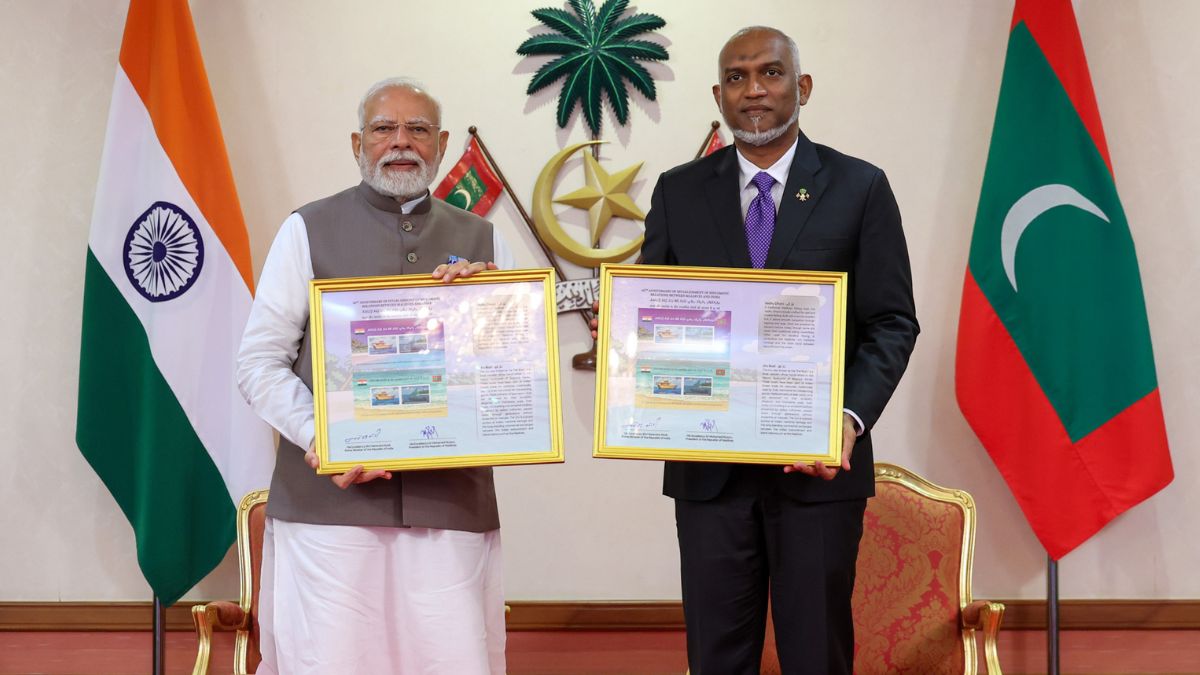
India and Maldives signed a Memorandum of Understanding (MoU) to strengthen cooperation in the fields of fisheries and aquaculture, marking a major step in bilateral ties. Signed during Prime Minister Narendra Modi’s State visit to the island nation, this agreement is a part of six MoUs exchanged between the two countries. The MoU aims to boost sustainable fisheries, aquaculture development, eco-tourism, and scientific research, contributing to food security, employment, and regional economic growth.
Background
- The Department of Fisheries (India) under the Ministry of Fisheries, Animal Husbandry and Dairying and the Ministry of Fisheries and Ocean Resources (Maldives) are the nodal agencies for implementation.
- Fisheries form a crucial pillar of Maldives’ economy and livelihood, while India, with its long coastline, has a significant stake in promoting sustainable marine resources.
- Both nations share cultural and geographical proximity, making fisheries cooperation a natural area of partnership.
Significance of the MoU
- Strengthening Bilateral Ties: Reinforces India-Maldives friendship through a strategic partnership in marine resources.
- Sustainable Resource Management: Promotes environmentally responsible fishing practices, especially tuna and deep-sea fisheries.
- Economic Development: Enhances fish processing, aquaculture production, and eco-tourism, boosting local economies.
- Skill Development: Provides training in aquatic animal health, refrigeration, and marine engineering, fostering youth employment.
- Regional Food Security: Helps both nations increase fish availability and diversify aquaculture species for long-term nutrition security.
Objectives of the MoU
- To promote sustainable fisheries and aquaculture.
- To develop a robust value chain and trade facilitation in the fisheries sector.
- To scale up fish processing and cold storage infrastructure in the Maldives.
- To encourage research, innovation, and knowledge exchange.
- To build human resource capacity through training in technical and managerial skills.
Key Features of the Agreement
- Focus Areas: Value chain development, mariculture, eco-tourism, trade facilitation.
- Infrastructure Development: Investment in cold storage, hatchery development, and processing units.
- Skill Training: Specialized training in biosecurity screening, aquaculture farm management, refrigeration, and marine engineering.
- Innovation & Research: Joint programs to enhance productivity and sustainability in fisheries.
- Eco-Tourism: Promotion of fisheries-based eco-tourism to generate income while ensuring resource preservation.


 India Launches AI-Driven Initiative to M...
 What the NPC-MoEFCC Agreement Means for ...
 IIT Bombay & Honeywell Launch Sustai...