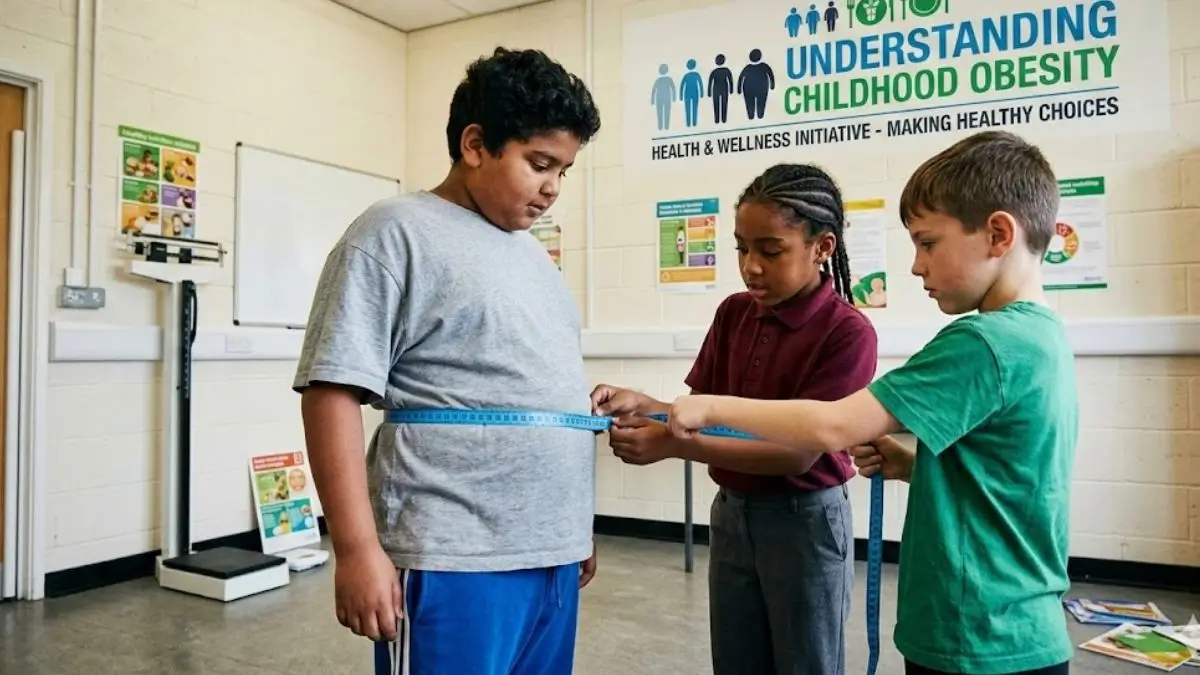
India has overtaken the United States to become the second highest country globally for childhood obesity. This data is according to the World Obesity Atlas 2026 released by the World Obesity Federation. Compiling data till 2025 the report estimates that 41 million Indian children have a high Body Mass Index (BMI). Which is including 14 million living with obesity. By 2040 it is projected that 20 million children in India could be living with obesity while 56 million may be either overweight or obese.
India’s Childhood Obesity Numbers: The Current Picture
As per the World Obesity Atlas 2026:
- 14.9 million children (5-9 years) were overweight or obese in 2025.
- Over 26 million adolescents (10-19 years) were overweight or obese.
- India ranks second globally and just behind China and ahead of the US.
- Globally, more than 20.7% of children aged 5-19 are overweight or living with obesity an increase of 14.6% since 2010.
Among countries projected to have over 10 million children with high BMI, China, India, and the United States lead the list.
What Does 2040 Look Like for India?
The World Obesity Atlas 2026 presents concerning projections for the next 15 years.
By 2040 in India,
- 20 million children are expected to live with obesity.
- 56 million children may be overweight or obese.
- BMI related hypertension may rise from 2.99 million to 4.21 million cases.
- Hyperglycaemia cases may increase from 1.39 million to 1.91 million.
- High triglycerides may jump from 4.39 million to 6.07 million.
The report warns that childhood obesity exposes children to adult-like chronic illnesses, including hypertension and cardiovascular disease.
Globally, by 2040, an estimated 507 million children could be overweight or living with obesity.
Why Is India’s Childhood Obesity Rising So Fast?
According to Johanna Ralston, CEO of the World Obesity Federation, India is among the fastest-rising countries in childhood obesity, with annual increases averaging nearly 5%.
Several factors contribute to this trend,
- 74% of adolescents (11-17 years) do not meet recommended physical activity levels.
- Only 35.5% of school-age children receive school meals.
- High consumption of sugary beverages among children.
- 32.6% of infants up to five months are breastfed sub-optimally.
- Rising high BMI among women aged 15-49 years.
India also ranks first in the WHO South-East Asia Region, with over 45 million young people (0–19 years) overweight or obese.
Health Risks Linked to High BMI in Children
Childhood obesity increases the risk of,
- Hypertension
- Type 2 diabetes
- Cardiovascular diseases
- Metabolic disorders
The report estimates that by 2040, over 57 million children globally may show early signs of cardiovascular disease due to high triglycerides while 43 million could develop hypertension.
What Needs to Be Done?
The World Obesity Federation calls for urgent, coordinated policy action,
- Strengthening healthy school food environments
- Restricting marketing of unhealthy foods to children
- Introducing taxes on sugar sweetened beverages
- Expanding early screening in primary healthcare
- Promoting physical activity at community and school levels
Question
Q. According to the World Obesity Atlas 2026, India ranks _____ globally in childhood obesity.
A) First
B) Second
C) Third
D) Fourth


 WMO Warns Earth's Climate Is "Flashing R...
 Inside the Global Terrorism Index 2026: ...
 Why Donald Trump Paused Iran Strikes: Ke...