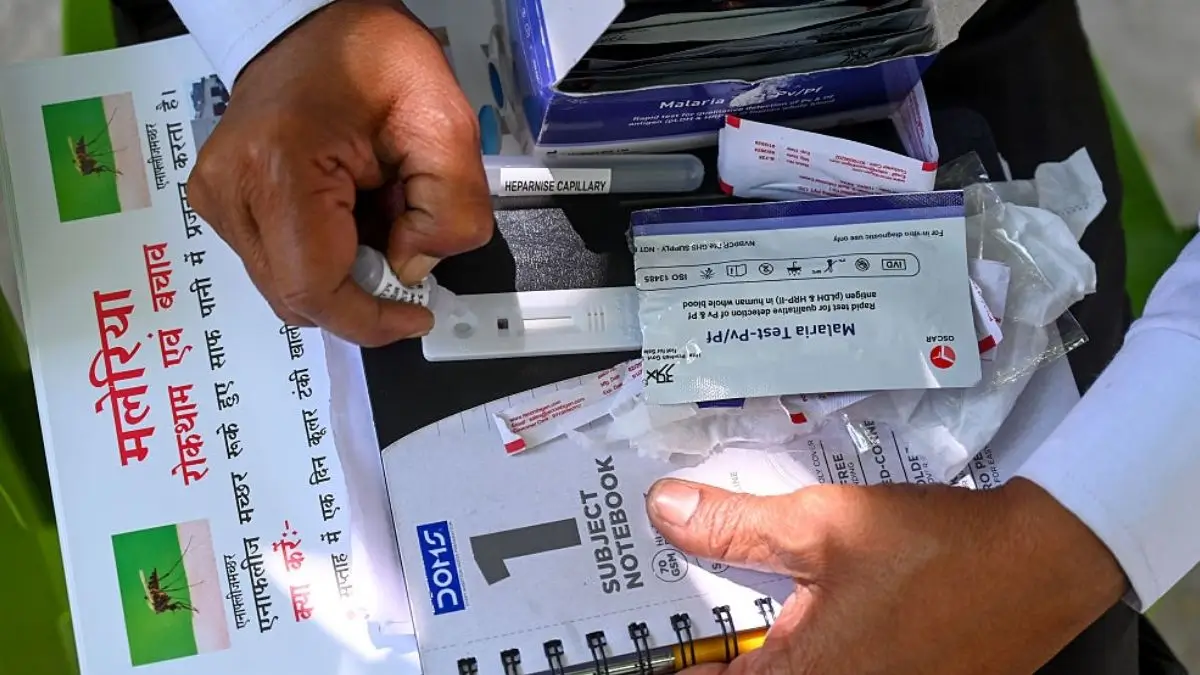
There has been remarkable progress in the India’s fight against the disease, which saw the number of cases and fatalities decline by almost 80% in the period between 2015 and 2025, per the Union Health Ministry. Also, there has been a significant reduction in the number of high-burden districts in India from 155 in 2015 to 33 in 2025. Additionally, another remarkable achievement has been the report of 160 districts being free of any indigenous cases of malaria between 2022 and 2025. Nevertheless, the government underscored the importance of continuous surveillance and interventions to realize India’s target of malaria elimination by 2030.
Malaria Burden Drops Sharply in India
According to the latest review, there has been a sharp decline in the malaria burden in India over the past decade.
The number of high-burden districts dropped from 155 in 2015 to 33 in 2025. Nonetheless, these districts remain an area of focus.
The 33 high-burden districts, which were spread across nine states and Union Territories, reported about 64% of India’s malaria cases and 54% of malaria fatalities in 2025.
These states and UTs include Mizoram, Odisha, Tripura, Assam, Andhra Pradesh, Andaman and Nicobar Islands, Chhattisgarh, Jharkhand and Maharashtra.
Zero Indigenous Cases Reported from 160 Districts
One of the major successes mentioned by the Health Ministry is the zero indigenous cases of malaria reported from 160 districts during 2022-2025.
It suggests that there has been interruption in transmission of malaria in these districts for a long time. According to the ministry, this success was due to implementation of malaria control and elimination strategies.
It does not mean that monitoring cannot be stopped because transmission of malaria can happen again due to imported cases or mosquitoes breeding in those areas.
Test, Treat and Track Approach Emphasized
Government has emphasized upon strengthening the implementation of “Test, Treat and Track” approach.
Delay in diagnosis of malaria and treatment of the disease has been mentioned as one of the key reasons for mortality due to malaria. States have been advised to strengthen active surveillance and availability of diagnostics and anti-malarial drugs.
It has been especially emphasized upon the hard to reach areas.
Community Participation and Environmental Control
The government was clear on the fact that eradication of malaria cannot rely solely on health care measures. Factors in the environment, such as water-logging and mosquito breeding sites, could also play an important role in causing transmission of the disease.
It was suggested that states take help from Rural Development and Urban Development departments and Panchayati Raj institutions to improve source reduction and environmental control.
Self-help groups, community volunteers, and Panchayati Raj representatives could also become a part of the process through reporting of fever cases, identification of breeding sites, and eliminating standing water.
India’s Malaria Elimination Target by 2030
India’s pledge towards achieving SDG of eradicating malaria by 2030 has been restated by the government.
Interventions like District Action Plans across 33 highly burdened districts and Village Action Plans in areas where malaria is prevalent have been recommended by the Health Ministry. These actions would have to be modified according to the local epidemiology and geography.
The new focus will be on prevention of resurgence rather than reduction.








 Supreme Court Constitutes Standing Commi...
 Aadhaar Name Change Rules Revised: Docum...
 IMC 2026: PM Modi Highlights India’s 5...