
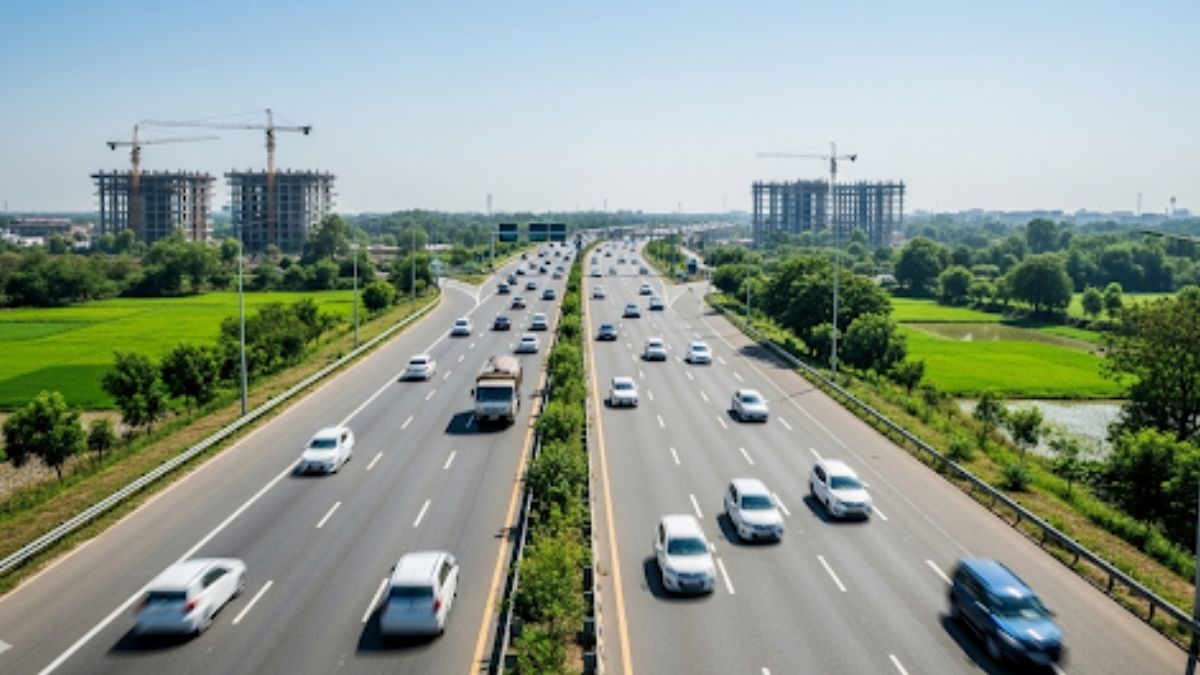
In one of its most ambitious infrastructure plans to date, India will invest ₹11 lakh crore ($125 billion) to expand its high-speed road network fivefold by 2033. The project, spearheaded by the Ministry for Road Transport and Highways, aims to build 17,000 km of access-controlled expressways, slashing logistics costs and enhancing economic connectivity across the country.
This major push aligns India with global infrastructure leaders like China and the United States, while signaling a strong focus on modern mobility, investor engagement, and economic efficiency.
Scope and Timeline of the Project
The planned road network will allow vehicles to travel up to 120 km/h, making them significantly faster and safer than conventional highways. As of March 2025, India had over 146,000 km of national highways, but only 4,500 km met high-speed standards.
Under the new plan,
- 17,000 km of expressways to be added
- 40% already under construction, to be completed by 2030
- Remaining corridors to begin by 2028 and finish by 2033
This timeline reflects a rapid infrastructure upgrade, aimed at supporting India’s growing urbanization, industrial corridors, and e-commerce logistics.
Funding Models and Private Participation
To finance this mega-project, the government will adopt a hybrid financing model,
- Build-Operate-Transfer (BOT) Model
- Used for projects promising 15%+ returns
- Private firms recover costs through toll collection
- Hybrid Annuity Model (HAM)
- Government covers 40% of construction cost upfront
- Balance funded by developers with payment over time
While HAM currently dominates ongoing construction, the government aims to increase private sector involvement, as past enthusiasm has been limited due to risk-return concerns. With global investors like Brookfield, Blackstone, and Macquarie showing interest, the sector is poised for a revival.
Comparing Global Expressway Networks
India’s high-speed expansion mirrors infrastructure strategies in major economies,
- China: Over 180,000 km of expressways built since the 1990s
- USA: Maintains over 75,000 km of interstate highways
- India (current): 4,500 km of high-speed roads
- India (2033 target): 21,500 km
Though smaller in scale, India’s roadmap is aggressive in timeline and ambition, leveraging both public and private capital.
Key Takeaways for Exam
- Investment Amount: ₹11 lakh crore (~$125 billion)
- Target: 17,000 km of access-controlled high-speed roads by 2033
- LeadAgency: Ministry for Road Transport & Highways; NHAI
- Models: BOT (for high-return projects), HAM (for others)
- CurrentExpressways: 4,500 km; Post-project: 21,500 km


 ECINet KYC Feature Explained: How Voters...
 BIRAC-BioNEST Incubation Centre Inaugura...
 E20 Petrol India 2026: Nationwide Rollou...











