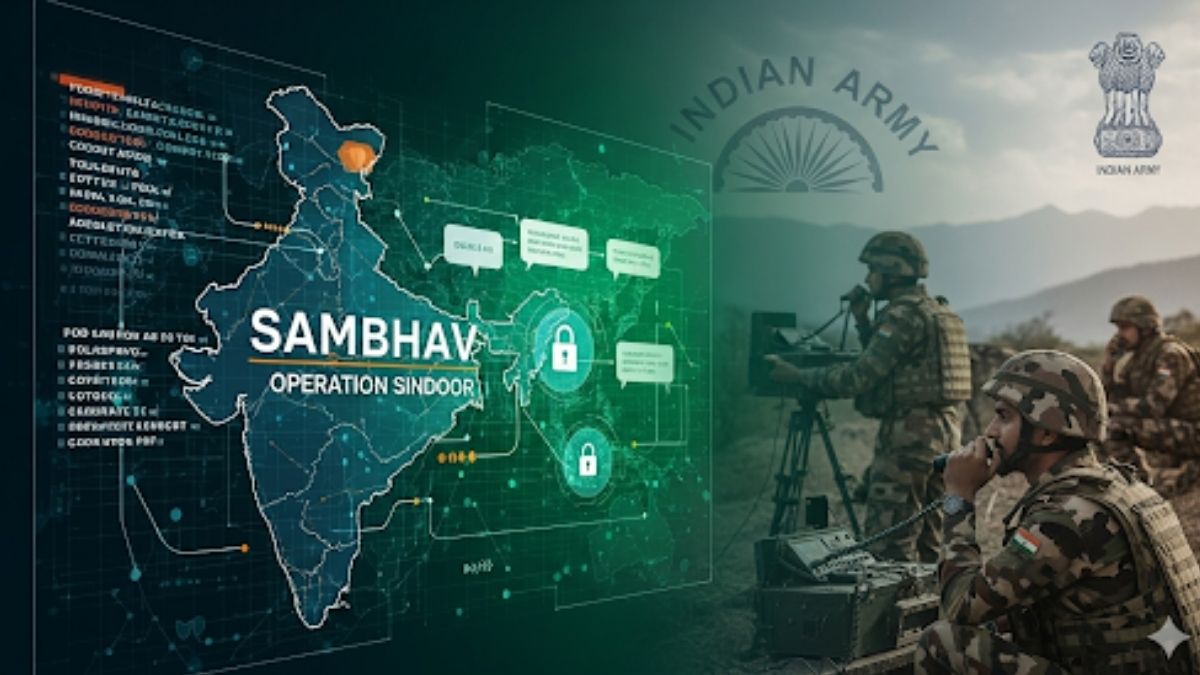
In a remarkable stride toward technological self-reliance, the Indian Army replaced widely-used messaging platforms such as WhatsApp with its own SAMBHAV system during the high-stakes Operation Sindoor. This strategic pivot not only ensured secure communication but also reflected the broader ambition of Atmanirbhar Bharat in defense technology.
A Shift from WhatsApp to SAMBHAV
In a major move to enhance communication security, the Indian Army transitioned from popular but vulnerable messaging apps like WhatsApp to an indigenous mobile ecosystem called SAMBHAV during Operation Sindoor. This operation, launched in May 2025 following a terrorist attack in Jammu and Kashmir, demonstrated India’s commitment to securing its military channels against espionage and cyber threats.
Army Chief General Upendra Dwivedi emphasized the shift while speaking at the AIMA National Management Convention. He noted that the Army was “no longer using WhatsApp and others,” and instead deployed SAMBHAV for operational command and communication, with further upgrades already underway.
What Is SAMBHAV?
SAMBHAV—short for Secure Army Mobile Bharat Version—is a secure, 5G-based communication platform developed indigenously under the Atmanirbhar Bharat initiative. Introduced in January 2024, the system aims to replace foreign mobile apps with a more secure, encrypted alternative built specifically for military needs.
Some key features include,
- Multi-layered encryption to prevent data leaks and eavesdropping
- 5G-ready handsets for seamless, high-speed mobile connectivity
- Network-agnostic function, compatible with public providers like Jio and Airtel
- M‑Sigma app, an Indian alternative to WhatsApp, supporting secure messaging and file transfers
- Preloaded contact directories for instant, internal communication between Army personnel
- Developed with the support of Indian research institutions and tech firms, SAMBHAV reflects a collaborative defense innovation model involving both state and private sectors.
How It Was Used in Operation Sindoor
- During Operation Sindoor, the Indian Army conducted a coordinated response to a terrorist attack in Pahalgam, Jammu and Kashmir. The mission, described as a “whole-of-nation approach,” involved not just soldiers but scientists and policymakers working together.
- For communication throughout the operation, SAMBHAV smartphones were used at all levels—from ground troops to top commanders. The secure network helped in preventing any intelligence leaks, which are a major concern in high-risk operations.
- This marked the first significant operational deployment of SAMBHAV, showcasing its real-world capability in a sensitive, high-stakes environment.
Broader Deployment and Strategic Impact
- The use of SAMBHAV was not limited to Operation Sindoor. The Indian Army also used these secure devices during military talks with China in October 2024, further proving their reliability in diplomatic and security engagements.
- By 2025, around 30,000 SAMBHAV devices had been distributed among Army officers, underlining the Army’s commitment to a full-scale transition away from third-party apps and platforms.
- This move also complements India’s push for cyber sovereignty, where critical defense infrastructure is shielded from foreign surveillance and hacking attempts.
Why It Matters
- The shift to SAMBHAV marks a pivotal moment in India’s military communication strategy. Unlike commercial messaging platforms, which are often subject to foreign regulations and surveillance risks, SAMBHAV is fully controlled within India’s security framework.
- The growing relevance of hybrid warfare, which blends cyber threats with traditional combat, makes secure communication tools like SAMBHAV indispensable. As General Dwivedi remarked, future warfare will see “boots sharing space with bots,” highlighting the role of technology in modern military operations.


 BRO's Project Chetak Turns 47: How It St...
 Indian Navy INS Aridaman: Features, Role...
 INS Taragiri Commissioned - What Makes T...