
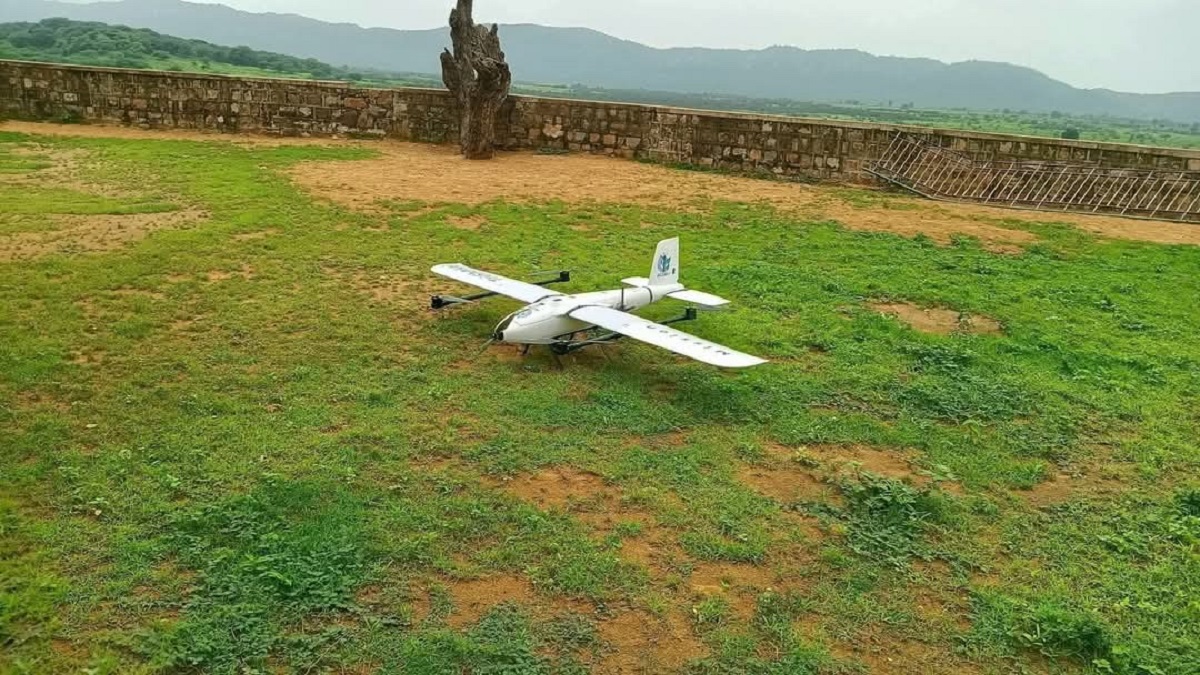
For the first time in India, cloud seeding technology enhanced with drones and artificial intelligence (AI) is being used to trigger artificial rain. The pilot project is taking place in the Ramgarh Dam area of Jaipur, Rajasthan, with hopes of reviving the 129-year-old reservoir that has been dry for the past two decades and has not filled to capacity since 1981. The initiative is a joint effort between GenX AI, an India-US-based technology company, and the Rajasthan Government.
Event Details and Participation
The experiment is scheduled to begin at 2 PM, headed by Agriculture and Disaster Relief Minister Kirodi Lal Meena. Weather and technology experts, along with a large gathering of villagers led by MLA Mahendra Pal Meena, are present to witness the event.
The project aims to revive surface water sources, provide relief in drinking water supply to Jaipur, and preserve the environment and biodiversity of the dam area.
Why Ramgarh Dam Was Chosen
Initially, Mansagar Dam near Jal Mahal was considered, but due to its smaller size and proximity to civilian areas, the site was shifted to Ramgarh Dam. The dam is larger, currently dry, and historically significant.
Historical Background:
- Foundation laid: 30 December 1897 by Maharaja Madho Singh II.
- Construction completed: 1903.
- 1931: Viceroy Lord Irwin inaugurated the first drinking water supply scheme of Rajputana from here.
- 1982: Hosted Asian Games sailing competition.
- Situated on the Banganga River, it was once the main water source for Jamwaramgarh Wildlife Sanctuary.
How the Drone-AI Cloud Seeding Works
Cloud seeding involves spraying chemicals such as sodium chloride into clouds, which act as condensation nuclei, causing water vapour to condense into raindrops.
In this experiment:
- Taiwan-made drones will fly thousands of feet high.
- They will spray sodium chloride into targeted clouds.
- The process aims to induce precipitation and fill the dam.
This weather modification technique is already in use in countries like the US, Russia, and several European nations to mitigate droughts.
Multi-Department Coordination
The project involves coordination between:
- Agriculture Department
- Meteorology Department
- Water Resources and Irrigation Departments
- Pollution Control Board
The DGCA has granted permission for drone flights. Data from the project will be recorded for one month for further analysis.
Previous Cloud Seeding Attempts in Rajasthan
A similar attempt was made at Ghosunda Dam in Chittorgarh, but it was unsuccessful. This time, improved AI and drone technology are expected to increase the chances of success.
History of Cloud Seeding in India
According to the Indian Institute of Tropical Meteorology (IITM):
- 1951: First attempt over the Western Ghats using ground-based silver iodide generators.
- 1952: Salt and silver iodide used via hydrogen-filled balloons.
- 1957–1966: Rain and Cloud Physics Research (RCPR) Unit conducted ground-based cloud seeding in north India, increasing rainfall by 20%.
- 1973–1977: Experiments over Tiruvallur (Tamil Nadu) and Mumbai.
- 1973–1986: Cloud seeding over Baramati (Maharashtra) led to a 24% increase in rainfall.
Significance of the Jaipur Experiment
This project is crucial because:
- It uses modern drones and AI-based targeting to improve accuracy.
- It could revive the Ramgarh Dam, benefiting drinking water supply and agriculture.
- It demonstrates India’s ability to adopt cutting-edge weather modification technology for climate resilience and drought mitigation.
If successful, it could pave the way for similar projects across drought-prone regions of India.


 Parliament Rejects Impeachment of Chief ...
 Against All Odds: Indian Cyclist Divya S...
 India’s Most Advanced Atomic Reactor Att...











