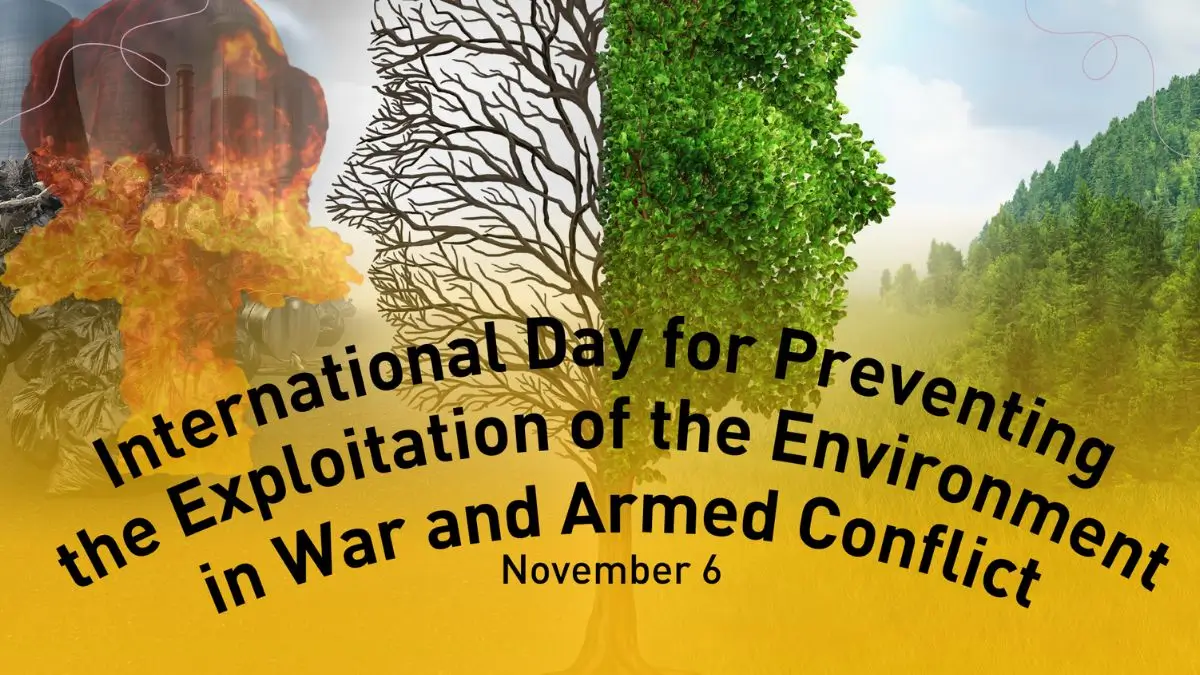
Each year on November 6, the world observes the International Day for Preventing the Exploitation of the Environment in War and Armed Conflict, a United Nations-designated occasion that emphasizes the devastating impact of warfare on the environment. As wars continue to wreak havoc globally, the environment often becomes the silent victim — degraded, polluted, and irreversibly damaged. This day reminds us that peace and sustainability go hand in hand, and that environmental protection must remain a priority even in times of conflict.
Historical Background
- The origins of this day date back to November 5, 2001, when the United Nations General Assembly adopted Resolution A/RES/56/4, officially declaring November 6 as the International Day for Preventing the Exploitation of the Environment in War and Armed Conflict.
- This initiative responded to growing concerns that environmental damage during conflicts was often overlooked and unaddressed.
- Later, on May 27, 2016, the United Nations Environment Assembly (UNEA) adopted Resolution UNEP/EA.2/Res.15, which reinforced this commitment.
- It recognized the essential role of healthy ecosystems and sustainable resource management in conflict prevention and post-conflict recovery. It also reaffirmed the UN’s commitment to the 2030 Agenda for Sustainable Development.
Environment: A Hidden Casualty of War
Wars cause more than human and economic losses. They lead to,
- Destruction of ecosystems and wildlife habitats
- Pollution of air, water, and soil from explosives and chemical weapons
- Deforestation and land degradation due to forced migration or military operations
- Contamination of water sources, harming civilian populations long after conflicts end
Peace Through Environmental Protection
Natural resources such as water, minerals, and forests are often at the root of conflicts. Managing these resources equitably and sustainably can,
- Prevent disputes over scarcity
- Promote dialogue and cooperation
- Support reconstruction and stability in post-conflict settings
SDGs and Environmental Justice
- The observance aligns closely with the Sustainable Development Goals (SDGs), especially,
- SDG 16 – Peace, Justice and Strong Institutions
- SDG 13 – Climate Action
- SDG 15 – Life on Land
- SDG 6 – Clean Water and Sanitation
Protecting ecosystems during war is not just about conservation — it’s about human survival, rights, and dignity.
Call for Global Action
The day encourages international cooperation and urges stakeholders — governments, NGOs, academic institutions, and citizens — to,
- Share best practices
- Document and assess environmental damage
- Enforce international laws and accountability
- Invest in environmental peacebuilding


 Easter Sunday 2026: Meaning, History &am...
 International Day for Mine Awareness 202...
 Good Friday 2026: Date, History, Meaning...