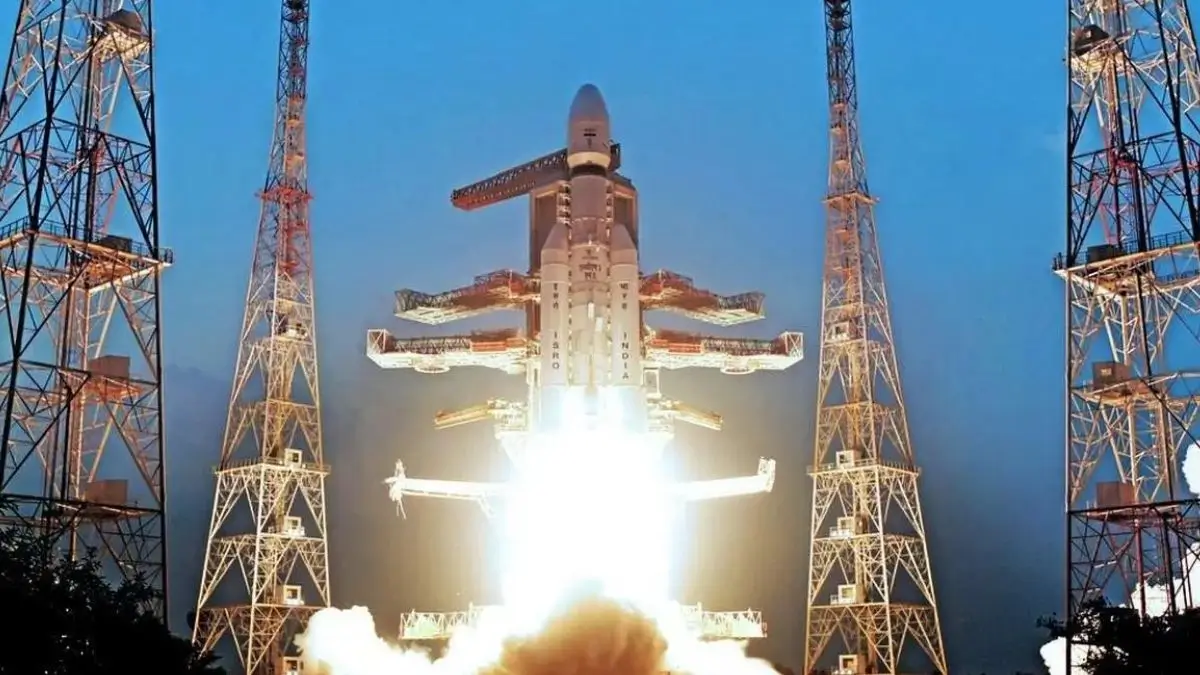
ISRO will be launching the GSLV-F17 rocket that will take the EOS-05, the most advanced Earth observation satellite, into the orbit on September 4, 2026. The mission is scheduled for 2:55 AM IST from the Second Launch Pad of Satish Dhawan Space Centre (SDSC-SHAR), Sriharikota, Andhra Pradesh. The significance of the mission lies in the fact that EOS-05 will become the first imaging satellite of India to operate from a geosynchronous orbit. The mission reflects the growing competence of the country in satellite-based Earth observation.
What Is GSLV-F17?
The GSLV-F17 is the 19th flight of Geosynchronous Satellite Launch Vehicle (GSLV) of India. The GSLV is the vehicle of ISRO designed to place satellites into high-orbit altitudes.
During the GSLV-F17 mission, the GSLV will launch EOS-05 and put it into Sub-Geosynchronous Transfer Orbit (Sub-GTO) from where the satellite will perform the required manoeuvres to reach its target geosynchronous orbit.
This mission will reveal the role of the GSLV as a means of launching heavy technologically advanced satellites into high altitudes of Earth’s orbit.
What Is EOS-05?
EOS-05 is the advanced Earth observation and imaging satellite designed to collect the information about the Earth’s surface.
In contrast to conventional imaging satellites that operate in low Earth orbit, EOS-05 will work from geosynchronous orbit. In that way, the satellite will be able to observe a larger part of Earth’s surface from the relatively higher altitude.
Earth observation satellites are used for the,
- Monitoring of land and natural resources
- Observation of the changes in the Earth’s surface
- Environmental research
- Scientific applications
- Planning and resource management
This large-scale observation potential makes the mission highly significant for the expansion of India’s Earth observation program based on space technologies.
The Significance of a Geosynchronous Orbit
A geosynchronous orbit is an orbit where the satellite revolves around the earth in about the same time that the earth completes its rotation.
This kind of orbit helps the satellites to retain the observation position relative to the region on Earth they are meant to observe. This makes the geosynchronous satellites useful where there is need for constant observation of certain regions on the earth’s surface.
In earth observation, working from a high orbit gives a wide area coverage, but imaging at a larger distance is difficult.
GSLV-F17 Mission: Key Facts
- Launch vehicle: GSLV-F17
- Satellite: EOS-05
- Launch date: September 4, 2026
- Launch time: 2:55 AM IST
- Launch site: Satish Dhawan Space Centre, Sriharikota
- Launch pad: Second Launch Pad
- Orbit targeted initially: Sub-Geosynchronous Transfer Orbit
- Organisation: ISRO
- Major significance: First Indian imaging satellite planned to operate from a geosynchronous orbit








 World Bank Ranks India Among Top 10 Emer...
 Elon Musk to Rename SpaceXAI as SpaceXSI
 Kerala Develops AI-Based Dengue Early Wa...