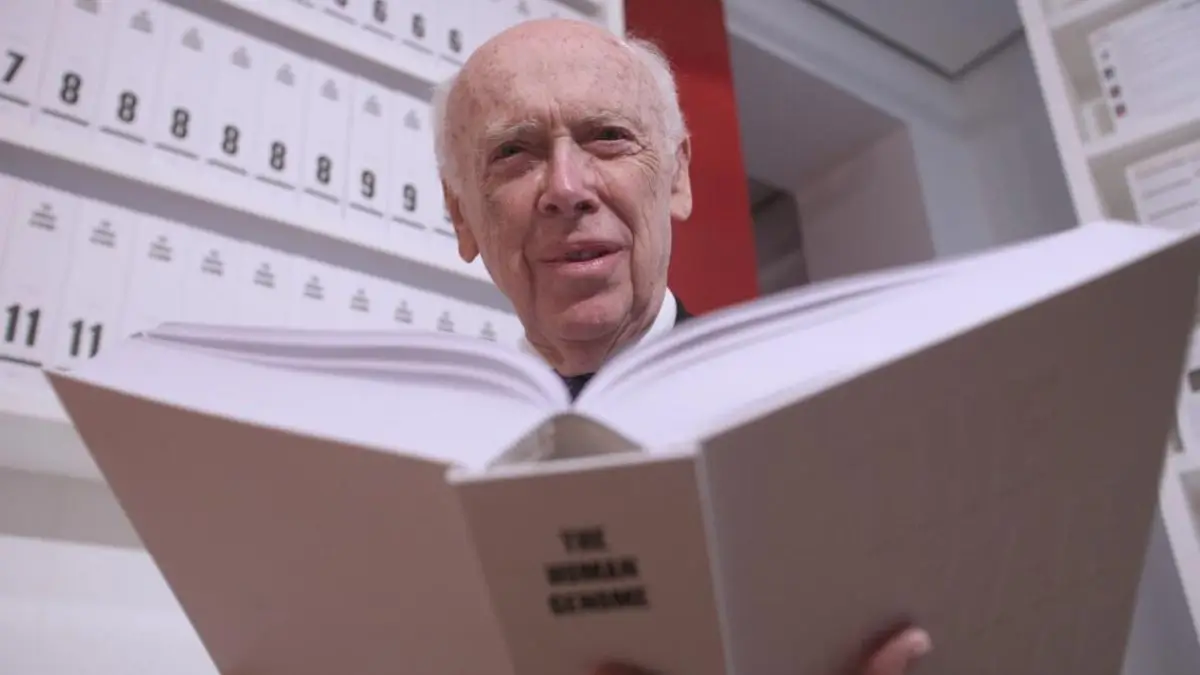
James D. Watson, the pioneering molecular biologist whose work revolutionized genetics and reshaped modern science, has died at the age of 97 in East Northport, New York. Best known for his co-discovery of the double helix structure of DNA alongside Francis H.C. Crick, Watson was awarded the Nobel Prize in Physiology or Medicine in 1962. His passing marks the loss of a monumental figure whose contributions, controversies, and complex legacy continue to influence scientific discourse worldwide.
Scientific Legacy: Discovery That Changed Biology
In 1953, Watson and Crick deciphered the three-dimensional structure of DNA, proposing the iconic double helix. Their model — a twisted ladder of sugar-phosphate backbones and paired nitrogenous bases (adenine-thymine, cytosine-guanine) — explained how genetic information is copied and inherited.
Key Points
- Published in Nature, the model described features “of considerable biological interest.”
- Based in part on X-ray crystallography images by Rosalind Franklin and Maurice Wilkins.
- Laid the foundation for modern molecular biology, genetic mutation studies, and genome engineering.
- This breakthrough transformed the understanding of heredity, disease, and biotechnology.
The Human Genome Project and Institutional Impact
Watson’s influence extended to genome mapping and research administration,
Human Genome Project (1980s–1990s)
- Mapped over 3 billion base pairs of human DNA.
- Advocated for ethical oversight, dedicating funds to social and ethical research.
Cold Spring Harbor Laboratory (Director, 1968–1994)
- Elevated the lab to a global genetic research hub.
- Promoted education, mentorship, and cancer genetics research.
Academic Career and Early Life
Born on April 6, 1928, in Chicago, Watson entered the University of Chicago at 15 and completed his Ph.D. at Indiana University under Salvador Luria. His move to Cambridge University’s Cavendish Laboratory led to his partnership with Crick. He later joined Harvard University, where he became a professor and wrote the foundational textbook Molecular Biology of the Gene. Despite tensions with colleagues, he mentored many young scientists, especially women, and was known for encouraging talented students.
A Polarizing Figure: Controversy and Criticism
Despite scientific brilliance, Watson attracted criticism for offensive and divisive remarks,
- 2007 Comments: Suggested Black people were inherently less intelligent, leading to removal from honorary positions at Cold Spring Harbor.
- Portrayal of Rosalind Franklin: Criticized in his memoir The Double Helix for minimizing her role and including dismissive commentary.
- Auction of Nobel Prize (2014): Cited feelings of ostracization from the scientific community.
Remembering a Complex Legacy
James D. Watson’s name will forever be linked to one of science’s greatest breakthroughs — the understanding of life’s blueprint, DNA. However, his divisive views and disregard for social sensitivity complicated his public image. He leaves behind a legacy that is both foundational and fraught, exemplifying the power of human intellect as well as the importance of accountability and ethics in science.
Static Facts for Revision
- Name: James Dewey Watson
- Born: April 6, 1928, Chicago, USA
- Died: November 7, 2025, East Northport, New York (Age 97)
- Co-Discoverer of DNA Structure (Double Helix): 1953
- Collaborator: Francis H.C. Crick
- Nobel Prize in Physiology or Medicine: 1962
- Notable Book: The Double Helix (1968)Static Facts for Revision


 Bengali Actor Rahul Arunoday Banerjee Di...
 Who Was Vijaypat Singhania? Raymond’s Fo...
 E A Rajendran Passed Away at 71: Remembe...