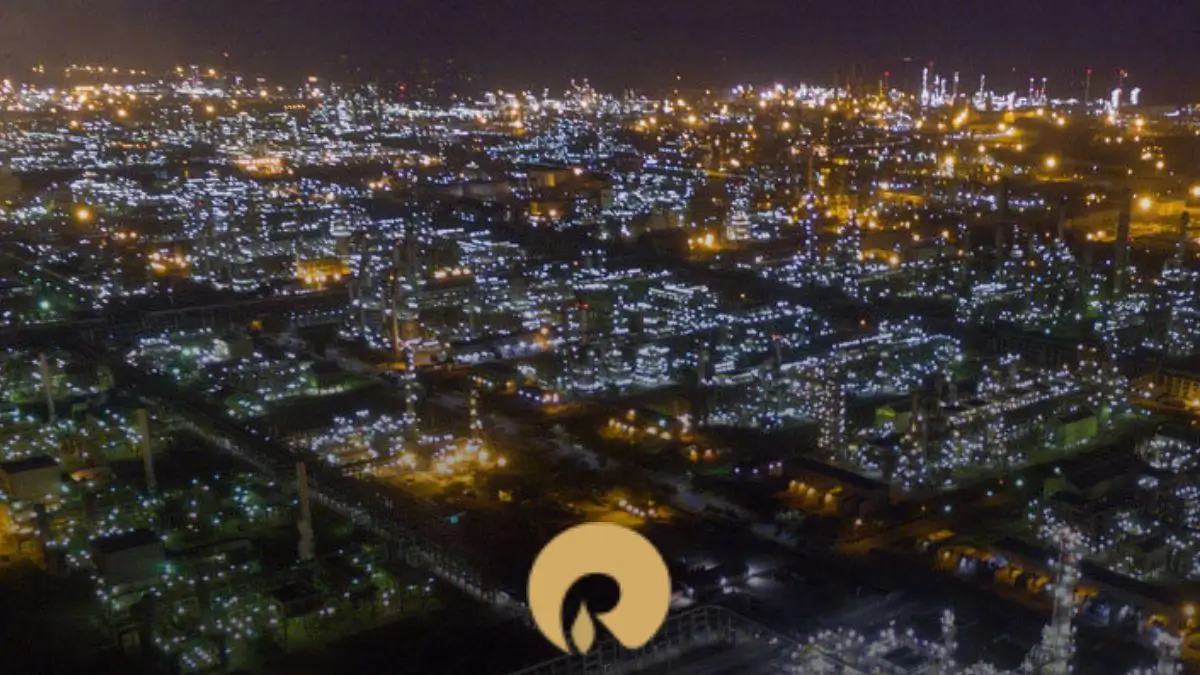
Jamnagar is a coastal city in the state of the Gujarat and it is emerging as a key location for the world’s petroleum refining industry. The importance of this region has received international focus after the recent visit to Reliance Industries’ refinery complex by the U.S. Secretary of State Marco Rubio on October 21st 2026, against the backdrop of the Venezuelan crude oil and energy security discussions between India and the United States.
Reliance Industries Limited (RIL)-operated Jamnagar complex is considered to be the largest integrated single-site refinery complex in the world by Reliance Industries, with a crude processing capacity of around 1.4 million barrels per day.
Where Is the Jamnagar Refinery Located?
The Jamnagar refinery is situated at Jamnagar district on the western coastline of Gujarat state of India. The coastal location of the plant facilitates transportation through sea routes and crude oil imports along with international sales of the refined products.
The facility is made up of two refineries run by Reliance Industries and together have an installed capacity to process about 1.4 million barrels of crude oil per day (MMBPD) which is around 70 million tons per year (depending on the density of the crude oil). The company claims the capacity to be 1.4 MMBPD.
The refinery came into production in 1999 with expansion making it much larger and technologically more advanced.
Why Is Marco Rubio Visiting Jamnagar?
Visit of U.S. Secretary of State Marco Rubio on October 21, 2026, marks the increasing role of energy collaboration between India and the United States.
From the available information on the visit, the possibility of Reliance processing additional Venezuelan crude oil is being discussed. The USA is looking for the market for the rising Venezuelan oil production, while the refining capacity in India provides an option for the processing of this type of crude. India is referred to as a refining superpower by Rubio due to its ability to refine various grades of crude oil.
In addition, the discussions are held under certain geopolitical considerations. Conflicts influencing the Middle East and the danger to the transport of oil through important maritime routes cause the worries concerning the energy supply, transport costs, and international oil prices.
It is important to note that the possible increase in the processing of Venezuelan crude does not mean a guaranteed long-term supply of oil from Venezuela. Purchasing of the crude depends on various commercial factors.
What Sets the Jamnagar Refinery Apart?
Jamnagar’s refinery is characterized by large-scale refining of crude oil along with conversion technology and petrochemical manufacturing.
According to Reliance Industries, the refinery’s complexity index is 21.1, and more than 216 grades of crude have been refined there. It means that the company has the ability to deal with many types of crude oil and manufacture products intended for various markets.
Crude oil consists of hydrocarbons of different molecular sizes and structures. Refineries isolate them from crude oil using further chemical processes of converting them into other products.
Specialized facilities in Jamnagar include fluidized catalytic cracking, coking, alkylation, paraxylene, polypropylene, refinery off gas cracking and petroleum coke gasification.
The ability to work with different crude oil is especially important when the crude’s supply, price or composition changes due to geopolitical factors or changes in the world market demands.
Technologies at Jamnagar
1. Petcoke gasification
Petroleum coke, which is rich in carbon content and obtained as a by-product of the refinery process, is gasified to synthesize gas known as ‘syngas’. This synthesized gas may help meet the energy needs of the complex.
2. Refinery Off-gas Cracker (ROGC)
This is a technology which utilizes gases produced in the refinery process as feedstock to produce ethylene, a basic building block chemical used to make various kinds of petrochemicals. The commissioning of the world’s largest ROGC facility was made public by Reliance Industries in January 2018.
3. Paraxylene production
Paraxylene is an important chemical feedstock which can be used to make purified terephthalic acid (PTA).
What is Heavy Crude Oil and How is it Significant?
Heavy crude oil is a kind of petroleum that usually has higher density and viscosity compared to light crude oil. Processing of heavy crude oil may need special refinery equipment that will transform its heavy components into economically viable products.
Venezuela has large heavy oil reserves. With the help of refineries that have special conversion capabilities, it is possible to produce economically valuable products using proper heavy crude oils.
The capability of Jamnagar to accept various types of crude oil makes it relevant in the context of Venezuelan oil exports. The economic viability of such export depends on many factors like the quality of the crude oil, its price, costs of transport and processing, and the value of the product.








 UNESCO World Heritage Sites of India - D...
 Can a Place with Heavy Rainfall Be Calle...
 Dussehra 2026: Top 30 Most Important GK ...