
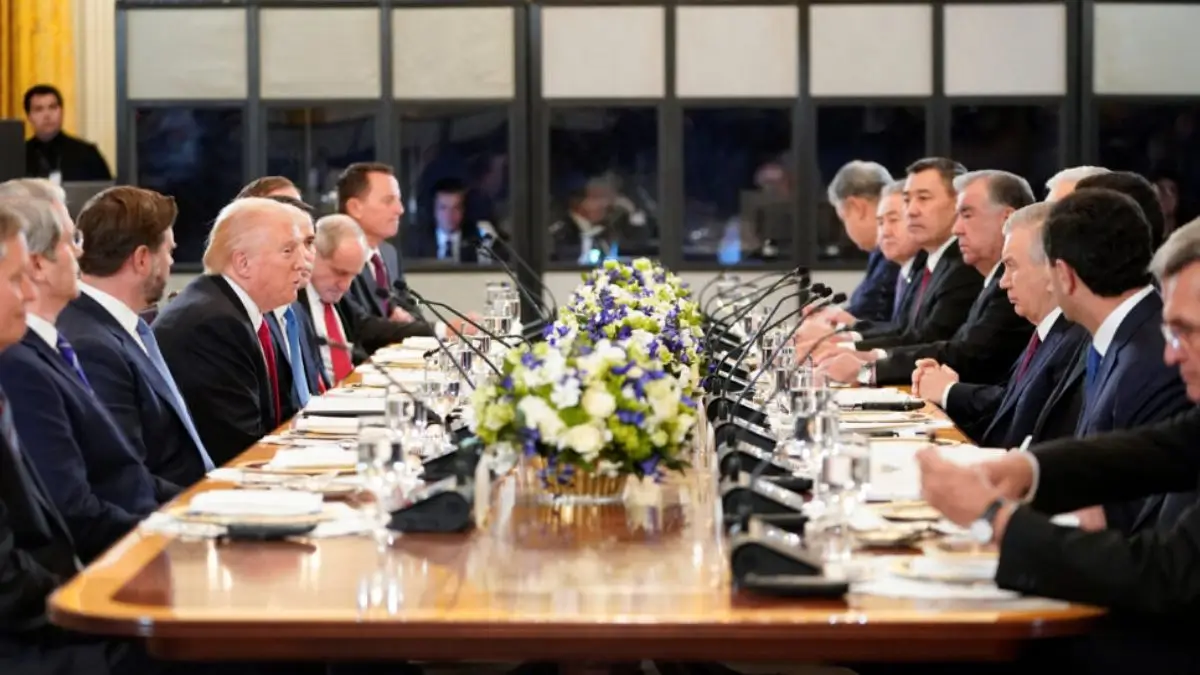
In a landmark geopolitical development, Kazakhstan is poised to join the Abraham Accords, a U.S.-brokered framework aimed at normalizing relations between Israel and Muslim-majority countries. This announcement, made by U.S. President Donald Trump on 6 November 2025, positions Kazakhstan as the latest entrant into a strategic partnership that has reshaped Middle Eastern diplomacy since its inception in 2020.
What Are the Abraham Accords?
- The Abraham Accords, first signed in 2020 under Trump’s administration, are a series of normalization agreements between Israel and several Arab states.
- The initial signatories included the United Arab Emirates, Bahrain, Morocco, and Sudan.
- These accords marked a major shift in Arab-Israeli relations, prioritizing diplomatic engagement, trade, and strategic alignment over longstanding political hostilities.
- Now, by welcoming Kazakhstan, the accords extend their footprint beyond the Arab world into Central Asia, a region of increasing geopolitical interest.
Why Kazakhstan’s Entry Matters
- Although Kazakhstan already maintains diplomatic and trade ties with Israel, joining the Abraham Accords carries symbolic and strategic weight.
- It aligns Kazakhstan more closely with other regional players in a U.S.-led initiative and enhances multilateral cooperation with existing members.
- Kazakhstan’s government confirmed that the accession was in its final negotiation stages, framing it as a “natural continuation” of its foreign policy, which prioritizes dialogue, mutual respect, and regional stability.
- According to U.S. Secretary of State Marco Rubio, the agreement represents “an enhanced relationship beyond just diplomacy”, promising deeper collaboration on economic, technological, and security matters among all signatories.
U.S. Strategy and Regional Impact
- President Trump announced the development after hosting leaders of the C5+1 group—Kazakhstan, Kyrgyzstan, Tajikistan, Turkmenistan, and Uzbekistan—at the White House.
- The gathering marks a concerted U.S. effort to engage with Central Asian republics, where Russia and China have long held sway.
- The decision comes at a time when the Abraham Accords have seen limited expansion due to regional instability, notably the Gaza conflict.
- The inclusion of Kazakhstan could reinvigorate the initiative, especially as the U.S. eyes broader engagement with other Muslim-majority nations, including Uzbekistan and Azerbaijan.
Broader Geopolitical Context
- The Abraham Accords’ expansion highlights the changing nature of Muslim-majority diplomacy with Israel, where shared concerns over economic development, regional stability, and counterterrorism now outweigh traditional objections centered on the Palestinian question.
- However, larger players like Saudi Arabia remain cautious.
- Despite speculation, Riyadh continues to withhold normalization absent a clear path toward Palestinian statehood.
- Saudi Crown Prince Mohammed bin Salman is expected to visit Washington on November 18, raising questions about further expansion of the accords.


 Costa Rica Launches Snake Identification...
 WTO 14th Ministerial Conference Conclude...
 Former Suriname President Chandrikapersa...











