On Earth Gulfs are the most important geographical features, as these large water bodies are partially enclosed by the land and it connected to oceans or seas. They plays the vital role in the international trade, fishing, marine biodiversity, transportation and climate regulation.
Across the globe, there are some of the largest gulfs serve as the major shipping routes and economic hubs which connecting different continents. Based on the surface area, the Gulf of Guinea ranks as the largest gulf in the world and it is followed by the Gulf of Mexico and the Gulf of Alaska.
So here is the detailed look at the five largest gulfs on Earth.
What Is a Gulf?
A gulf is the large inlet of the sea or ocean which extends deep into the land and it is surrounded by land on three sides. Gulfs are generally larger and more enclosed than bays although the distinction is not always strict.
These water bodies often support the,
- International maritime trade
- Commercial fishing industries
- Oil and gas exploration
- Rich marine ecosystems
- Coastal settlements and the ports
The strategic location makes many gulfs economically and geopolitically important.
Top 5 Largest Gulfs in the World
| Rank | Gulf Name | Surface Area |
| 1 | Gulf of Guinea | 2,350,000 km² |
| 2 | Gulf of Mexico | 1,550,000 km² |
| 3 | Gulf of Alaska | 1,533,000 km² |
| 4 | Hudson Bay | 1,230,000 km² |
| 5 | Gulf of Aden | 410,000 km² |
Detailed Breakdown of Top 5 Largest Gulfs in the World
1. Gulf of Guinea
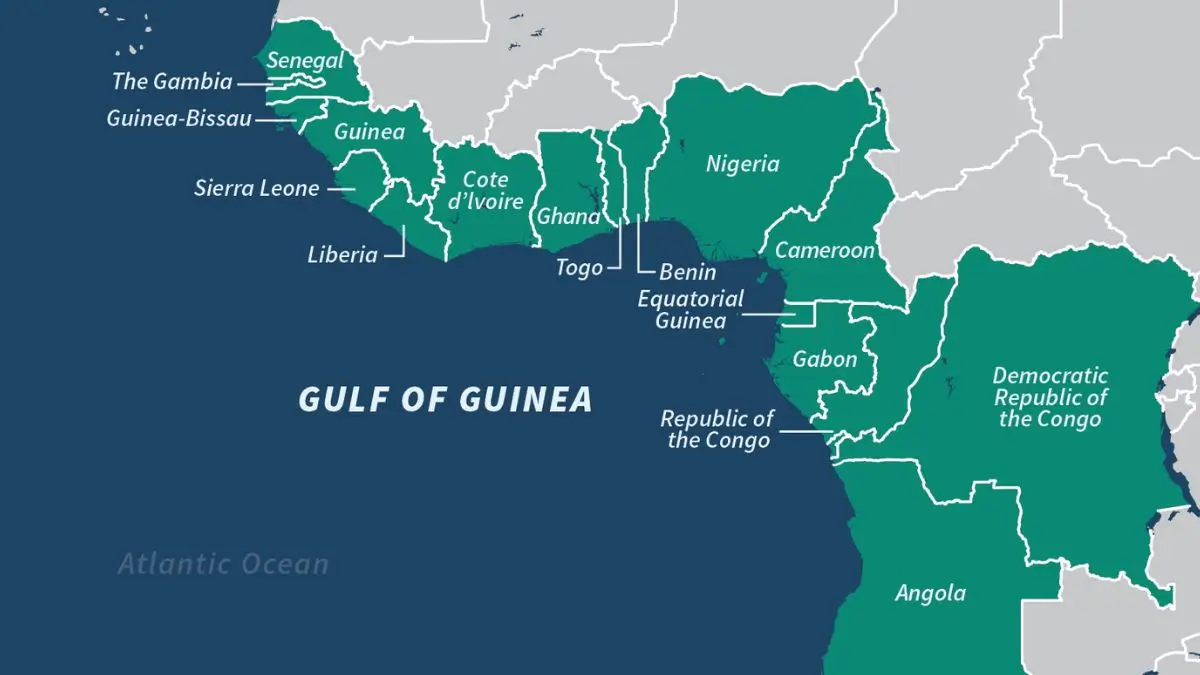
The Gulf of Guinea is located along the western coast of the Africa and it covers an impressive area of around 2.35 million square kilometres and making it as the largest gulf in the world.
One of its most fascinating features is that the Equator and the Prime Meridian intersect within this gulf.
The point where the latitude 0° and longitude 0° meet is often referred to as the “Null Island.”
Major rivers flowing into the gulf includes the Niger River, Volta River and Ogooué River.
The gulf supports the important fisheries, oil production and maritime trade activities across the West Africa.
2. Gulf of Mexico
The Gulf of Mexico is the second-largest gulf globally, covering around 1.55 million square kilometres.
It is bordered by the United States, Mexico and Cuba.
The gulf connects to the Atlantic Ocean through the Florida Straits and to the Caribbean Sea through the Yucatán Channel.
Importance of the Gulf of Mexico
- Major oil and natural gas reserves
- One of the world’s busiest shipping regions
- Rich marine biodiversity
- Important fishing industry
Five U.S. states border this gulf are Texas, Louisiana, Mississippi, Alabama, and Florida.
3. Gulf of Alaska
It is located along the southern coast of the Alaska, the Gulf of Alaska covers approximately 1.533 million square kilometres.
The gulf is known for the,
- Cold-water marine ecosystems
- Productive fisheries
- Frequent storms
- Oil and gas reserves
The nearby Cook Inlet region contains the significant petroleum resources. Fishing remains one of the most important economic activities for communities surrounding the gulf.
4. Hudson Bay
Although it is officially called a bay, many geographers classify Hudson Bay as a gulf because it is almost entirely enclosed by land.
It covering approximately 1.23 million square kilometres, Hudson Bay is one of the largest inland seas in the world.
Key Features
- Located in northeastern Canada
- Average depth around 100 metres
- Frozen for much of the year
- Receives water from numerous rivers
The bay was named after English explorer Henry Hudson, who explored the region in the early 17th century.
5. Gulf of Aden
The Gulf of Aden lies between the Arabian Peninsula (In West) and the Horn of Africa (In South). It covers the approximately 410,000 square kilometres and it serves as one of the world’s most strategic waterways.
Why Is the Gulf of Aden Important?
- It directly connects the Red Sea and Arabian Sea
- Critical route for the global oil transportation.
- Also the gateway to the Suez Canal.
- Around 20,000 ships transit every year.
The location of gulf makes it vital for the trade between Europe, Asia and the Middle East.
Comparison of the Top 5 Largest Gulfs
| Gulf | Continent | Surface Area | Major Significance |
| Gulf of Guinea | Africa | 2.35 million km² | Equator and Prime Meridian intersection |
| Gulf of Mexico | North America | 1.55 million km² | Oil production and shipping |
| Gulf of Alaska | North America | 1.533 million km² | Fisheries and petroleum resources |
| Hudson Bay | North America | 1.23 million km² | Largest inland sea-like water body |
| Gulf of Aden | Asia-Africa | 410,000 km² | Strategic global shipping route |








 Who Is Navi Pillay? Nobel Peace Prize 20...
 Vande Bharat vs Amrit Bharat Express: Ke...
 Asian Games to LA28: Which Sports Earned...