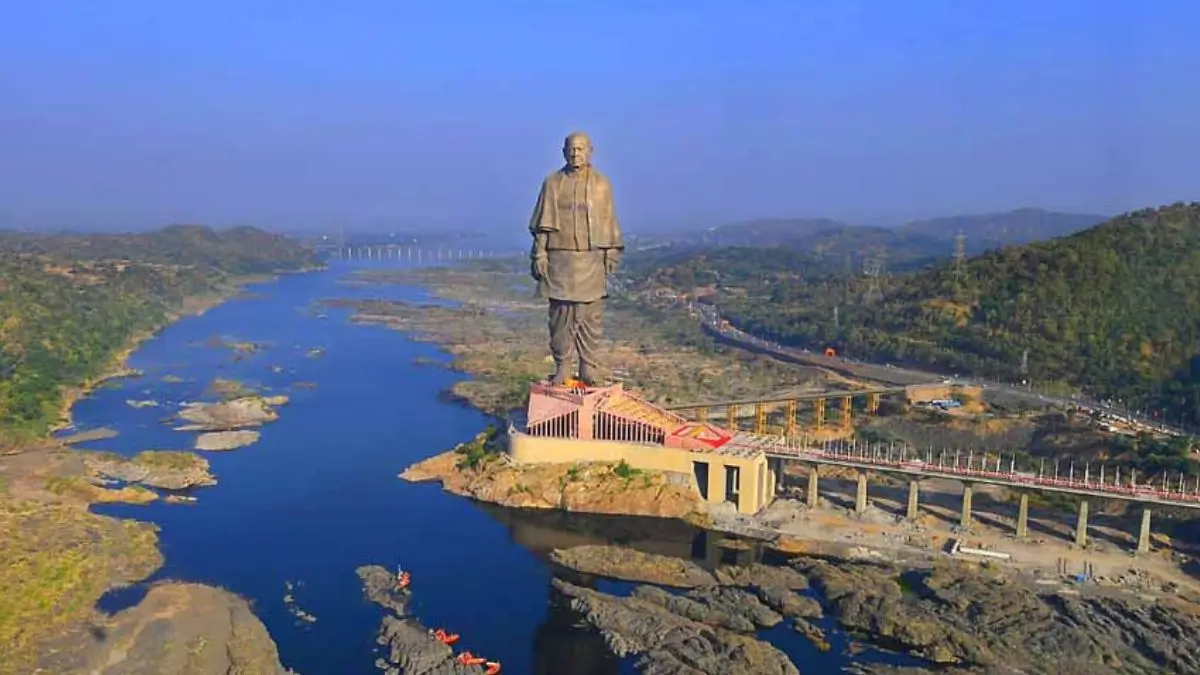
The Narmada River, which has an approximate length of 1,312 kilometres, it is the longest river in the state of Gujarat and it is one of the most holy west-flowing rivers in India. Despite starting in Amarkantak, Madhya Pradesh, the Narmada flows through Gujarat and is instrumental in its development through irrigation, drinking water supply, hydropower, etc. After passing through the famous Sardar Sarovar Dam, the river finally meets the Gulf of Khambhat.
Interestingly, the Narmada also serves as the traditional natural boundary of the North India and South India.
Which Is the Longest River of Gujarat?
The Narmada river is the longest river present in the Gujarat that runs about 1312 kilometers in total.
This river originates from the Amarkantak plateau in Madhya Pradesh and flows towards the western regions of India in Maharashtra and Gujarat before emptying itself into the Arabian Sea in the Gulf of Khambhat.
The Narmada river is special as it flows in the west direction through several rift valleys.
Key Facts About the Narmada River
- River Name: Narmada River
- Total Length: 1,312 km
- Origin: Amarkantak Plateau, Madhya Pradesh
- Mouth of River: Gulf of Khambhat, Arabian Sea
- Flow Direction: East to West
- States Covered By Narmada: Madhya Pradesh, Maharashtra, Gujarat
- Major Dam: Sardar Sarovar Dam
- Nickname: Lifeline of Gujarat & Madhya Pradesh
The Importance that the Narmada River Hold for the Gujarat
The Narmada River has played a major role in the development of Gujarat’s economy and ecology through irrigation and agricultural water supply and hydropower generation.
1. It Powers the Sardar Sarovar Dam
The construction of the Sardar Sarovar Dam across Narmada is one of the largest multipurpose projects of river valley in India.
This dam generates hydropower and irrigation, as well as contributes to flood control and establishment of dry regions like Kutch and Saurashtra.
2. It Provides Irrigation to Dry Areas
The extensive network of canals that has been created within the framework of the project established at the Sardar Sarovar Dam provides irrigation services for millions of hectares of farmland of the state.
3. It Delivers Drinking Water
The Narmada project is responsible for supplying treated drinking water to over 9000 villages and other towns of Gujarat, contributing to the stabilization of the water ecologists in the dry regions of the state.
4. Generation of Hydroelectric Power
The hydropower plants of the Sardar Sarovar Project produce thousands of megawatts of clean energy.
This source of the energy contributes to the development of industries and helps reduce reliance on non-renewable sources of energy.
5. Tourism and Economic Growth
The Narmada River hosts the Statue of Unity, the tallest statue in the world at 182 meters, which is a tribute to Sardar Vallabhbhai Patel.
The statue has turned into one of the major tourist attractions in India stimulating job creation and it bringing momentum to the economy of the local districts.
Why Does the Narmada River Divide North and South India?
The Narmada River is the natural boundary separating the North India from South India.
The river flows in between the Vindhya Mountain Range in the north and the Satpura Mountain Range in the south making up a geographical divide, which played an important role in the development of different cultures, languages, kingdoms and traditions over many centuries.
Important Tourist Spots on the Narmada River
Some of the famous tourist attractions of the Gujarat are situated on the banks of the Narmada River.
- Sardar Sarovar Dam
- The Statue of Unity
- The National Waterway
- Kevadiya tourism hub
- Eco-Tourism and River Front Development Activities
Through these projects, the river has emerged as an important tourist, infrastructural and sustainable development center.
Interesting Facts about the Narmada River
- The river is one of the few major Indian rivers flowing towards the western side.
- It is the fifth largest river in India according to its length.
- Unlike most of the Indian rivers, the Narmada River flows through the tectonic rift valley.
- It is regarded as one of the sacred rivers in Hinduism (Sapta Nadi).
- The Sardar Sarovar Project is one of the biggest multipurpose river development projects in India.
- The Statue of Unity is world’s tallest statue and it is located in the middle of the Narmada river on an island.






 Guava Capital of India: Which Place Is K...
 7 Most Beautiful Train Stations in the W...
 World Architecture Day 2026: 8 Clever Fe...