
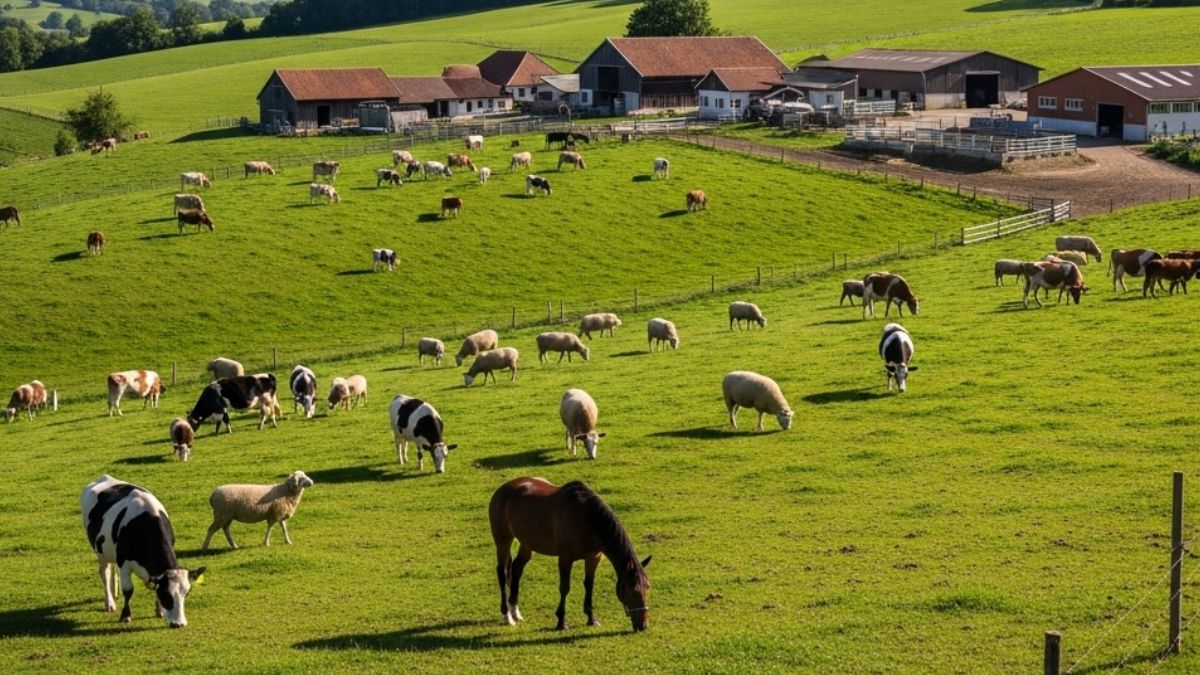
In a historic policy shift, the state of Maharashtra has become the first in India to grant agricultural status to livestock and poultry farming. This decision, approved by the Maharashtra Cabinet on July 11, 2025, recognizes the vital role of animal husbandry in the rural economy and aims to bring parity between crop cultivators and livestock farmers. The move is expected to benefit over 37 million livestock farmers, enhancing their access to subsidies, lower tariffs, and institutional credit.
Background
India’s agricultural policies have traditionally focused on crop production—grains, pulses, fruits, and vegetables—while livestock farming has been treated as a separate or “allied” activity. As a result, livestock farmers were often excluded from core benefits like agricultural credit, electricity subsidies, and tax exemptions. Maharashtra’s decision seeks to close this policy gap and provide institutional parity to farmers engaged in dairy, poultry, fisheries, and small ruminant farming.
Significance of the Move
Granting agricultural status to livestock farming brings with it a host of policy benefits. Livestock farms will now qualify for agricultural electricity tariffs, reducing high power costs that were earlier charged at commercial rates. They will also enjoy tax relief, credit eligibility, and solar equipment subsidies—incentives previously reserved for crop farmers. This shift marks a systemic recognition of animal husbandry as an integral pillar of agriculture.
Key Features and Benefits
- Lower Electricity Tariffs: Poultry sheds, fish ponds, and cattle shelters will now qualify for subsidised agricultural power.
- Tax Relief: Local levies and access taxes will now be calculated at agriculture rates, rather than commercial rates.
- Access to Agricultural Credit: Livestock farmers will become eligible for Kisan Credit Cards (KCC) and low-interest agricultural loans, including benefits under schemes like the Deshmukh Interest Relief Scheme.
- Subsidised Solar Equipment: Farmers can now install solar-powered infrastructure like pumps and sheds at subsidised rates.
Sector-Wise Impact
- Poultry Sector: Lower costs will help scale broiler units and hatcheries, boosting meat and egg production.
- Dairy Sector: Small and medium herd owners will benefit from cheaper utilities and easier access to finance.
- Sheep & Goat Farming: Critical for marginal farmers, these operations will become more viable under agricultural tariffs.
- Fisheries: Aquaculture will also benefit through easier access to subsidies and power.
Economic and Policy Impact
The government estimates an additional ₹7,080 crore in annual income from this policy, potentially transforming rural livelihoods. It also aligns with ICAR and NITI Aayog recommendations advocating scientific livestock development to ensure productivity, disease control, and resilience. Moreover, the move is expected to boost value chains for milk, meat, eggs, leather, wool, and processed goods.
Challenges Ahead
While widely welcomed, experts warn that effective implementation is key. Issues like land-use classification, zoning restrictions, and bureaucratic hurdles must be resolved for the policy to yield lasting results. Monitoring and capacity building will also be critical to ensure the benefits reach smallholder farmers.


 Nitish Kumar to Take Rajya Sabha Oath on...
 Ashwini Bhide Becomes First Woman BMC Co...
 Lok Sabha Passed Resolution For Amravati...











