
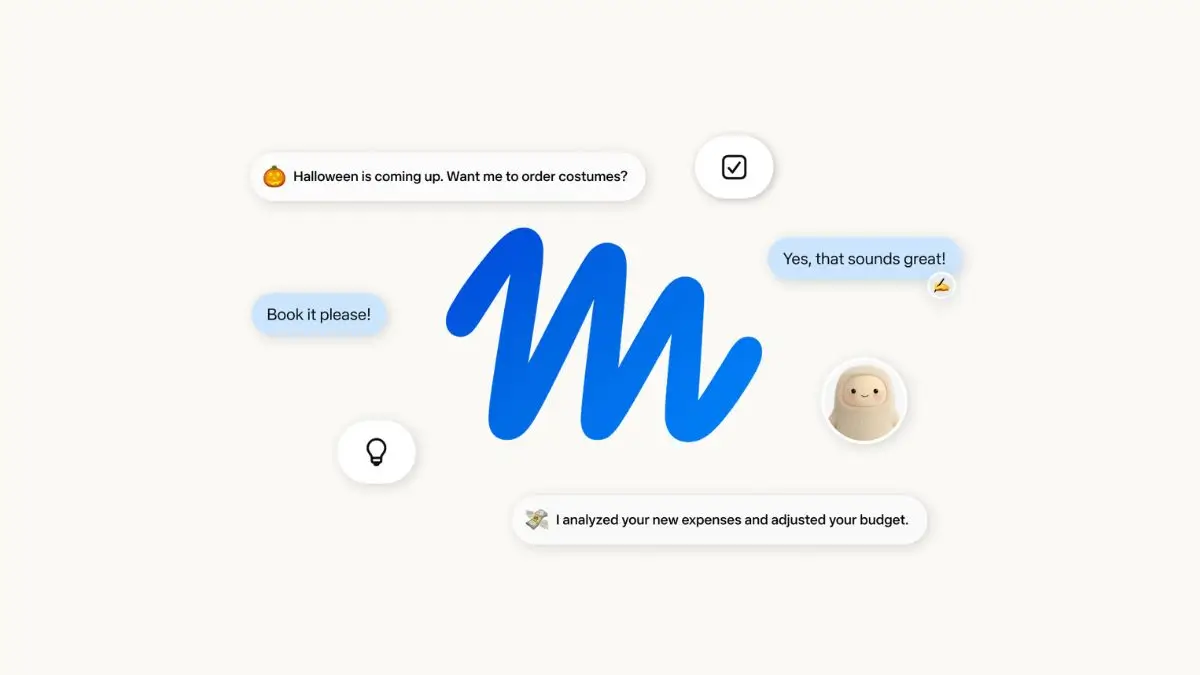
Meta has made a huge leap forward from typical chatbots to Muse, which is a personal AI that is capable of completing tasks for the users. Muse does not just generate responses or answer the users’ questions but is able to organise trips, send emails, shop online, complete forms, schedule plans, and maybe even make payments.
The release underscores the move of Meta towards agentic AI where a user sets the goal for an AI and it performs several actions independently. At the same time, because Muse is supposed to work with personal services, privacy and security become crucial aspects for this product.
What Is Meta Muse?
Meta Muse is a personal AI agent created to serve more like a digital assistant than a typical chatbot. Muse allows a user to indicate what should be done without giving all the instructions of how it should be done.
For instance, a user may ask Muse to plan a trip. Then Muse will independently go through different tasks to help organise this trip. Moreover, Muse can do things like,
- Sending emails
- Filling out online forms
- Shopping
- Selling something
- Organising plans and schedules
How Does Meta’s Muse Work?
The main distinction of Muse from a regular chatbot lies in its ability to work independently.
While a regular AI assistant tends either to provide some information or wait until the user gives another command, an AI agent can divide a broader goal into smaller actions and complete these actions by means of using various digital technologies.
According to Meta, Muse will be able to work with the help of its own virtual machine named Muse Secure VM. This machine will work as a special computing environment that has its own browser and computing resources.
This is crucial because any agent that can do something requires an environment where it will be possible to monitor its actions.
Privacy and Security in the Context of the Launch of Muse
One of the aspects that is especially relevant for the launch of Muse is privacy. Providing an AI with access to emails, calendars, shopping accounts or payment services presents another set of risks compared to the chatbot that can only generate text.
According to Meta, it is up to the user to grant the necessary permissions and revoke them, while the company has implemented certain security mechanisms to watch the agent and minimize the likelihood of any dangerous or unexpected actions.
Among the problems identified in the process of conducting security research by Meta are prompt injection, tool usage, long running operations, and unintended behavior of the agent.
It is important to mention that any mistake of the AI can have real-life consequences. While an error of the chatbot could be corrected, an autonomous agent could potentially send an incorrect email, make an unnecessary purchase, or arrange inappropriate travel booking.
Why the Muse Image Controversy is Important
The introduction of Muse AI agent follows closely behind an incident involving the Meta company and the Muse Image software.
Muse Image was presented as the image generation model from Meta Superintelligence Labs. One of the functionalities allowed users to tag public Instagram accounts and generate AI content based on images from those accounts.
This functionality was criticized because anyone with a public Instagram account could be tagged unless they declined participation. Meta eventually dropped the functionality and expressed regret, stating that it had “missed the mark.”
In light of this background, it becomes very important for Meta to stress permission, security, and user controls for the new Muse AI agent.
Muse and the Rise of Agentic AI
The significance of Muse as a whole, on the other hand, is in the move from generative AI towards agentic AI.
While the former type creates content like text, images, code or summaries based on the prompt, the latter is meant to accept a task, evaluate the necessary actions and do several actions in order to accomplish it.
For instance, instead of asking an AI for advice on organising a holiday, one could potentially ask an agent to do everything from the research up until the bookings themselves within reasonable limits.
It would certainly make AI much more useful in the everyday digital business, although there would be a lot of emphasis on security, permissions and accountability.
Meta Muse and AI Competition With Apple
One should pay attention to the time of release of Meta Muse since it was published approximately in the same period when Apple was preparing its event.
Apple had already demonstrated the capabilities of the next-generation Siri at the WWDC 2026 event back in June in the form of Apple Intelligence, which included the ability to understand personal context and on-screen activity.








 Dussehra 2026: Top 30 Most Important GK ...
 Dussehra and UNESCO: Ramlila, Durga Puja...
 Mysuru Dasara 2026: History, Jamboo Sava...










