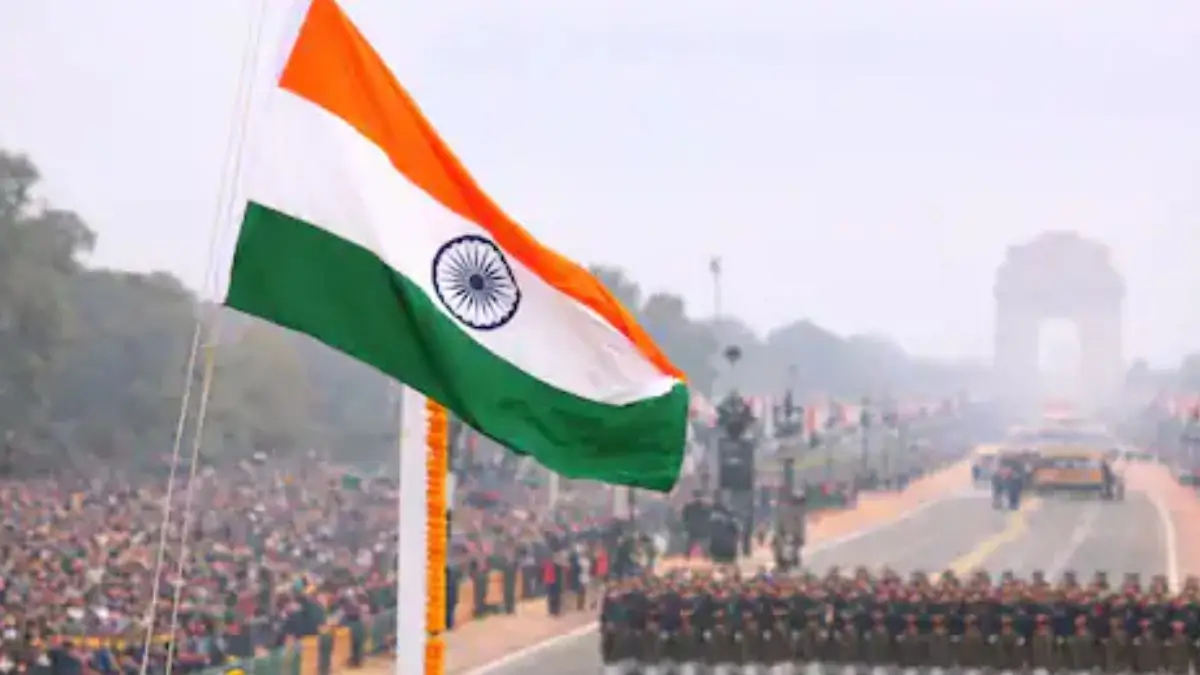
The National Flag Day in 2026 will observed on July 22 as a way to observe one of the major milestones in history of India regarding independence, which is the official acceptance of the Tiranga by the members of the Constituent Assembly. The tricolor was accepted for the role of National Flag just before India gained independence.
It is not merely recognized as a national symbol, but the Indian National Flag is also symbolic of the sacrifices made by freedom fighters, principles found in the Constitution of India, and aspirations of over one billion people. National Flag Day serves to remind people about the need to respect the Tiranga along with its values.
What is the Importance of National Flag Day?
Celebration of National Flag Day takes place every year on July 22 to commemorate the formal acceptance of the national flag of India by the Constituent Assembly in 1947. This event signifies the Tiranga as an important emblem of India’s independence and sovereignty.
Moreover, the day is also a mark of respect for the freedom fighters who marched, protested, and even sacrificed their lives amidst the tricolour in their fight against the British Raj.
Educational institutions, public sector offices, and various organizations conduct many awareness activities like themed-events, discussions, and so on regarding the importance of the National Flag on this day.
National Flag Day 2026: Date
National Flag Day in the year 2026 will be celebrated on Wednesday, July 22, 2026.
The date is symbolic of the historical decision made by the Constituent Assembly on July 22, 1947, which involved the adoption of the current Indian National Flag where the Ashoka chakra replaced the wheel (Charkha).
Less than a month later, on August 15, 1947, the Tiranga was raised as an emblem of independent India.
The History of National Flag Day
The journey of India’s National Flag depicts the tireless struggle of the people for independence. Many different forms of the flag have been created throughout the years before the present design was adopted. Statement about the first time.
Initial Phase of the National Flag of India
- 1904 to 1906: Sister Nivedita made the first national flag with the image of a lotus and a Vajra.
- 1906: Kolkata Flag was hosted at Parsee Bagan Square marking the start of the tri-color concept.
- 1907: Madam Bhikaji Cama unfurled the first version of the national flag of India in Stuttgart, Germany- marking the first time the Indian flag is seen in a foreign land.
- 1917: The Home Rule Movement Flag, associated with Annie Besant and Bal Gangadhar Tilak, marked India’s fight for self-rule.
- 1921: Pingali Venkayya made a new version of the tri-color flag modified by Mahatma Gandhi who added the white color and Charkha.
- 1931: Indian National Congress made the tri-color flag with saffron, white, and green colors, which became the basis of the present-day flag.
- On July 22, 1947: The Constituent Assembly adopted the current National Flag.
- On August 15, 1947: The first time Tiranga was hoisted as an Independent India for first time.
The Role of the National Flag in the Fight for India’s Freedom
The National Flag has been crucial to India’s independence struggle, becoming a major symbol of the fight against the British Empire.
Unity of the Nation
The Tiranga linked many people belonging to different religions, languages, areas, and communities for a common aim of Swaraj. It unified millions who were fighting for freedom.
Motivating the Movement for Freedom
The National Flag was held aloft by freedom fighters during rallies, demonstrations, and gatherings. Showing the National Flag became a indicates of having guts and bravery against the colonial rule.
Indication of Resistance
The act of hoisting the National Flag was often interpreted as defiance towards the British government. Many patriots were imprisoned, beaten, and even killed for protecting or hoisting the Flag.
During the Swadeshi Movement
The flag encouraged Indians to not purchase foreign goods and use local goods, thus following the principles of self-sufficiency and economic independence.
In the Dandi March and Civil Disobedience Movement
Numerous volunteers carried the Tricolor flag during Mahatma Gandhi’s Salt March in 1930, making it an everlasting symbol of non violent protest.
During the Quit India Movement
In 1942, the Teeranga became the flag of the Quit India Movement, which inspired countless individuals to call for the end of British rule in India despite the strictest of oppression.
International Recognition
Leaders like Madame Bhikaji Cama introduced the Indian flag to international audience.
Importance of National Flag Day 2026
National Flag Day is not just a historical event but also serves as a means to establish the principles that govern the present-day India.
This day marks the signing of the National Flag and honors the great leaders who fought for India’s freedom.
It reminds the people that their flag embodies the value of sovereignty, unity, democratic order, and constitutional values.
National Flag Day also makes it significant for the young people of India to know the history of National Flag and learn about the significance of its color and Ashoka Chakra.
By honoring this day, the citizens demonstrate their faith in justice, freedom, equality, brotherhood, and unity.
Understanding the Indian National Flag
Every part of the Tiranga has deep symbolic meanings.
Saffron color
Saffron color symbolizes bravery, sacrifice, strength, and selfless help to the nation.
White color
The white color stands for truth, honesty, peace, and harmony amongst people.
Green color
The green color represents prosperity, development, fertility, and the relationship between India and nature.
Ashoka Chakra
Ashoka Chakra, which is located in the center of the national flag, contains 24 spokes in navy blue color.
Flag Code of India
The Flag Code of India specifies proper etiquette for the use of the National Flag. This Flag Code was first introduced on 26th January 2002. This Flag Code has been modified in the years 2021 and 2022 to give more scope for flexibility without compromising the honour given to the Tiranga.
Here are some main clauses related to,
- The National Flag shall observe length-to-breadth ratio of 3:2.
- The National Flag consists of equal three bands – India saffron, white and India green.
- The Ashoka Chakra with 24 spokes is set in the middle of the white band.
- While hoisting the flag the saffron color should be on top.
- When the Flag is displayed in the vertical position, the saffron will be closer to the left side of an observer.
- The National Flag should occupy the top position compared to other flags.
- As per the amendment’s recent amendment in 2022, the Flag can be flown in the day as well as night positively.
- The Flag made with khadi, cotton, or wool, or silk, polyester, or the machine-made fabric is accepted.
- The National Flag should not touch the ground, floor, or water and be dragged from the vehicle.
- It cannot be used as an advertisement for business purposes.
- The Flag should not be used in clothing, tablecloths, or curtains below the waist.
Interesting Details About the National Flag of India
- On 22nd July, 1947, the Tiranga was officially adopted before India became independent.
- The flag was designed by Pingali Venkayya which later transformed into today’s Indian National Flag.
- In the final version approved by Constitutional Assembly, the Ashoka Chakra was included instead of Charkha.
- At 15 August, 1947, the national flag was hoisted for the first time as the flag of an independent country.
- Through the Har Ghar Tiranga campaign, lakhs of Indians every year unfurl the National Flag and celebrate Independence Day.








 International Day for Disaster Risk Redu...
 National Human Rights Commission to Mark...
 World Arthritis Day 2026: Date, Theme, H...