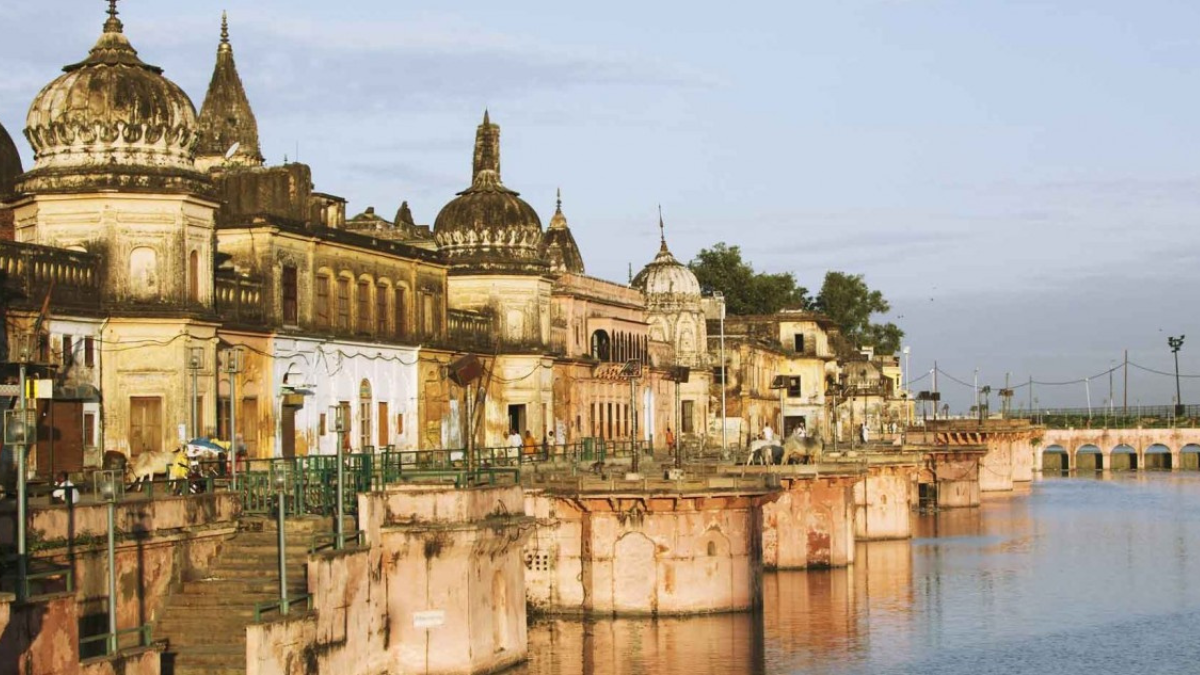
Ayodhya is one of the oldest and most sacred cities in India, known for its deep connection to history, religion and culture. It holds great importance in Hinduism, Buddhism and Jainism. The city is often mentioned in ancient scriptures and has been a center of devotion and tradition for centuries. Over time, it has had different names that reflect its rich and diverse past.
Old Name of Ayodhya
The old name of Ayodhya was Saket. This name is found in early writings of Buddhism and Jainism. At that time, Saket was not only a spiritual spot but also a busy town known for its culture and trade. Over the years, the name Saket slowly faded and Ayodhya became more popular.
Why was the Name Saket Used?
In old religious books, Saket was described as a peaceful place where people came to learn and worship. It was a well-known center for monks, travelers and scholars. As time passed and Hindu texts like the Ramayana became widely read, the name Ayodhya, meaning ”the city that cannot by defeated,” became more common.
When Did it Become Ayodhya?
The change from Saket to Ayodhya happened gradually. As Hindu culture and the Ramayana became stronger, the name Ayodhya was used more often. During the rule of the Gupta kings and later in the Bhakti movement, Ayodhya became known as a holy land connected to Lord Rama. After India’s independence, the city officially kept the name Ayodhya.
Why is the Name Ayodhya So Important?
The name Ayodhya carries deep meaning for millions of people. It is one of Hinduism’s seven holy cities and a top place for pilgrimage. The recent building of the Ram Mandir has made Ayodhya even more important in India’s culture and religion today.
7 Quick Facts About Ayodhya’s Old Name
- Saket was a Buddhist Name: Ancient Buddhist texts called the city Saket, showing its early religious importance.
- Ayodhya means ”No War”: The word comes from Sanskrit and means ”a place where no war happens.”
- Famous in the Ramayana: Ayodhya is shown in the Ramayana at the home of Lord Rama and his father King Dasharatha.
- Center for Learning: Even before it became a spiritual city, Saket was known for knowledge, trade and art.
- Found in Jain and Buddhist Books: Not just Hindu texts – Jain and Buddhist scriptures also talked about Saket, proving its mixed cultural roots.
- Ram Mandir Boosted Its Importance: The Ram Temple, completed in 2024, has made Ayodhya a major focus of Indian spirituality again.
- Modern Yet Historic: Today, Ayodhya is growing as a modern city, but it still keeps its ancient identity alive.


 Weekly Current Affairs One Liners (30th ...
 Who is known as the Father of Mobile Pho...
 Which is the Highest Airport in the Worl...