
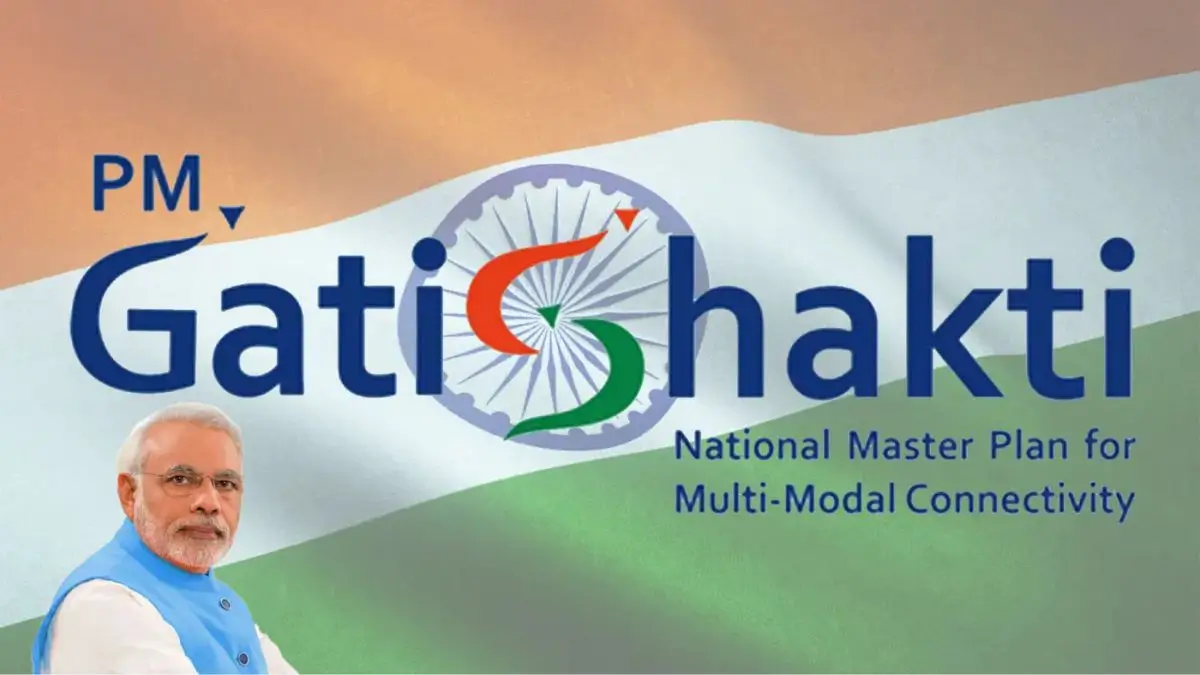
PM GatiShakti National Master Plan (PMGS-NMP) completed 5 years on October 13th 2026. The plan was launched in 2021 and integrates data related to infrastructure in ministries, states, and union territories on a common Geographic Information System (GIS)-based platform. The program includes 58 central ministries and departments as well as 36 states and union territories. Through synchronization of roadways, railways, ports, airways, waterways, and logistics, the program seeks to enhance connectivity and streamline project implementation.
What Is PM GatiShakti National Master Plan?
PM GatiShakti is a comprehensive framework to plan integrated multi-modal infrastructure in the nation. The project was initiated by Prime Minister Narendra Modi on October 13, 2021, to increase coordination among the various ministries dealing with infrastructure and government departments.
The National Master Plan involves the integration of geospatial data, infrastructure network, economic zones, and other data sets into one digital platform. This helps in analyzing all the layers of data to find out connectivity issues, evaluate the routes, and coordinate infrastructure projects in various sectors.
This project aligns with the larger objective of Viksit Bharat.
Objectives and Seven Infrastructure Engines of PM GatiShakti
Through its plan, PM GatiShakti focuses on seven essential infrastructure engines that work collectively to achieve effective infrastructure development. The infrastructure development planning strategy attempts to enhance multimodal connectivity as well as efficiency during the implementation of the projects.
The seven infrastructure engines includes,
1. Roads: National highways as well as other road networks.
2. Railways: Railway infrastructure and connectivity.
3. Ports: Port infrastructure and connectivity by sea.
4. Waterways: Inland waterways transport networks.
5. Airports: Aviation infrastructure and it’s connectivity.
6. Mass Transport: Public transport infrastructure.
7. Logistics Infrastructure: Storage, freight movement, and distribution infrastructure.
The plan is guided by six fundamental principles namely; integration, multimodality, last mile connectivity, rapid land acquisition, minimal clearances, and ecology.
Institutional Structure for PM GatiShakti
The institutional structure for PM GatiShakti includes a three-layered system which helps in ensuring coordination, technical assessment and monitoring of the process.
1. Empowered Group of Secretaries (EGoS)
EGoS is headed by the Cabinet Secretary. It helps in implementation of PM GatiShakti and looks into the evaluation and approval of changes to the National Master Plan.
2. Network Planning Group (NPG)
Network Planning Group involves the heads of network planning divisions belonging to the different infrastructure ministries/departments. It evaluates the project proposals for better integrated planning, connectivity and optimization in the infrastructure sectors.
As on August 11, 2026, 396 infrastructure projects worth approximately ₹18.66 lakh crore have been evaluated by NPG till now. Out of the 396 projects, 256 projects have been sanctioned and 198 projects are at implementation stage.
3. Technical Support Unit (TSU)
Technical Support Unit involves domain experts and subject matter experts who help in technical evaluation. It helps the Logistics Division which is acting as PM GatiShakti Secretariat.
PM GatiShakti and Logistics Digitization
PM GatiShakti operates in conjunction with digital interventions that help to enhance the exchange of information within the logistics industry in India.
Unified Logistics Interface Platform (ULIP): ULIP facilitates integration of government logistics systems via API.
By July 2026, ULIP integrates 46 government logistics systems belonging to 12 Central Ministries via 142 APIs.
Gati Shakti Vishwavidyalaya: Infrastructure Training and Research
Gati Shakti Vishwavidyalaya (GSV), founded in 2022, is a university that offers education and training in areas of transport and logistics.
The university contributes to the implementation of PM GatiShakti and National Logistics Policy, 2022 through courses, executive trainings, and research. The university, as per the information provided in the PIB, had trained more than 2.4 lakh officers till July 2026 through course on PM GatiShakti.
Some of its fields of expertise include transport planning, maritime transport, bridge and tunnel engineering, and defence logistics.





 President Droupadi Murmu Appoints Six Go...
 Jantar Mantar Denotified as Protest Site...
 Supreme Court Constitutes Standing Commi...