
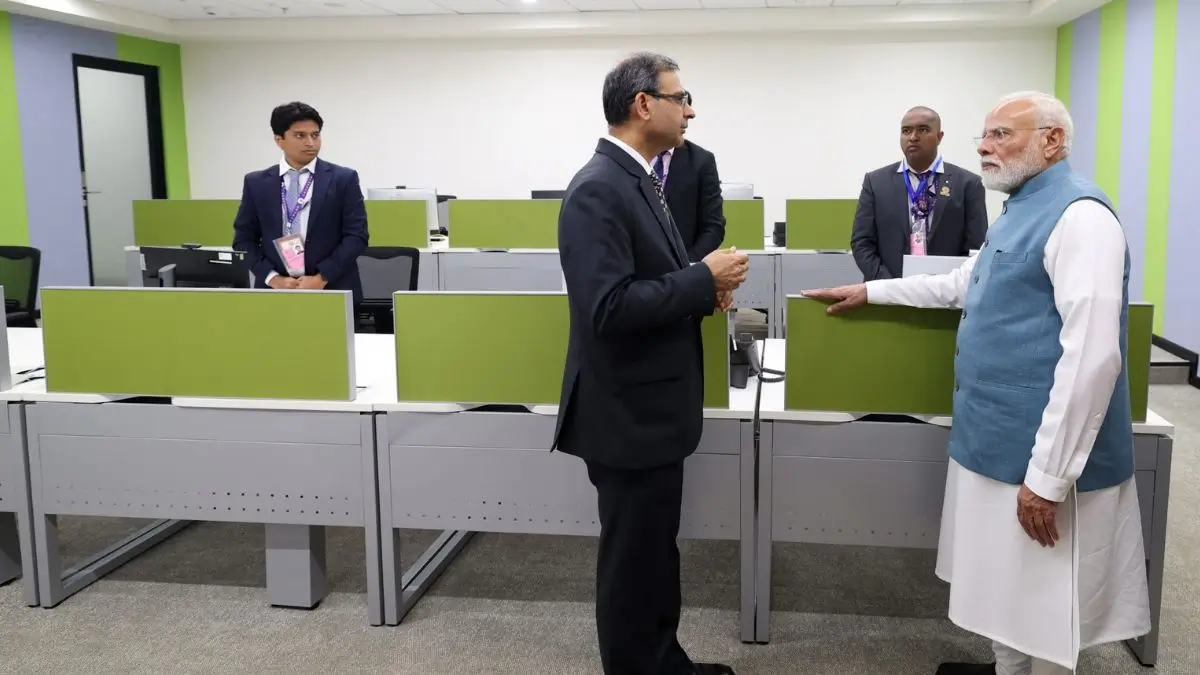
PM Narendra Modi launched RBI Data Centre and Cyber Security Training Institute in Bhubaneswar, Odisha on 25 October 2026. Both these institutes are meant for improving India’s digital financial infrastructure as well as critical payment systems along with specialising in cybersecurity. The data centre will contain mission-critical applications such as RTGS (Real Time Gross Settlement) and NEFT (National Electronic Funds Transfer). The cyber security training institute will have a special emphasis on cyber security, artificial intelligence (AI), and other latest technologies.
Functions and Significance of the RBI Data Centre
The new data center will serve the RBI in terms of its crucial technological infrastructure that includes various important payment systems for performing financial transactions in India.
Main functions of the data center are,
- Facilitating digital payments: Infrastructure support for the payment systems like RTGS and NEFT.
- Increasing reliability: Support for the reliability and continuity of essential banking services.
- Better data management: Infrastructure support for the management and processing of vital financial system data.
- Resilience: Infrastructure support to increase resilience against disruptions.
Functions of RBI Data Centre
The new data center would help in providing RBI’s technological infrastructure that will be required for supporting vital technological infrastructure of India’s payment systems, which can be used for facilitating financial transactions in India.
The primary functions of the RBI Data Center includes,
- Support to the digital payments: Infrastructure for the India’s payment systems like RTGS and NEFT.
- Reliability: Continuity and reliability of essential banking services.
- Data management: Handling critical data in the Indian financial system.
- Resilience: Supporting India’s technological infrastructure against disruption and risk factors.
The data center comes under the broader initiative to improve the efficiency, reliability, and security of India’s financial system with the growth of digital banking.
Cybersecurity Training Institute: Why It is important?
The Cybersecurity Training Institute will have the capability to tackle new threats to India’s financial infrastructure. The areas of training will include cybersecurity, AI, and emerging technologies.
The importance of the Cybersecurity Training Initiative lies in the increasing dependency of financial institutions on digital systems that are interconnected. Such cyber attacks can disrupt payment systems and threaten the sensitive data and create distrust of digital banking systems among people.
The Cybersecurity Training Institute will enhance professional skills of individuals and help RBI in their mission to develop technological capabilities in the financial sector.
Key Cybersecurity Priorities
- Threat detection: Identifying the any suspicious activities and cybersecurity threats.
- Incident Response: Enhancing the capacity to respond to the cybersecurity threats.
- Emerging Rechnologies: Gaining skills in AI and other digital technologies.
- Financial system resilience: Strengthening the capability of providing essential banking services during the time of disruption.
Differences between RTGS and NEFT
The new data centre is going to contain both these payment systems. The key differences in them are essential from the point of view of banking and competitive exams.
| Feature | RTGS | NEFT |
| Full Form | Real Time Gross Settlement | National Electronic Funds Transfer |
| Settlement method | On transactional basis in real time | In batches after fixed intervals |
| Type of settlement | Gross settlement | Net deferred settlement |
| Minimum limit of transaction | ₹2 lakh | None specified by RBI |
| Maximum limit of transaction | None specified by RBI | None specified by RBI |
| Timing | 24 hours daily | 24 hours daily |
| Main usage | Large value payments needing real time settlement | Electronic fund transfer for any value |
Both RTGS and NEFT are operated by the RBI and constitute an integral part of the electronic payments system in India. Banks may set their own rules for specific modes.






 Kaizad Bharucha to Exit HDFC Bank on Dec...
 SCL Das Appointed Chairman of Financial ...
 RBI Approves Merger of Emirates NBD’s ...