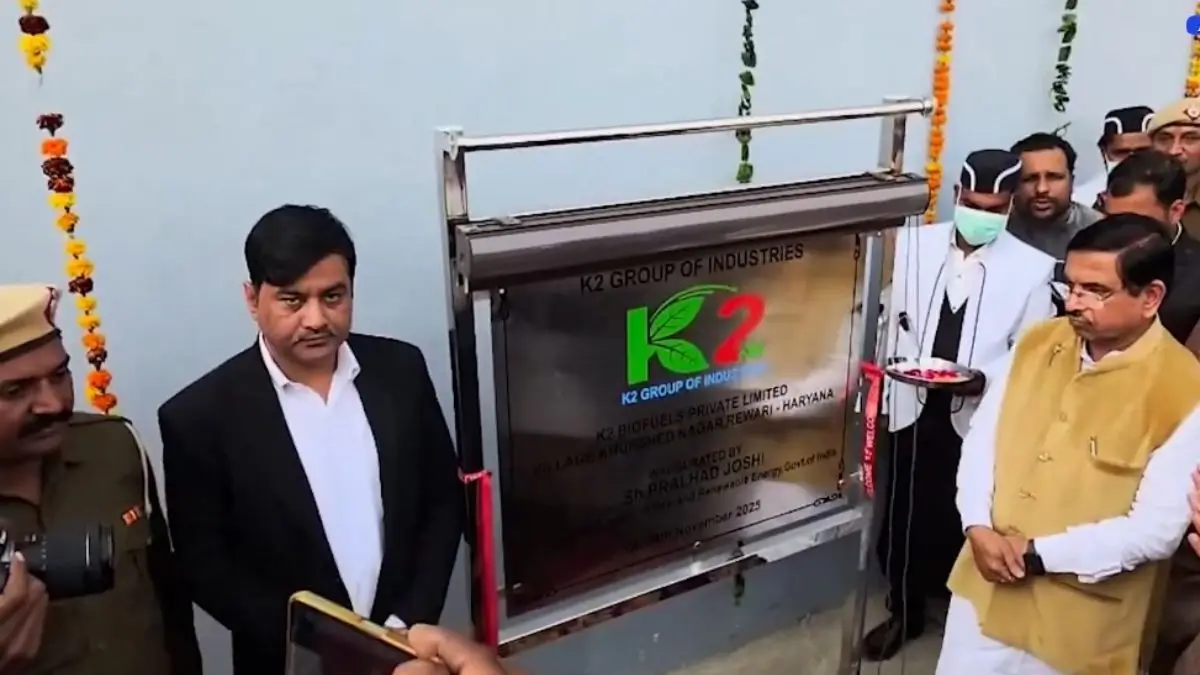
In a major step towards sustainable energy and environmental conservation, Union Minister of New and Renewable Energy, Pralhad Joshi, inaugurated a biomass pellet plant and laid the foundation stone for a bio-ethanol plant in Rewari district, Haryana. These twin developments mark a leap forward in India’s push to achieve its Net Zero 2070 target and realise the goals of the E20 Mission. The plants aim to utilise agricultural residue—once seen as waste—into a valuable clean energy resource, offering dual benefits of environmental protection and rural income generation.
Pellet Plant: Turning Stubble into Power
The newly inaugurated pellet plant in Rewari will produce 240 tonnes of biomass pellets per day, using crop residue such as,
- Paddy straw
- Mustard straw
- Cotton stalks
These pellets will be used for co-firing in thermal power plants, replacing coal and helping reduce carbon emissions significantly. This also aligns with the mandatory co-firing policy by the Government of India for thermal plants to adopt biomass and municipal solid waste (MSW) as part of their fuel mix.
Key Benefits
- Reduces stubble burning and air pollution
- Generates rural employment
- Creates income for farmers from crop residue
- Supports India’s renewable energy mix
Bio-Ethanol Plant: Fueling India’s E20 Mission
Alongside the pellet facility, the foundation stone was laid for the K2 Bio-Ethanol plant, which will convert similar agricultural residues into bio-ethanol, a cleaner alternative fuel.
This supports India’s E20 Mission, which targets blending 20% ethanol in petrol by 2025. Ethanol from crop waste reduces dependency on fossil fuels and cuts emissions from the transport sector.
Highlights of the Bio-Ethanol Plant,
- Converts stubble into ethanol for fuel blending
- Helps India reduce oil imports and carbon footprint
- Promotes clean rural industries
- Adds to farmer income while solving environmental challenges
Government’s Policy Support and Green Mandates
Speaking at the event, Minister Pralhad Joshi underscored that earlier crop residue was seen as a burden—leading to stubble burning and toxic air. Now, under proactive policies, this residue is being turned into biofuels and energy pellets, generating both economic and ecological value.
He also mentioned,
- Mandatory biomass co-firing in thermal power plants under the new energy policy
- Government commitment to rural energy infrastructure in Haryana and beyond
- India’s dual focus on infrastructure growth and environmental protection
Haryana’s Clean Energy Landscape Expands
This initiative is a part of Haryana’s broader transformation towards green infrastructure and sustainable energy sources. With biofuel and pellet plants being set up in agro-rich regions like Rewari, the state is poised to become a hub for,
- Renewable fuel innovation
- Decentralised energy generation
- Rural industrial growth
The project aligns with India’s vision to balance development with sustainability and empower farmers as energy providers.
Static Facts
- Location: Rewari, Haryana
- Minister Involved: Pralhad Joshi (Union Minister of New and Renewable Energy)
- Pellet Plant Output: 240 tonnes/day
- Raw Material: Paddy straw, mustard straw, cotton stalks
- End Use: Thermal power plant co-firing
- Bio-Ethanol Plant: Foundation stone laid for K2 facility
- Target Mission: E20 (20% ethanol blending in petrol by 2025)


 Gujarat Becomes Second State To Passing ...
 Rekha Gupta Unveils Delhi’s Green Budget...
 GHADC Amendment 2026 Explained: Only ST ...