
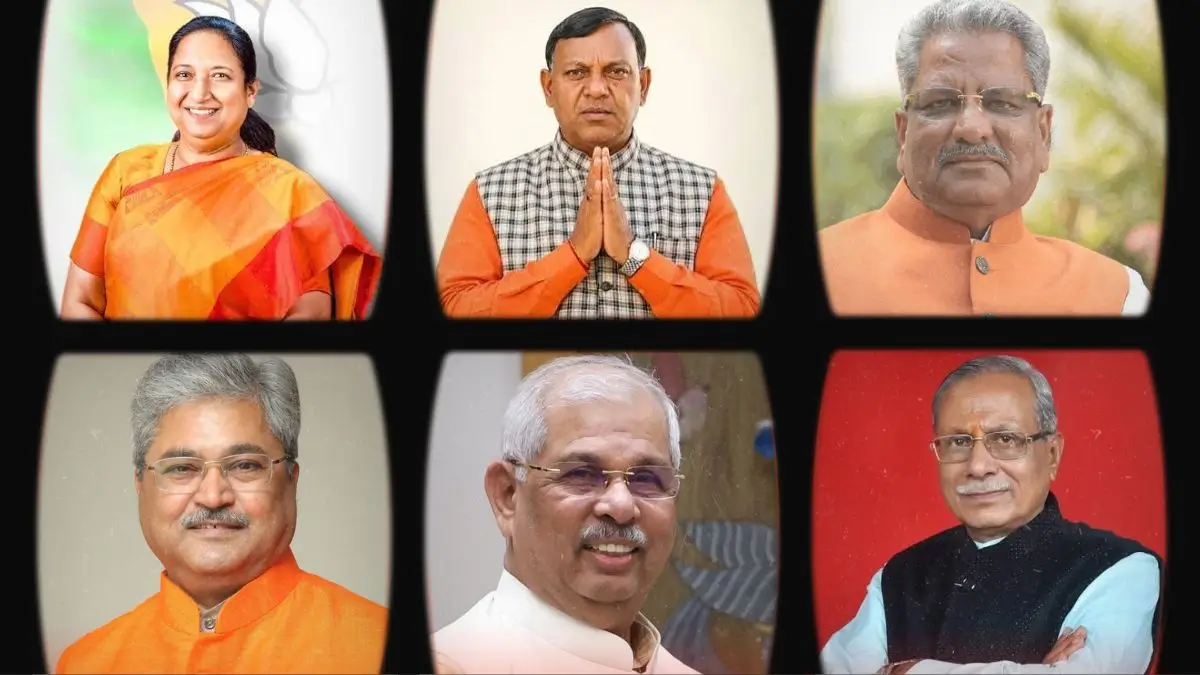
Honorable President of India Droupadi Murmu announced a reshuffle of the State Governors, which includes a total of six governors. In this new order, a total of four new appointments have been made in the posts of governors of Odisha, Karnataka, Uttarakhand, and Sikkim; two governors are being shifted to other states. Om Prakash Mathur, who was the governor of Sikkim, has been appointed as the governor of Kerala, and Rajendra Vishwanath Arlekar, who is the governor of Kerala, has been appointed as the governor of Tamil Nadu.
List of Appointments of Governors Made in October 2026
The official press release from the President of India was issued on October 12th 2026.
A total of four persons have been given new appointments as governors, and two incumbent governors have been appointed for the other states. The appointments will be effective upon taking charge.
| State | Governor Appointed | Nature of Appointment |
| Odisha | Braj Mohan Ram | New appointment |
| Karnataka | Dr Sudha Yadav | New appointment |
| Uttarakhand | Dr Dhal Singh Bisen | New appointment |
| Sikkim | Dushyant Gautam | New appointment |
| Keralam | Om Prakash Mathur | Transferred from Sikkim |
| Tamil Nadu | Rajendra Vishwanath Arlekar | Appointed after serving as Governor of Kerala |
This list involves six states – Odisha, Karnataka, Uttarakhand, Sikkim, Kerala, and Tamil Nadu. The communiqué by the President of India is the main reference for this list.
Constitutional Provisions Related to State Governors
The office of the Governor is established under Part VI of the Constitution of India, which deals with the state governments.
The Governor is the constitutional head of a state and performs executive, legislative and other functions prescribed by the Constitution.
| Article No. | Constitutional Provision |
| Article 153 | Provides for a Governor for the each state; one person may serve as Governor of two or more states. |
| Article 154 | Vests the executive power of the state in the Governor, to be exercised in accordance with the Constitution. |
| Article 155 | Provides that the Governor is appointed by the President by warrant under the President’s hand and seal. |
| Article 156 | Deals with the Governor’s term of office and the President’s pleasure. |
| Article 157 | Specifies the qualifications for appointment as Governor. |
| Article 158 | Covers the conditions of the Governor’s office. |
| Article 159 | Prescribes the oath or affirmation taken by the Governor. |
| Article 161 | Gives the Governor powers to grant pardons, reprieves, respites, remissions and certain other forms of clemency within the scope specified by the Constitution. |
| Article 163 | Provides for a Council of Ministers, headed by the Chief Minister, to aid and advise the Governor, subject to constitutional provisions. |
| Article 200 | Deals with the Governor’s options when a state legislature presents a Bill for assent. |
Qualifications and Tenure of a Governor
According to Article 157, the qualifications for becoming a Governor include being an Indian citizen who has attained the age of 35 years.
As per Article 156, the tenure of the Governor is for a period of five years from the date on which the Governor assumes office, provided that the Governor is appointed during the pleasure of the President.
In case of expiry of the five-year period, the Governor remains in office until the successor assumes office.
The Governor is appointed by the President of India and not elected either by the citizens or the legislature of the state.
The constitution allows the same person to act as the Governor of two states.






 Jantar Mantar Denotified as Protest Site...
 Supreme Court Constitutes Standing Commi...
 Aadhaar Name Change Rules Revised: Docum...