A rare and visually striking frog species from India’s Western Ghats is facing a serious conservation crisis. A recent scientific study suggests that seven galaxy frogs may have died after repeated disturbances caused by wildlife photographers. The incident has renewed concerns about unethical photo tourism and its growing impact on fragile ecosystems, especially those hosting rare and endemic species.
Why in the News?
A study published in December 2025 reports that seven rare galaxy frogs disappeared, likely dying after photographers repeatedly disturbed their habitat in Kerala’s Western Ghats.
About the Galaxy Frog Species
- The frog is rare, endemic, and highly sensitive to disturbance.
- Galaxy frog’s scientific name is Melanobatrachus indicus.
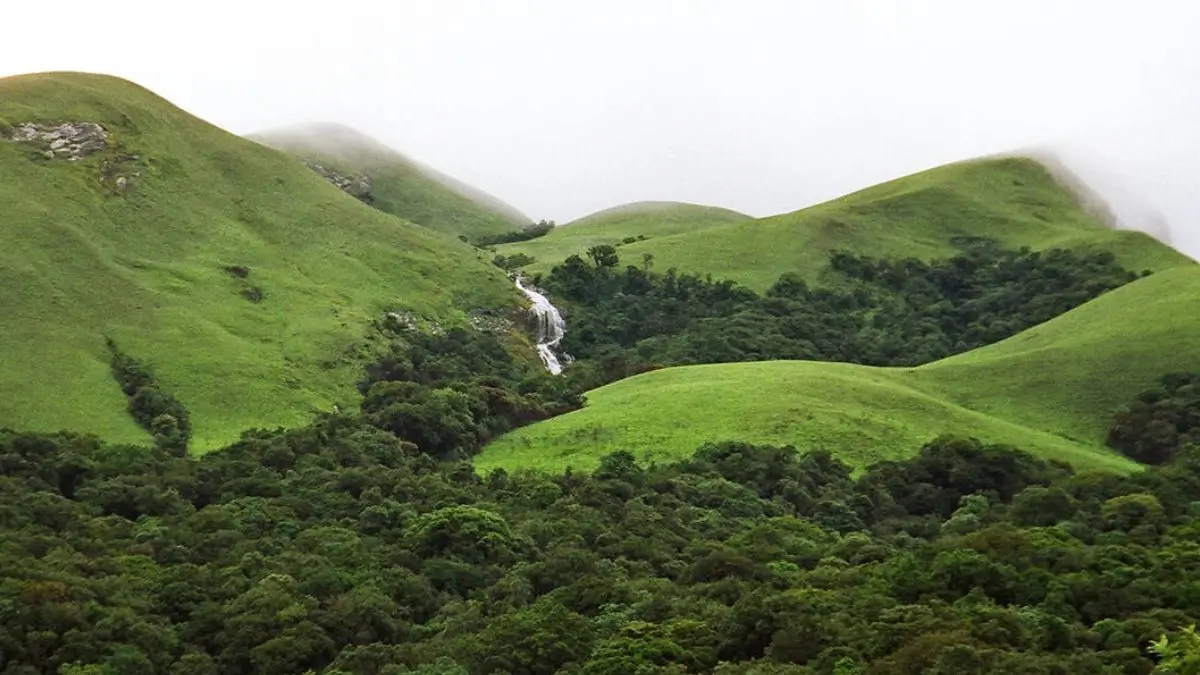
- It is endemic to the Western Ghats, mainly in Kerala.
- The frog lives under rotten logs in cool, moist forest patches.
- It is very small (2-3.5 cm) and does not produce mating calls.
- The species is listed as Vulnerable by the International Union for Conservation of Nature.
What the Study Found
- Researchers linked the frogs disappearance to human disturbance.
- Seven galaxy frogs were documented at one site in 2020.
- During COVID restrictions, photographers accessed the location repeatedly.
- Logs were overturned, vegetation trampled, and frogs handled.
- Frogs were exposed to strong camera flashes for long durations.
- When researchers returned in 2021 and 2022, the frogs had vanished.
Role of Photo Tourism
- Unregulated photography emerged as a new conservation threat.
- Photographers searched aggressively for rare frog images.
- Frogs were moved to artificial backdrops for better photos.
- Handling with bare hands risked dehydration and skin damage.
- Human presence altered temperature and humidity conditions.
- These disturbances likely affected feeding and breeding success.
Why Habitat Disturbance Is Dangerous
- Galaxy frogs need extremely stable microhabitats.
- Frogs depend on precise temperature and moisture levels.
- Turning logs exposes the underside to heat and dryness.
- Frogs breathe through moist skin, which dries under flash heat.
- Stress and habitat loss can force frogs to abandon safe sites.
- Pathogens may also transfer from humans to amphibians.
Need for Regulation and Ethical Standards
- Experts stress stronger rules for wildlife photography.
- Restrict handling, chasing, and capturing wild animals.
- Limit use of high-intensity lights and camera flashes.
- Avoid altering microhabitats like logs, moss, or soil.
- Train guides and photographers in ethical practices.
- Rare species should ideally be left undisturbed.
Galaxy Frog – Key Points
| Scientific Name | Melanobatrachus indicus |
| Common Name | Galaxy Frog |
| Family | Microhylidae |
| Sub-family | Melanobatrachinae |
| Significance | One of the rarest and most visually striking amphibians
Declared the flagship species of Mathikettan Shola National Park, Idukki (Kerala) |
| Appearance | Size: 2–3.5 cm
Shiny black skin with bluish-white speckles, resembling stars in a night sky Warty dorsal surface |
| Habitat | Lives under logs and stones on forest floor
Found at elevations above 900 metres Requires moist, humid conditions |
| Distribution | Endemic to wet evergreen forests of the southern Western Ghats
Found in Kerala and Tamil Nadu |
| Characteristics | No vocal sac cannot be identified by calls
Bright spots likely used for communication Nocturnal and highly light-sensitive Absorbs water and oxygen through skin Secretes mucus to keep skin moist for respiration |
Key Summary at a Glance
| Aspect | Details |
| Why in News? | Seven galaxy frogs presumed dead |
| Species | Galaxy frog (Melanobatrachus indicus) |
| Location | Western Ghats, Kerala |
| Main Threat | Unethical photo tourism |
| Study Published In | Herpetology Notes (Dec 2025) |
| Conservation Status | Vulnerable (IUCN) |
Question
Q. The galaxy frog (Melanobatrachus indicus) is endemic to which region?
A. Eastern Himalayas
B. Western Ghats
C. Andaman Islands
D. Deccan Plateau


 V.O. Chidambaranar Port Launches India’s...
 India Plans ₹1 Trillion Fund to Boost Ch...
 WHO Foundation and Novo Nordisk Launch I...