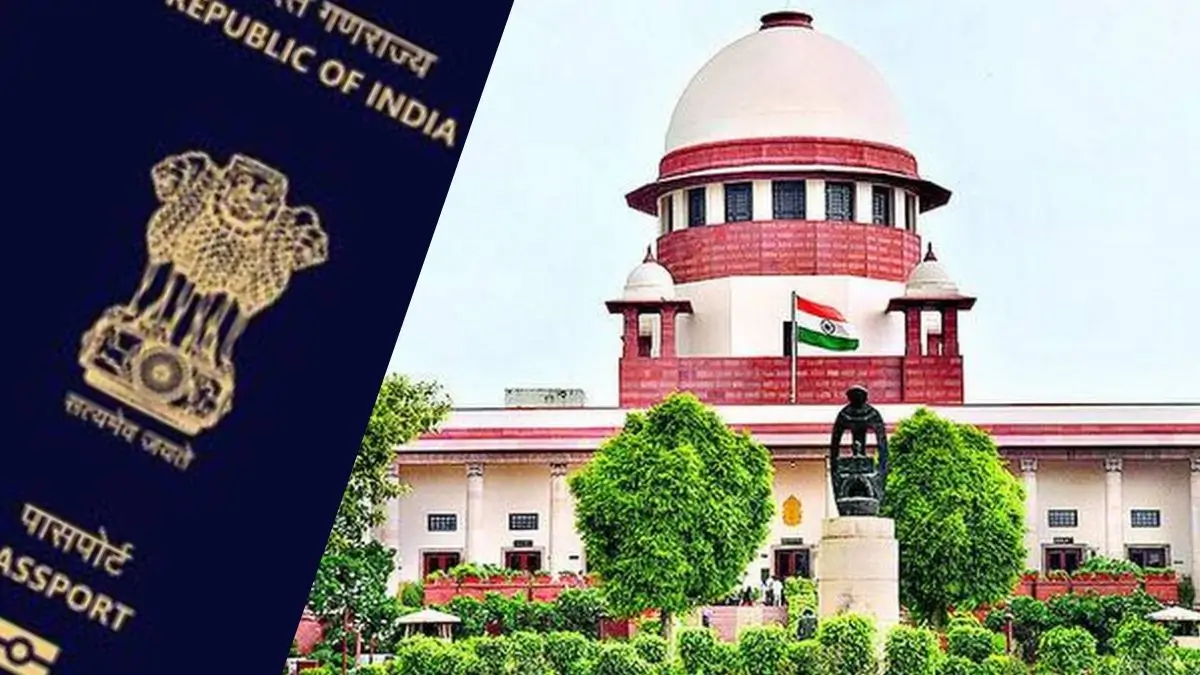
The Supreme Court of India has reaffirmed that personal liberty is not a gift of the State but its first obligation. In a key judgment the Court held that facing criminal proceedings does not automatically disentitle a person from holding or renewing a passport. The ruling strengthens constitutional protections under Article 21.
Case Background
- The judgment arose from a plea seeking renewal of a passport in Mahesh Agarwal vs Union of India.
- The petitioner was convicted in a coal block case and is facing proceedings under the UAPA in another matter.
- Despite trial court and High Court permissions with conditions, the passport authority denied renewal citing pending cases.
Supreme Court Bench and Observation
- The Bench comprising Justices Vikram Nath and A. G. Masih delivered the ruling.
- The Court observed that liberty in India’s constitutional scheme is central and must be protected unless law clearly restricts it.
- Restrictions, if any, must be necessary, proportionate, and grounded in statute.
Constitutional Basis: Article 21
- Article 21 guarantees the right to life and personal liberty.
- The Court reiterated that freedoms to move, travel, and pursue livelihood fall within this guarantee.
- Any restraint by the State must be narrowly tailored to serve justice, security, or public order.
Passport Law Explained
- Under the Passports Act, Section 6(2)(f) allows refusal of a passport when criminal proceedings are pending.
- However, the Court clarified that this is not an absolute bar.
- If a criminal court applies its mind and permits issuance or use subject to conditions passport authorities must respect that order.
Key Clarifications by the Court
The Court made several important distinctions,
- Possession of a passport is not equal to permission to travel abroad.
- Whether an accused may leave India is for the criminal court, not the passport authority.
- Passport authorities should not speculate misuse or second-guess judicial risk assessments.
- Authorities need not demand future travel schedules or visas at renewal.
UAPA and Liberty
- The case involved charges under the Unlawful Activities (Prevention) Act (UAPA).
- The Court underscored that even in serious cases liberty cannot be curtailed by administrative rigidity when courts have imposed safeguards.
- Temporary disabilities must not become indefinite exclusions.
Static Concept: Passport as a Civil Document
- A passport is a civil identity document enabling visa applications and lawful border crossing.
- Actual travel is subject to court permissions, bail conditions and other laws.
- Thus denial must be lawful, reasoned, and proportionate.
Key Takeaways
- Right to passport flows from Article 21
- Section 6(2)(f) is not an absolute bar
- Passport possession is different from permission to travel
- Criminal courts, not passport authorities, assess travel risk
- Emphasises proportionality and due process
Question
Q. The Supreme Court held that the right to a passport primarily flows from which constitutional provision?
A. Article 14
B. Article 19
C. Article 21
D. Article 32


 Supreme Court Rules on SC Status: Conver...
 Lok Sabha Passes Transgender Amendment B...
 Indian Railways New Ticket Cancellation ...